
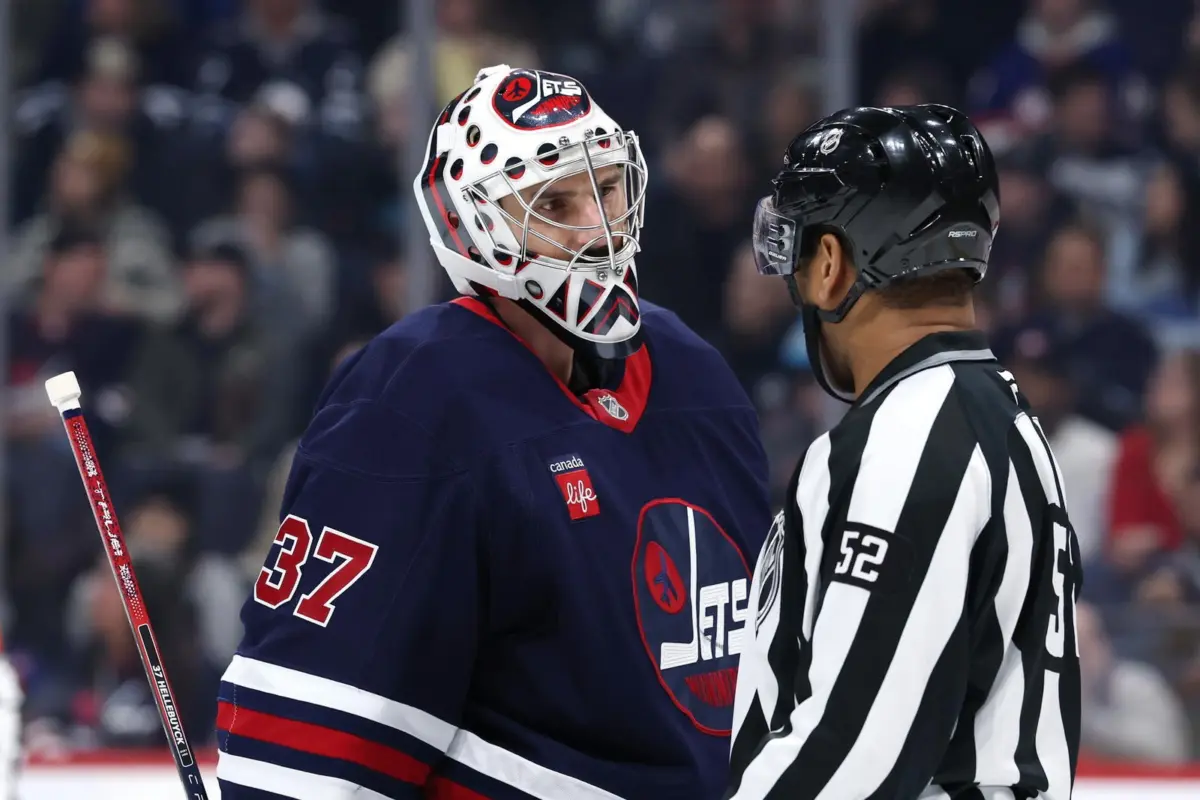
The National Hockey League trade rumor mill is spinning into high gear as autumn settles across the league. In Winnipeg, the prolonged standoff between star goaltender Connor Hellebuyck and the Jets is finally hurtling toward a critical juncture as his suspension draws to a close. Meanwhile, up in Toronto, the Maple Leafs are once again grappling with the defensive vulnerability that comes with another injury to veteran shutdown defenseman Chris Tanev, forcing the front office to weigh aggressive options on the trade market.
As the 2026-27 NHL regular season gathers momentum, these two parallel narratives are dominating discussions among league executives, insiders, and fans alike. Both situations highlight the delicate balance general managers must strike between managing immediate roster crises and protecting the long-term health of their franchises.
Connor Hellebuyck’s Suspension Ending and the Winnipeg Jets’ Dilemma
The high-stakes saga involving Connor Hellebuyck and the Winnipeg Jets is approaching a pivotal milestone. According to reports, the 33-year-old elite goaltender’s suspension from the club is slated to end on Friday, Oct. 23.
The roots of this friction stretch back to August, when Hellebuyck publicly requested a trade from the organization. Following the trade demand, the veteran netminder chose to skip the team’s training camp, prompting the Jets to suspend him with pay.

Speaking on Sportsnet’s Saturday Headlines segment, insider Elliotte Friedman shed light on the mechanics of the situation and the timeline leading up to the upcoming resolution. Friedman reported that Hellebuyck actually reached out to the Jets prior to their season opener on Oct. 2 to inform management of his desire to return to the fold. However, under the terms of the collective bargaining agreement (CBA) governing the league, clubs possess the right to suspend a player who withholds services for a "reasonable length" of time. For Winnipeg, that designated window is set to expire later this week.
Throughout the offseason and into the opening weeks of the regular season, multiple rival clubs inquired about Hellebuyck’s availability. According to Friedman, several interested teams adopted a waiting game, hoping that the pressure of an approaching deadline or escalating organizational tension might force the Jets into a corner, compelling them to accept a discounted trade package.
Despite outside pressure, the Jets have held firm. Management has signaled that they would rather retain the services of an elite, albeit disgruntled, goaltender than cave to external leverage and execute a substandard trade that fails to reflect Hellebuyck’s immense value on the ice.
Complicating the broader goalie landscape further, Friedman noted that the New York Rangers could inadvertently influence how the situation unfolds. While the Rangers are not actively pursuing a trade for Hellebuyck, any potential moves they might make to adjust their own roster could trigger a ripple effect across the wider goaltender market, shifting the leverage dynamics for Winnipeg.
Once the suspension officially lifts, a fascinating question remains: How will the Jets handle their star player? If a trade materializes before the deadline, the issue resolves itself. However, if Hellebuyck remains on the roster without a deal in place, the organization will have to decide whether to welcome him back into the locker room or pay him to stay away from the team while a trade is continuously sought. Friedman believes that neither party has an appetite for the latter option, leaving the door open for a reintegration or an accelerated push to finalize a deal.

Maple Leafs Targeting Defensive Help Amid Chris Tanev Injury Concerns
While Winnipeg navigates its crease controversy, traditional pressures are mounting further east for the Toronto Maple Leafs. The early portion of the schedule has brought familiar anxieties regarding the team’s defensive depth, sparked by yet another injury to veteran shutdown defenseman Chris Tanev.
Tanev, renowned for his fearless shot-blocking, positional awareness, and elite defensive instincts, has unfortunately built a career hampered by injuries. His latest setback has once again left a gaping hole on the Toronto blueline, forcing observers and analysts to wonder how long the organization can rely on internal fixes before exploring external solutions.
Jonas Siegel of The Athletic recently penned an analysis speculating that the Maple Leafs may ultimately be forced into the trade market to insulate their defense corps. Even if Tanev’s current absence proves to be brief, the reality of his injury history means the team cannot operate under the assumption that he will remain healthy for a grueling 82-game regular season and a deep spring playoff run. Toronto needs insulation, and they need reliability.
Addressing these concerns on Saturday, Elliotte Friedman reported that the Maple Leafs are actively formulating plans to reinforce their defensive core. Crucially, Toronto’s front office has communicated to rival teams across the league that they are not interested in acquiring temporary "band-aid solutions." Instead, the franchise is reportedly willing to part with a premium asset to secure a true difference-maker on defense. Furthermore, the club is open to the possibility of moving an older roster player in exchange for a younger, high-upside piece.
Executing a major trade, however, presents unique structural challenges for the Maple Leafs’ front office. The team boasts several older, high-value "premium assets" who command massive salary-cap hits and possess significant leverage through contract clauses. Players such as Auston Matthews, William Nylander, John Tavares, Darren Raddysh, and goaltender Sergei Bobrovsky all carry full no-movement clauses (NMCs), meaning any potential blockbuster involving their services would require their explicit consent.

Meanwhile, veteran defenseman Morgan Rielly also carries a full no-movement clause in his contract. However, management approached Rielly during the summer to request flexibility, resulting in the blueliner submitting a short list of preferred Western Conference destinations. Whether that previous dialogue will translate into Rielly becoming a legitimate trade candidate as the Maple Leafs search for defensive upgrades remains one of the more compelling subplots to watch as the autumn schedule unfolds.
As the NHL calendar advances through October, both the Winnipeg Jets and the Toronto Maple Leafs find themselves at critical crossroads. Whether Winnipeg can find a suitable trade partner for Connor Hellebuyck or successfully reintegrate him, and whether Toronto can swing a bold trade to protect their blue line from injury attrition, will go a long way toward shaping the competitive landscape of the league.