
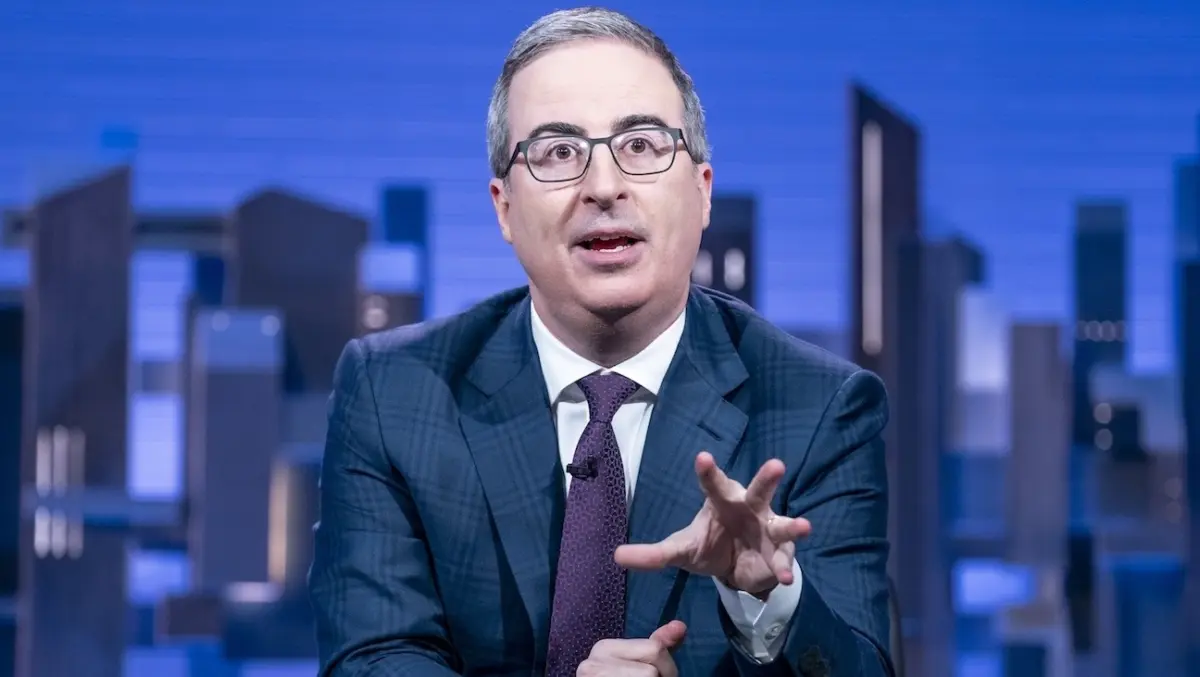
John Oliver wasted little time leaning into the shifting corporate landscape surrounding his HBO series on Sunday night, treating viewers of Last Week Tonight to a few pointed, lighthearted references to his new corporate parent, Skydance.
While the British satirist initially bypassed any direct mention of Skydance’s acquisition of Warner Bros. Discovery—the parent company of Last Week Tonight’s long-standing cable home, HBO—during the previous week’s broadcast, he made up for it on Sunday’s edition. Skydance, which notably acquired Paramount last year, found itself on the receiving end of Oliver’s trademark wit as the host poked fun at studio economics, surprise inspections, and corporate accountability.
The corporate quips were woven seamlessly into the fabric of the Sunday night episode, which primarily focused on the complex and often murky world of generic medications. During his signature deep-dive segment, Oliver turned his critical eye toward the U.S. Food and Drug Administration and its oversight of the international manufacturing facilities that supply a significant portion of America’s prescription drugs.
As he detailed the inner workings of regulatory oversight, Oliver pointed out what he characterized as a glaring loophole in how foreign pharmaceutical plants are monitored compared to their domestic counterparts.
"You should know while surprise FDA inspections are common for U.S. factories, most FDA inspections done overseas are actually announced beforehand, allowing manufacturers to both prepare for them and potentially hide any issues," Oliver explained to the studio audience, establishing the premise for his critique.
To underscore the efficacy of unannounced oversight, the host cited empirical data regarding regulatory outcomes. "In fact, one study found that the odds of a facility receiving the most severe inspection outcome are over 250 percent higher for unannounced inspections, which just makes sense, doesn’t it?" he quipped. "You clean up when you know people are coming over."
That observation provided a natural pivot for Oliver to direct the spotlight back toward his own working environment and the network executives who ultimately sign off on his weekly production budgets. Transitioning from the pharmaceutical industry’s preparation tactics to the physical state of his own soundstage, Oliver delivered a self-deprecating joke about the television studio where Last Week Tonight is taped each week.
"The only reason this studio is so clean is because I knew you were all coming here today," he remarked, gesturing to the surrounding production space. "Otherwise this place would be a complete pigsty. And by the way, I mean that literally: I run a wet market here the rest of the week. I’m just trying to get out ahead of any Paramount budget cuts."
The joke immediately resonated with viewers familiar with the ongoing wave of media consolidation, cost-cutting measures, and structural reorganization that has swept through Hollywood in recent years, particularly following major corporate mergers involving legacy entertainment institutions.
Later in the broadcast, Oliver returned to the corporate theme during a separate, characteristically absurd segment targeting the insurance industry mascot known as Liberty Biberty—the fluffy, round, yellow character featured in commercials for Liberty Mutual. In an effort to secure the mascot’s removal from the company’s high-profile advertising rotation, Oliver presented several suggestive, highly stylized images of the character and enthusiastically encouraged his audience to share them widely online.
The campaign, designed to create maximum corporate discomfort for the insurance brand, served as the setup for Oliver’s final, pointed nod to his new media overlords.
After showing the provocative images on screen, Oliver leaned directly into the camera with faux-enthusiasm. "I’m thrilled to be part of the Skydance family!" he declared, feigning corporate loyalty. "Hope you’re happy with what you bought, guys! We’re never gonna change! … Never—we’re never changing!"
The tongue-in-cheek reassurance highlighted the unpredictable nature of topical late-night comedy operating under massive, multi-conglomerate media structures, ensuring that Last Week Tonight will continue to find humor in the boardroom politics shaping the modern entertainment industry.