
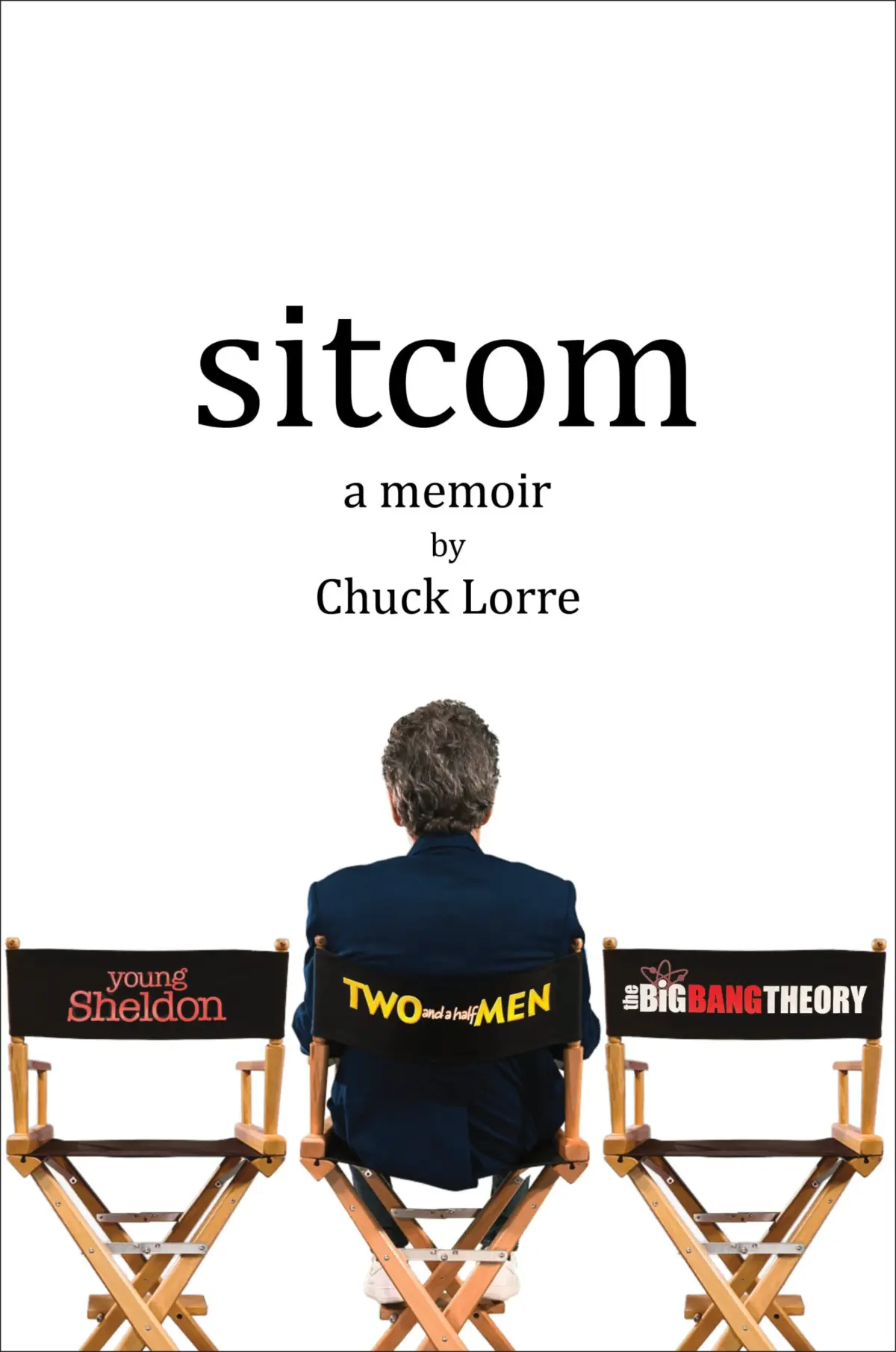
If scathing anecdotes from some of the most popular television comedies of the last four decades are your thing, you have likely noticed that Chuck Lorre has released a memoir. The powerhouse showrunner behind Dharma & Greg, Two and a Half Men, The Big Bang Theory, Mom, Young Sheldon, and many, many more hit series published his deeply anticipated book, Sitcom, on October 13.
The memoir covers a vast and often tumultuous landscape, including Lorre’s unfiltered take on Charlie Sheen’s infamous Two and a Half Men meltdown, reflections on other sitcom stars who pushed him to the edge—such as Brett Butler and Cybill Shepherd—and the complex relationship with Roseanne Barr, a star who drove him to his limits while simultaneously helping launch his career.
Naturally, reviving some of these fraught narratives has irked a few of the individuals mentioned in the book. Tom Arnold, the 1990s pop-culture fixture, quickly shot back at Lorre’s claim that Arnold had demanded writers add his name to scripts when he was producing then-wife Roseanne Barr’s hit series. Arnold took to X (formerly Twitter) to express his intense displeasure with the accusation, ultimately labeling Lorre “a terrible human, an angry dry drunk who lies every time he opens his mouth.”
In interviews days later, Barr corroborated her ex-husband’s claim regarding the disputed writing credits, though she distanced herself from the more personal character assassination. Yet, as Lorre makes clear over a phone call, the super-producer is hardly interested in engaging in any further back-and-forth with former colleagues now that his words are officially on the page. For those who take issue with his specific recollections, Lorre offers a blunt suggestion near the end of Sitcom: they can simply write their own books.
Looking Back at ‘Cybill’ and Network Skepticism
Despite the reputation for unfiltered truth-telling, Lorre’s memoir also highlights profound professional affection for many of his past collaborators. Asked about Christine Baranski, who co-starred in the notoriously problematic CBS series Cybill, Lorre expresses nothing but admiration.
“Oh my god. Christine Baranski is one of the great joys of my life—to have been able to work with her, not just on that show, but on The Big Bang Theory,” Lorre says.
Among the more surprising threads revealed in the book is that, internally at CBS during the casting process, Baranski was infamously referred to as “the death of comedy”—a harsh label also applied to future comedy royalty Jon Cryer and Melissa McCarthy. When asked if those network executives ever expressed contrition after being proven so definitively wrong, Lorre is pragmatic.
“No. Listen, the big picture is that they’re extraordinarily good at casting dramas, but casting comedies was not their strong suit,” Lorre explains. “You also have to acknowledge that CBS gave me a shot to do a show about quantum physicists. Yes, we disagreed on casting, but it’d be foolish to overlook how many opportunities I had with that company to figure it out and do it right.”
Reflecting on the butterfly effect of his career, Lorre considers what his reaction would have been if a prophet had appeared to him in 1992—the year he was fired from Roseanne—to tell him he would still be publicly battling over the show’s behind-the-scenes drama 34 years later.
“I don’t know how to answer that,” he admits. “It was a singular, extraordinary opportunity to be on that show. While it was difficult, I also benefited from it. I don’t think anybody who worked there didn’t come out a better writer for having been there. It might have crushed their soul in the process, but we all became better. And that’s because Roseanne insisted on honest, truthful storytelling about this family. She would not suffer any glib sitcom bullshit.”
Navigating Scientology and Hollywood Relationships
In Sitcom, Lorre also writes candidly, and at times mockingly, about his decade-long involvement with Scientology. Given the organization’s historic aggressiveness toward critics, addressing the subject required careful thought. When asked if he had discussions regarding the potential ramifications of being so remarkably candid—a rarity in Hollywood memoirs—Lorre emphasizes his pursuit of narrative honesty.
“The whole book is an effort to tell the truth of my experience and my journey to where I am right now,” Lorre says. “At the same time, it was important for me to put in the book that there were benefits regarding that 10-year bubble that I was in. It’d be ridiculous to ignore the fact that for every mistake that I made and every poor choice that I made… surviving it, you can take a step back and go, ‘Well, here’s what I got from that.’ And I made a point of putting that in the book that it’s not all negative. It’s not all just trash talking this organization. I did benefit in some ways that it would be disingenuous to ignore.”
Asked if he has heard from anyone within that camp since publication, Lorre is dismissive. “No. I don’t think it’s worth it. I don’t think anybody gives a crap.”
When assembling a memoir containing so many moving parts and high-profile figures, managing expectations of those mentioned was crucial. Lorre notes that he sent the pages concerning Charlie Sheen directly to the actor, who ultimately signed off on them. He also ran relevant passages past his ex-wives, stating that his primary goal was to be careful not to inflict unnecessary pain.

A Nearly Three-Decade Partnership with Warner Bros.
Lorre’s tenure at Warner Bros. spans nearly 28 years, beginning in 1999 amidst the tumultuous AOL merger. While the book features passing jokes about the studio’s revolving door of corporate owners, Lorre recognizes that he has been a major beneficiary of steady institutional support, starting with legendary executive Peter Roth.
“He loves television. He loves storytelling. He loves to laugh,” Lorre says of Roth. “That’s not always the case with executives. Generally, they’re running scared and they’re trying to figure out how to survive the job. Peter actually loved the job and he loved comedy. He was the one who offered me a job at Fox and that led to Dharma and Greg. He went to Warner Brothers and said, ‘No, come here.’ So I followed him, because there’s an intangible quality that I’ve always gone after—which was to work with people that love what we do. That it’s not just creating content.”
Lorre notes that Skydance CEO David Ellison reinforced that philosophy during a recent meeting. According to Lorre, Ellison made it clear that he dislikes the ubiquitous corporate term "content" and prefers focusing on stories and entertainment.
“‘Content’ is a pretty gross term,” Lorre remarks, calling it “loathsome.” He adds, “When I hear someone in that position say, ‘I’m not in the content business, I’m in the storytelling business,’ that’s meaningful. That’s really meaningful because that’s what I try to do. I keep my job really simple. My job is to make people laugh.”
The Memoir Wave and the Art of the Audiobook
Lorre’s book arrives during a notable season of autobiographical releases by Hollywood’s prominent figures, alongside books by Ari Emanuel, an authorized Larry David biography, and upcoming projects from leaders like Bob Iger. Asked if something specific is in the air, Lorre laughs off the timing as mere serendipity.
“This was a two-year project for me and I’m glad it’s done. I really am,” Lorre says. “As I was writing, I was hoping that the book can cause laughter. Otherwise, what’s the point? I’m not in the education business. I’m not in the morality business. I’ve been in the comedy business for a long time and if I’m going to write a book, hopefully it causes laughter, otherwise the book fails.”
Recording the audiobook presented its own unexpected hurdles. Despite writing dialogue for a living, Lorre found that performing the text required an entirely different skill set.
“I was told that it’s difficult. ‘How tough can it be?’ It’s actually really hard because you want to perform the book,” Lorre explains. “You want to make sure that the jokes land and that the stories unfold and that it’s an entirely different experience. I wrote the book to be read, not to be listened to, but audiobooks are a big deal. I actually hadn’t considered it until the book was in, really. I did the very best I could.”
Hiring an outside narrator was never an option. “There was no chance I was going to let anybody read this. It made no sense to me to have someone read the story of my life.”
Looking Forward
Among the personal reflections in Sitcom, Lorre details moments of profound fortune, including a chance encounter buying a guitar at a bar that saved his life, and an ex-girlfriend whose dietary interventions saved him from requiring a permanent colostomy bag. Reflecting on these strokes of fate brings a deep sense of appreciation.
“I have a lot of gratitude,” Lorre says. “I’ve had angels cross my path over and over again. It became very clear in writing this book how lucky I’ve been. Because of the certain people who came along at just the right time to rescue me—sometimes from myself.”
Today, Lorre remains as busy as ever. Between Stuart Fails to Save the Universe, Georgie & Mandy’s First Marriage, and Leanne Morgan’s upcoming television project, he continues his daily routine of trying to generate laughter.
Asked jokingly if he might write a sequel in 20 years revealing a toxic environment on Leanne Morgan’s set, Lorre vehemently defends his colleague.
“Leanne Morgan is a magnificent human being and that is not hyperbole,” Lorre says. “Somebody who’s a successful standup comedian, not everybody can make it acting. It’s a difficult transition. And she’s done that, and it’s a very happy set because she sets the tone. That’s Leanne’s nature.”