
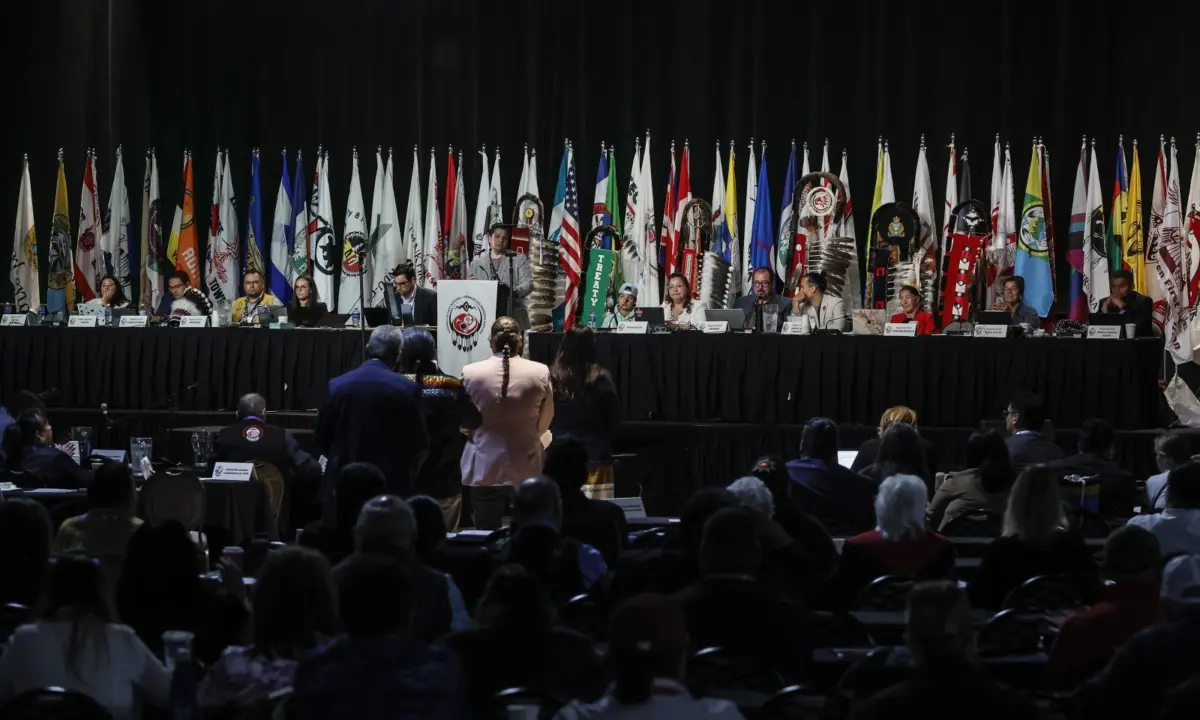
In what is being marked as a historic convergence of national political leadership, First Nations leaders across Canada are making final preparations to assemble in Ottawa on Monday for a high-stakes summit with Prime Minister Mark Carney and provincial and territorial premiers. The upcoming summit represents the first direct, comprehensive gathering of its kind between First Nations leadership, the head of the federal government, and the provincial and territorial premiers in more than two decades, setting the stage for a critical recalibration of Crown-Indigenous relations.
The high-level talks come at a moment of heightened political strain. Tensions between First Nations leadership and the Government of Canada have escalated markedly since Carney was elected in 2025. A central point of contention has been the federal government’s recent passage of legislation designed to accelerate and streamline the development of major infrastructure and resource projects across the country.
The legislation has drawn sharp criticism from Indigenous leaders, who assert that the measure was pushed forward without meaningful or adequate consultation with First Nations communities. Leaders from across the country have argued that bypassing proper consultation protocols undermines the legal framework governing Crown obligations and poses a direct threat to the ongoing national effort toward genuine reconciliation. By failing to engage First Nations as equal governance partners prior to codifying fast-tracked development rules, critics say the government risks repeating historical patterns of unilateral decision-making that disregard Indigenous rights and territorial stewardship.
In the lead-up to Monday’s Ottawa meeting, the Assembly of First Nations (AFN) has spent months orchestrating an extensive national consultation strategy. To build a unified agenda and synthesize priorities from coast to coast to coast, the AFN hosted a series of nationwide town halls with First Nations chiefs. These sessions provided a venue for community leaders to outline the precise actions, structural reforms, and policy shifts they expect federal, provincial, and territorial governments to deliver during the intergovernmental talks.
Building upon the outcome of those town halls, the Assembly of First Nations formally released a suite of comprehensive position papers last week. The policy documents establish detailed frameworks across four vital domains: economic development, policing and public safety, employment, and health services. Together, the papers reflect an effort to present governments with concrete policy proposals that address both structural economic inclusion and the urgent delivery of essential services in First Nations communities.

Among the central economic proposals being brought to the negotiation table is the creation of a dedicated First Nations sovereign wealth fund. The concept, originally advanced by the Chippewas of the Thames First Nation, envisions pooling capital across communities to create a sustained, independent financial resource. Advocates for the fund emphasize that establishing a national wealth-generation vehicle would enable First Nations to secure long-term financial independence, finance community-driven infrastructure, and build generational wealth that extends far beyond individual project development cycles or transient government grant programs.
However, as delegations prepare for the talks in the nation’s capital, significant debate remains within First Nations leadership regarding the scope and focus of the summit agenda. While many acknowledge the critical importance of financial autonomy, some leaders express deep concern that an exclusive focus on major resource development and commercial partnerships risks overshadowing pervasive social crises affecting First Nations communities.
Concerns are mounting that issues such as chronic homelessness, systemic addiction, mental health crises, and elevated suicide rates may be relegated to the margins if governments view the summit solely through an economic lens. Community advocates emphasize that financial deals cannot serve as a substitute for addressing severe social deficits and public health shortfalls that continue to destabilize communities.
Jeff Copenance, Chief of the Ojibways of Onigaming First Nation, stressed the importance of addressing systemic social issues alongside economic development. He warned that focusing solely on resource extraction or commercial partnerships risks failing to achieve meaningful progress on the broader agenda of reconciliation. Chief Copenance emphasized that unless the Prime Minister, provincial premiers, and territorial leaders are willing to look beyond immediate economic interests and commit to addressing the underlying human and social crises facing communities, the proposed path forward will remain incomplete.
The broader discussion surrounding Indigenous inclusion and participation in governance structures has also been reinforced by recent events in Alberta. The province’s recent referendum brought renewed visibility to the systemic friction and obstacles First Nations citizens often encounter when attempting to exercise their democratic rights within federal and provincial frameworks. Following the vote, First Nations leaders across Alberta publicly noted that community members faced unnecessary obstacles to casting their ballots.
The Siksika Nation highlighted these ongoing operational barriers following the vote. While leadership indicated that Siksika Nation was pleased with the ultimate outcome of the referendum, the community reported severe administrative failures on voting day. Specifically, the polling station established within the community was understaffed and was not supplied with an adequate number of physical ballots by Elections Alberta, resulting in frustration and highlighting persistent institutional gaps in ensuring full and equitable access for First Nations voters.

As the Ottawa summit approaches, regional leadership bodies are finalizing their collective mandates. Leaders from Manitoba First Nations gathered on Saturday to firmly articulate their specific territorial priorities ahead of Monday’s formal sessions in Ottawa.
The Assembly of Manitoba Chiefs (AMC) confirmed that its delegation will present a targeted set of priorities to federal and provincial leaders, anchored in the recognition of inherent treaty rights, self-governance mechanisms, and genuine reconciliation framework commitments. The AMC reiterated that while economic sovereignty remains a vital pillar for community self-determination, it must be pursued in tandem with strict adherence to mandatory consultation processes for any and all government decisions that impact First Nations territories, rights, and livelihoods.
Grand Chief Kyra Wilson of the Assembly of Manitoba Chiefs emphasized that treaties and historic alliances with the Crown represent solemn, nation-to-nation agreements that remain fully binding today. Grand Chief Wilson emphasized that these agreements cannot be minimized or set aside by governments simply because they present political or economic challenges. She added that First Nations will not accept a relationship characterized by unfulfilled promises, emphasizing that communities expect to be treated as equal governance partners and for governments to work with them accordingly.
With Manitoba leaders establishing their position over the weekend and delegations from across the country converging on Ottawa, Monday’s meeting represents a critical benchmark for the Carney government and Canada’s premiers. As First Nations leaders insist on equal partnership, comprehensive consultation, and action across both economic and social spheres, the summit will test whether governments are prepared to reset their relationship with First Nations and deliver concrete results on nation-to-nation commitments.