
Growing up, actress and writer Illeana Douglas spent a considerable amount of time immersed in the creative and intellectual world of her Oscar-winning grandfather, actor Melvyn Douglas, in his Upper West Side apartment. In that salon-style environment, he regularly hosted literary luminaries like Gore Vidal and screen legends such as Myrna Loy. That early exposure to the titans of the entertainment industry profoundly influenced the trajectory of Douglas’s life and career. In her twenties, she balanced a dual existence, performing in a sketch comedy group by night while holding down a demanding day job as a film publicist. During her time in publicity, she worked on campaigns for future cinematic classics including The Princess Bride, The Untouchables, and Moonstruck.
As she entered the 1990s, Douglas established herself as one of Hollywood’s most reliable and distinctive character actresses, stealing scenes in zeitgeist-defining films such as Martin Scorsese’s Goodfellas and Gus Van Sant’s To Die For. Reflecting on her acting style, she notes that she would often look through a script and realize the written lines were sparse, only to be told by directors that she would come up with something brilliant. In hindsight, she realizes that she was essentially writing through her performances without consciously thinking of herself as a writer.
In the last decade, Douglas has made a remarkable transition into the realms of film history and literature, a trajectory reminiscent of silent film icon Louise Brooks. She began this new chapter with her acclaimed memoir I Blame Dennis Hopper: And Other Stories from a Life Lived in and Out of the Movies, which eventually led to her becoming a familiar and beloved presence on Turner Classic Movies (TCM), where she presented the network’s Trailblazing Women series.
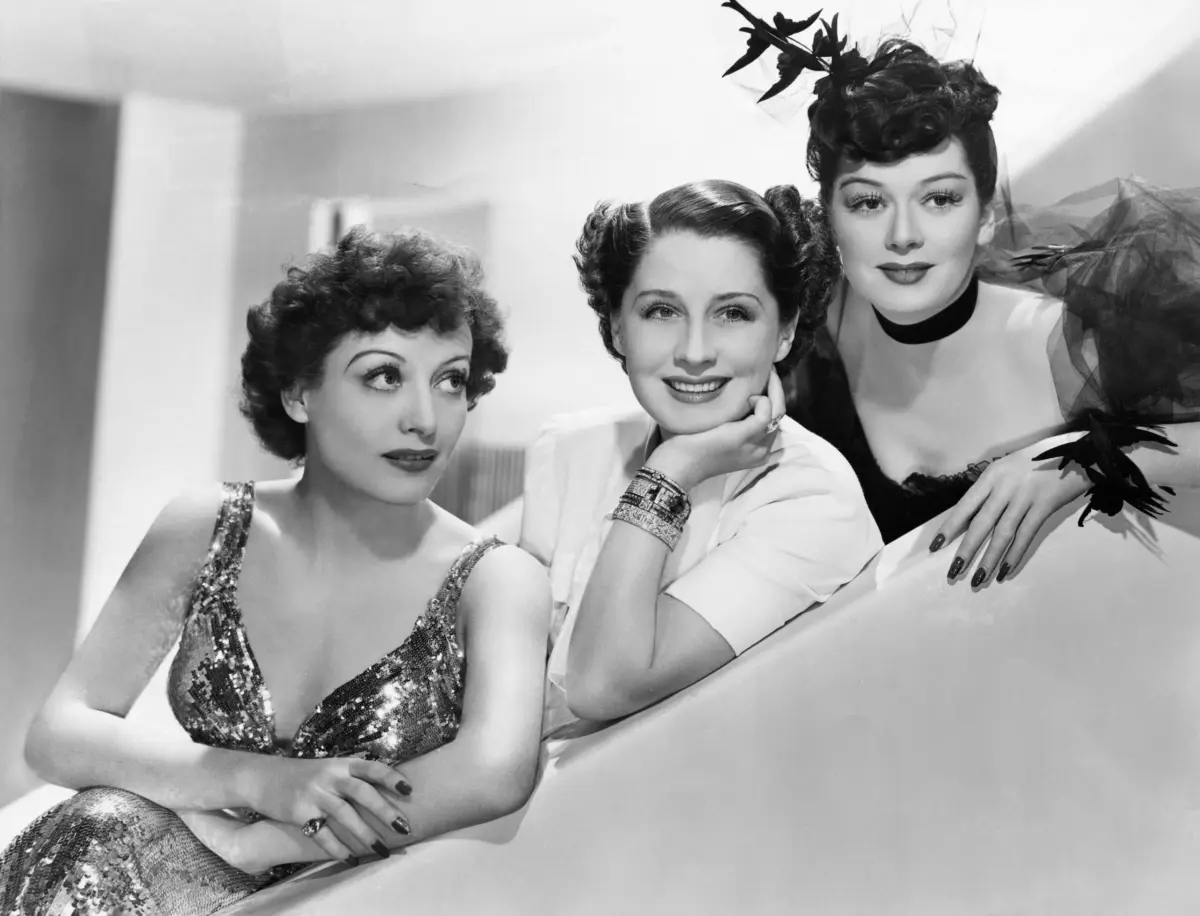
Now, Douglas is turning her critical and historical eye toward a subject she seems uniquely destined to explore with her latest book, Jungle Red!: The Making of MGM’s The Women. In the new publication, she tackles the tumultuous production of the 1939 all-female blockbuster. Directed by George Cukor, the original film starred a powerhouse ensemble including Norma Shearer, Joan Crawford, and Rosalind Russell. It ultimately saved Cukor’s directorial career, inspired a myriad of fashion trends, and spawned several remakes, including the critically maligned 2008 version starring Meg Ryan and Annette Bening.

Based on the original Broadway play by writer and former Vanity Fair managing editor Clare Boothe Luce, The Women chronicled the romantic and social upheavals of a circle of Manhattan high-society frenemies. These characters circled like vultures upon learning that Norma Shearer’s virtuous socialite character, Mary Haines, was about to lose her husband to Joan Crawford’s fabulously viperous shopgirl, Crystal Allen. Uniquely told without the participation of a single male actor, the film successfully turned Hollywood’s traditional all-boys club on its head, emerging as a major box-office hit during a banner year for cinema that was otherwise dominated by monumental epics like Gone With the Wind and The Wizard of Oz.
As the feminist movement gained momentum in the 1960s, many critics and feminists initially disavowed the film, arguing that its female characters talked exclusively about men. Decades later, however, film historians view the picture through a different lens, recognizing what it reveals about the societal constraints placed on women during that era. By focusing the narrative battles within luxury department stores, exclusive fashion shows, high-end spas, nail salons, and domestic settings, the movie vividly illustrated just how limited even privileged women’s options truly were during the period. The men in the story essentially functioned as chess pieces manipulated in the pursuit of social standing, financial stability, and power.
Douglas’s Jungle Red! approaches this historical material with deep appreciation, guiding readers through the comprehensive, soup-to-nuts process of producing a major studio picture during Hollywood’s golden era. Along the way, the book pays homage to the unsung heroes of the studio system—including pioneering women and talented gay men—who worked behind the scenes to create cinematic magic. Douglas explains that her unique perspective as a working actress grants her an ability to spot nuances that straight-up historians might overlook, adding an emotional resonance to her writing as she lifts the cobwebs off compelling American stories that deserve to be remembered.
Reflecting on her motivations for writing the book, Douglas notes that The Women serves as a narrative nexus that connects an array of fascinating historical threads. Released in 1939 right alongside Gone with the Wind and The Wizard of Oz, the film involved many of the same creative figures peripherally. Douglas sought to document why the project was critically important to the careers of Joan Crawford, George Cukor, Paulette Goddard, Rosalind Russell, costume designer Adrian, and the studio itself. The production functioned as a carousel of remarkable figures coming together, ranging from F. Scott Fitzgerald and screenwriter Anita Loos to producer Hunt Stromberg, studio head Louis B. Mayer, production chief Irving Thalberg, child star Mickey Rooney, and even Douglas’s own grandfather.

While numerous biographies have been written about George Cukor and Joan Crawford, Douglas observed that biographers traditionally glossed over The Women. Without this film, Cukor’s career likely would have effectively ended following his firing from Gone with the Wind, Goddard’s career could have stalled after she lost the coveted role of Scarlett O’Hara, and Crawford’s professional standing was precarious following the box-office failure of Ice Follies of 1939. Douglas sought to weave these parallel trajectories together, using the movie as a device to transport readers back to the specific pressures of Hollywood between 1936 and 1939.
From a feminist standpoint, Douglas is eager to redefine public perception of The Women, noting that generations of women grew wary of the word "bitch" as an exclusively negative descriptor. In contrast, during the film’s 1938 and 1939 promotional campaigns, stars like Joan Crawford openly embraced the term with a sense of frivolity, declaring how much they enjoyed playing such roles. Douglas views the film not as a mean-spirited portrayal of women, but as a sharp social satire that exposes the rigid societal roles forced upon women of the era—whether as spinsters, dutiful wives, wise mothers, or sexpots. She draws a direct line from The Women to modern pop culture phenomena like the Real Housewives franchise, arguing that both formats explore money, power, status, and complex frenemy dynamics.
Among the most surprising elements Douglas uncovered during her extensive research was the reality and intensity of the legendary feud between Norma Shearer and Joan Crawford. While studio-era feuds were sometimes manufactured for publicity—such as Crawford’s rumored rivalry with Bette Davis—Douglas discovered that the animosity between Shearer and Crawford was entirely genuine. Shearer actively utilized her influence as the widow of studio chief Irving Thalberg to thwart Crawford’s career, whether by stealing leading men like Clark Gable or poaching specialized cameramakers when Crawford found lighting techniques that suited her. MGM executives recognized the combustible nature of pairing the two stars, even positioning reporters on set in anticipation of an explosion. Both actresses leaned into the rivalry, treating it with the sophisticated theatricality of a Molière restoration comedy.
The production was similarly defined by fierce competition regarding costumes and screen presence. Costume designer Adrian played a pivotal role in establishing character traits through wardrobe, consciously using sequins to denote Crawford’s "bad girl" persona while Shearer maintained her refined, queenly status through elegant attire. Costumes became a battleground of upstaging tactics, culminating in famous moments such as Crawford’s striking, unscripted physical entrance in a doorway and her dramatic, largely nude bathing scene designed to maximize press coverage and steal focus from her co-stars.

Adrian’s contributions extended to a lavish, six-minute Technicolor fashion show within the department store sequence. Although the sequence did not strictly advance the plot, it served as a showcase for cinematic experimentation while fulfilling a commercial purpose, as modified versions of the film’s costumes and accessories were successfully marketed to consumers nationwide through major department stores like Macy’s. Through her meticulous research and deep appreciation for the era’s craftsmanship, Douglas’s Jungle Red! successfully resurrects the fascinating, high-stakes world that birthed one of Hollywood’s most enduring cinematic achievements.