
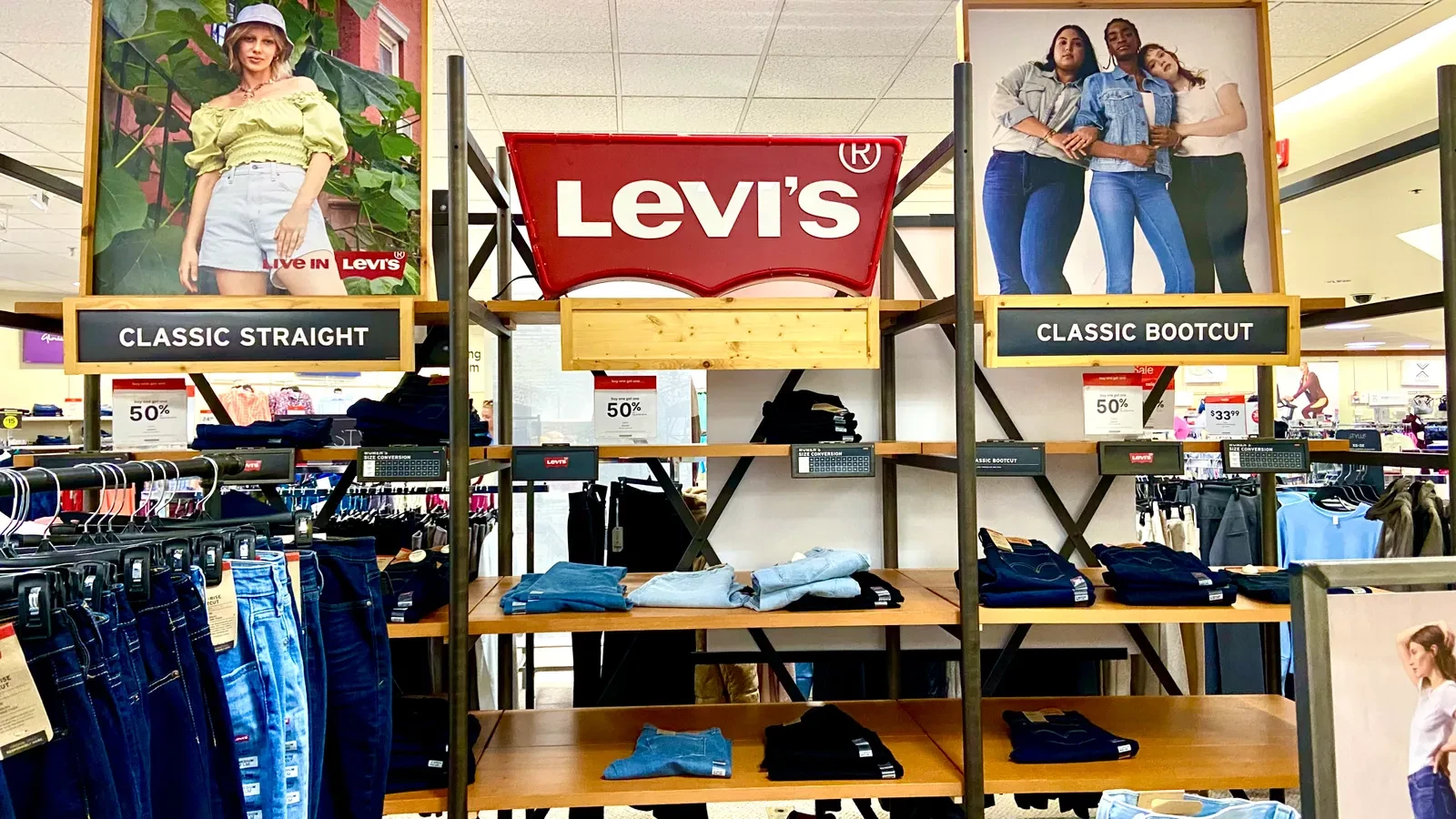
Denim giant Levi Strauss & Co. is leaning heavily on its traditional wholesale partnerships and an unexpected windfall of tariff reimbursements to steady its financial footing following a surprisingly sluggish quarter in its direct-to-consumer (DTC) channels.
The iconic apparel maker recently reported a turbulent financial period characterized by its first net revenue miss in two years, according to data from Wells Fargo. While the brand’s long-term strategic priority has been to scale and expand its direct-to-consumer business—encompassing both its branded brick-and-mortar retail locations and its e-commerce platforms—it was the wholesale sector that unexpectedly saved the day during the third quarter, delivering stronger performances in both the United States and European markets.
At the same time, the company’s overall profits and margins were significantly propped up by trade reimbursements, providing a vital financial cushion as management navigated a series of operational headwinds, shifting fashion trends, and macroeconomic pressures.
Navigating the Direct-to-Consumer Slump and Wholesale Realities
The recent struggles in the direct-to-consumer segment underscore a fundamental financial reality of the modern retail landscape. While DTC channels offer brands greater control over customer data, brand messaging, and full-price selling, they also come with significantly higher operating expenses—most notably, relentless marketing and customer acquisition costs.
Research and industry analyses consistently demonstrate that DTC margins often fail to reach the lofty profitability levels of wholesale margins. In a wholesale arrangement, retail partners shoulder a substantial portion of the heavy lifting, taking on the direct expenses, operational burdens, and localized efforts associated with marketing, merchandising, and driving store traffic. When DTC traffic slows down, as it did for Levi’s during the third quarter, the margin compression can become starkly apparent.
Chief Financial Officer Harmit Singh noted during a call with analysts that distribution costs across the United States have also remained stubbornly higher than anticipated, further squeezing retail profitability and adding to the cost pressures faced by the denim manufacturer.
Compounding the DTC challenges were shifting consumer preferences that caught the brand momentarily off-guard during the critical back-to-school shopping season. CEO Michelle Gass explained that traffic and overall demand for the back-to-school period fell short of expectations, in part because the company’s product assortment over-emphasized loose-fitting denim styles at a precise moment when U.S. consumers were rapidly pivoting toward low-rise cuts.
Fortunately, the executive team moved quickly to recalibrate the product mix and sharpen its focus on the silhouettes that shoppers were actively seeking. Gass noted that while low-rise styles dominated the immediate demand shift, loose-fitting denim remains an integral part of the brand’s overall business and continues to serve as a major volume driver across its collections.
Weather-Related Hurdles and European Recovery
Across the Atlantic, Levi’s faced an entirely different set of environmental challenges that temporarily dampened its European retail performance. The continent experienced a brutally hot summer, a weather pattern that historically depresses foot traffic and dampens consumer appetite for heavy fabrics like denim. Shoppers simply delayed purchases of traditional fall and back-to-school apparel while extreme temperatures persisted.

However, as the summer heat broke and seasonal weather finally moderated across Europe, consumer trends rebounded sharply. Gass pointed out that the brand’s trajectory in the region quickly bounced back once normal autumn weather arrived.
In Europe right now, direct-to-consumer trends quarter-to-date are robust, highly positive, and indicative of a deeply engaged consumer base, providing a strong sense of reassurance to investors. Furthermore, this retail momentum was complemented by an incredible wholesale business throughout the European market, demonstrating that the underlying strength and equity of the Levi’s brand remain remarkably healthy overseas.
Timely Tariff Refunds and Strategic Reinvestment
Amid these operational speedbumps and seasonal weather disruptions, Levi’s received a major financial boost in the form of trade and tariff reimbursements. During the third quarter, the denim giant collected approximately $80 million in tariff refunds, capturing virtually the entirety of the total amount it had anticipated recovering.
The influx of capital arrived at an exceptionally opportune moment for the company. Rather than simply pocketing the windfall to pad its balance sheet, Levi’s has opted to plow roughly three-quarters of the refunded cash directly back into core business operations.
According to CFO Harmit Singh, the strategy involves deploying these funds toward incremental marketing initiatives designed to stimulate consumer demand, enhancing supply chain capabilities to fortify long-term market competitiveness, and establishing a sharper value proposition for shoppers navigating key holiday promotional moments.

Of that $80 million total, approximately $25 million was deployed during the third quarter, while another $35 million has been specifically slated for deployment in the fourth quarter to support the crucial year-end holiday shopping season. Company leadership views the timing of these tariff recoveries as an ideal catalyst to help accelerate momentum and offset the soft patches experienced earlier in the year.
Thanks in large part to these proactive marketing investments, targeted inventory adjustments, and a renewed alignment with consumer preferences, Levi’s direct-to-consumer sales have already begun mounting a visible recovery from the third-quarter slump, positioning the brand to tackle the remainder of the fiscal year with renewed operational vigor.