
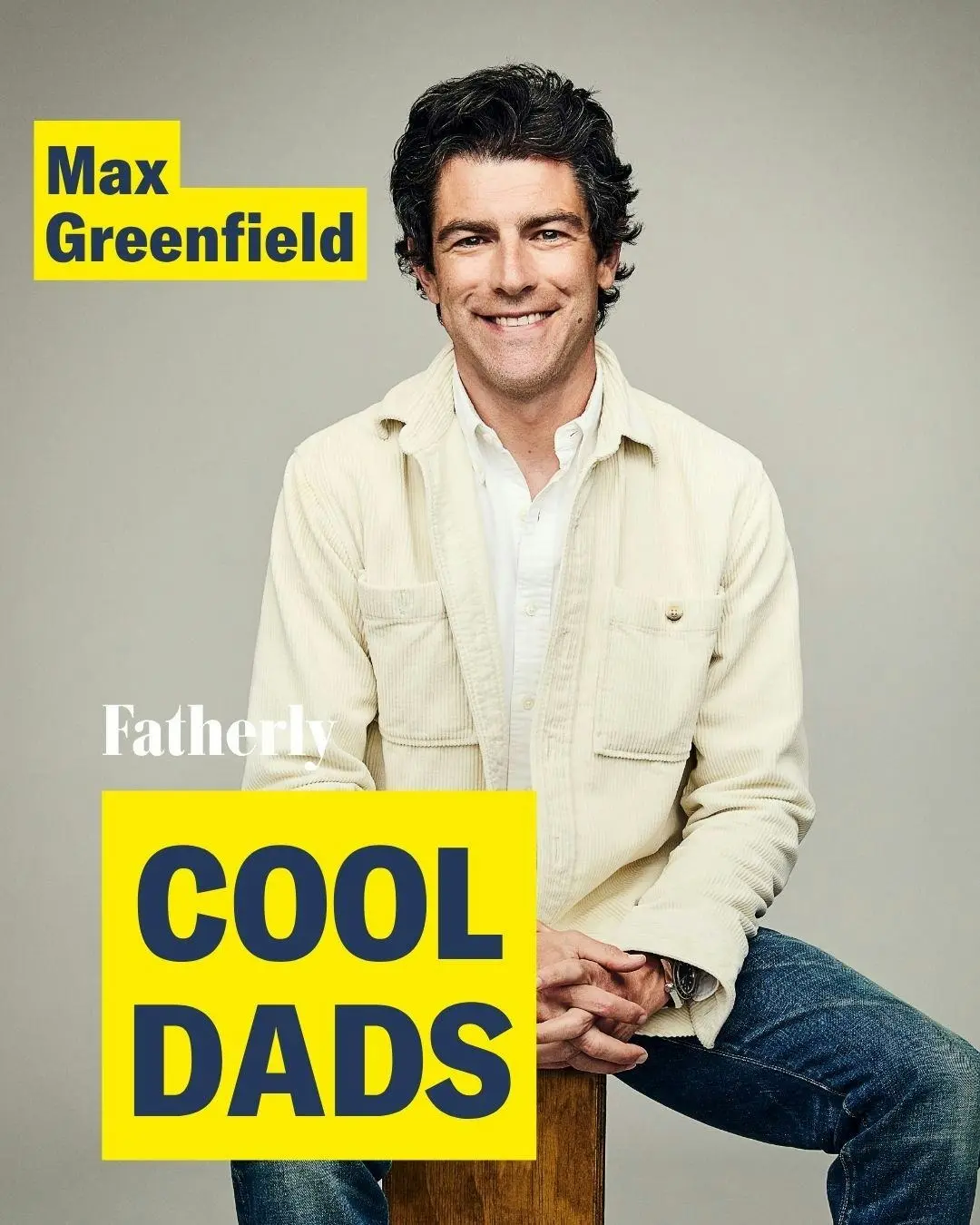
The first thing you may observe about the dad in Netflix’s upcoming teen drama Don’t Say Good Luck is that his hair looks remarkably, impeccably perfect. Yet, that polished exterior is merely the starting point of the aspirational cues emanating from this complex character portrayed by Max Greenfield. In this funny and undeniably tear-jerking family drama, Greenfield’s character finds himself constantly juggling the demanding facets of modern life: a high-pressure career, the daily chaos of raising elementary-aged twins, the heavy, shifting emotional landscape of a teenager, and the devastating blow of his wife’s cancer diagnosis. While he is certainly thrown off-kilter at times by the relentless curveballs life hurls his way throughout the film, this particular father figure never bumbles his way through his responsibilities. In virtually every single scene, he actively seeks out and discovers meaningful ways to remain an emotionally available parent and a deeply supportive partner.
Reflecting on the role, Greenfield admits that understanding the character came remarkably naturally to him. There is so much of his own personal life infused into that movie, he notes, explaining that he felt an immediate and profound closeness to the material and the creative direction the project was taking. That deep resonance likely stems from his real life: his own daughter is a high schooler around the same age as the film’s lead actress, Sunny Sandler. Furthermore, his daughter shares mutual friends with Sandler, meaning Greenfield was already intimately familiar with the social ecosystem, the anxieties, and the onstage and backstage realities of navigating high school life in Southern California.
In a recent interview discussing the film, Greenfield opened up about the emotional weight of the project, finding patience, fighting parental anxiety, and even sharing his thoughts on why Los Angeles bagels are seriously underrated.
When asked about watching the finished product, Greenfield revealed that even during his current press tour, catching glimpses of emotional clips played right before interviews leaves him needing a moment to collect himself. The intensity of the film is undeniable, but it is anchored by a grounded emotional authenticity that Greenfield felt equipped to handle because of his own experiences as a father.
When he first considered taking the role, he was acutely aware that Sunny Sandler was starring in the film. Although he had never worked on a Sandler family production before, he was well aware of their legendary reputation for fostering warm, supportive film sets. Eager to ensure that young Sandler had a positive, comparable experience working alongside an adult cast member, Greenfield felt uniquely positioned to provide that environment. He candidly admitted that while he was not entirely certain how his acting performance would ultimately turn out, he possessed an unshakable confidence in his ability to simply be a dad. Knowing where Sandler went to school, understanding their shared social circles, and being able to communicate with her effortlessly made the transition into the role seamless. His goal was to maintain a light, supportive atmosphere on set—something he felt entirely capable of achieving.
The dynamic on set was further enhanced by the two young boys playing the twins in the film. Greenfield noted that they were brilliantly funny because they were essentially never really acting; they were simply running around, bursting with natural energy. Though they were slightly younger than his own son, Greenfield’s recent experience coaching his son’s basketball team served as the ultimate preparation. Wrangling a group of energetic kids, keeping them engaged, and keeping everyone moving forward provided the exact logistical and emotional warm-up he needed to handle his young co-stars, ultimately making those scenes remarkably fun to shoot. This bled into the overall atmosphere of the production, where everyday interactions felt less like scripted performances and more like a mirror reflecting the realities of his own day-to-day life.
One of the most poignant moments in the film arrives later in the story during a heavy, dramatically grounded scene that resonated deeply with viewers who have lived through similar hardships. For instance, one audience member drew a direct parallel to their own adolescence, recalling how their mother was diagnosed with cancer when they were a high school sophomore, and how desperately they wished Greenfield’s character could have been their father during that agonizing period. This emotional apex is epitomized in a quiet car scene where Sunny’s character asks, “Are you okay?” and Greenfield’s character responds by asking, “Are you okay?” with both ultimately admitting, “No.”
Discussing the creation of that pivotal scene, Greenfield credited director and writer Julia Hart, alongside co-writers Laura Hankin and Jordan Horowitz, for fostering an exceptionally collaborative environment. The creative team held extensive conversations about the trajectory of that specific scene, remaining remarkably generous with Greenfield’s input. As the filmmakers watched the earlier portions of the movie come together, they exchanged multiple script drafts back and forth to ensure that the emotional beat would honor everything built up in the narrative prior to that moment while properly setting up everything that followed. Crucially, they agreed that the scene should not offer a neat answer or a convenient fix to the unfolding tragedy. Instead, both characters needed to fully experience the weight of the situation. When cameras finally rolled, Greenfield described the atmosphere on set as absolutely nuts and profoundly heavy.
In the film, Greenfield’s character runs a local bagel shop, a detail that naturally led to a discussion about his personal culinary preferences. Reflecting on his taste with a touch of self-awareness about his age and lifestyle, he offered two distinct favorites. His classic go-to is an everything bagel layered with cream cheese, onion, tomato, and lox—a combination he describes as utterly foolproof and the absolute best. For a lighter, more health-conscious alternative, he leans toward a light cream cheese spread or a quality hummus paired with fresh, crisp vegetables tossed in the right dressing with a generous dusting of salt and pepper. He also shared his recent conversion regarding Los Angeles’s famous bagel scene, noting that after hearing endless hype about Courage Bagels, he initially resisted the notoriously long lines. However, after finally relenting and waiting in line with his daughter to try a specialty vegetable-heavy creation, he admitted that the hype was entirely justified and the food was unbelievable.
Beyond the emotional beats and culinary detours, Don’t Say Good Luck tackles profound thematic territory regarding disclosure to children. The film examines the delicate balancing act of deciding what information to share with a child, what to withhold to protect them, and the eventual backfires that occur when well-intentioned secrecy clashes with reality. Sharing his personal philosophy on the matter, Greenfield noted that he believes he has navigated this challenge successfully in his own parenting. His approach centers on encouraging his children to make discoveries on their own while actively cultivating a safe, open domestic environment where they feel comfortable bringing those discoveries to him. Depending on the framing of their questions and their appetite for information, he believes in easing them into complex topics and allowing ongoing conversations to develop organically over time. By letting his children absorb information at their own pace, he has found that they are significantly more comfortable processing topics he once feared might prove too confusing or frightening.
This evolution in parenting philosophy has become especially pronounced as Greenfield’s children have grown out of the baby and elementary stages and into teenagehood, with his kids now aged 16 and 11. He candidly admits that he currently finds himself making a lot more mistakes than he used to. The thin, shifting line between exerting parental responsibility and knowing what to let go of grows narrower with each passing day. A major internal struggle involves recognizing the difference between genuine protection and attempting to control situations merely to make himself feel safer amidst terrifying circumstances. Operating from a fear-based parenting model, he noted, is never a healthy zone to inhabit.
Nowhere has this realization been tested more intensely than with his daughter learning to drive and earning her driver’s license. Greenfield described the initial surreal phase where he and his wife questioned whether she would simply drive herself to volleyball practice, and the subsequent reckoning that comes with stripping away irrational fears to recognize that she had prepared, practiced, and legally earned her driving privileges. While raising small children brings a comforting sense that things will continually improve, the transition into adolescence shifts the dynamic in a terrifying direction, introducing a completely different tier of parental anxiety.
However, sitting in the passenger seat while his teenage daughter navigates the road provided Greenfield with a profound perspective shift. It taught him to compartmentalize his anxieties, helping him realize that the generalized worries he projects onto the future, work, and everyday life are essentially unfounded. Real fear, he discovered, is sitting in a car with your teenage daughter behind the wheel—a tangible, heavy, shark-in-the-water kind of fear that is entirely appropriate for the specific situation. Recognizing the distinct difference between actual danger and abstract worry has given him a valuable emotional baseline, offering a clarifying lens through which to view the challenges of both parenting and life.