
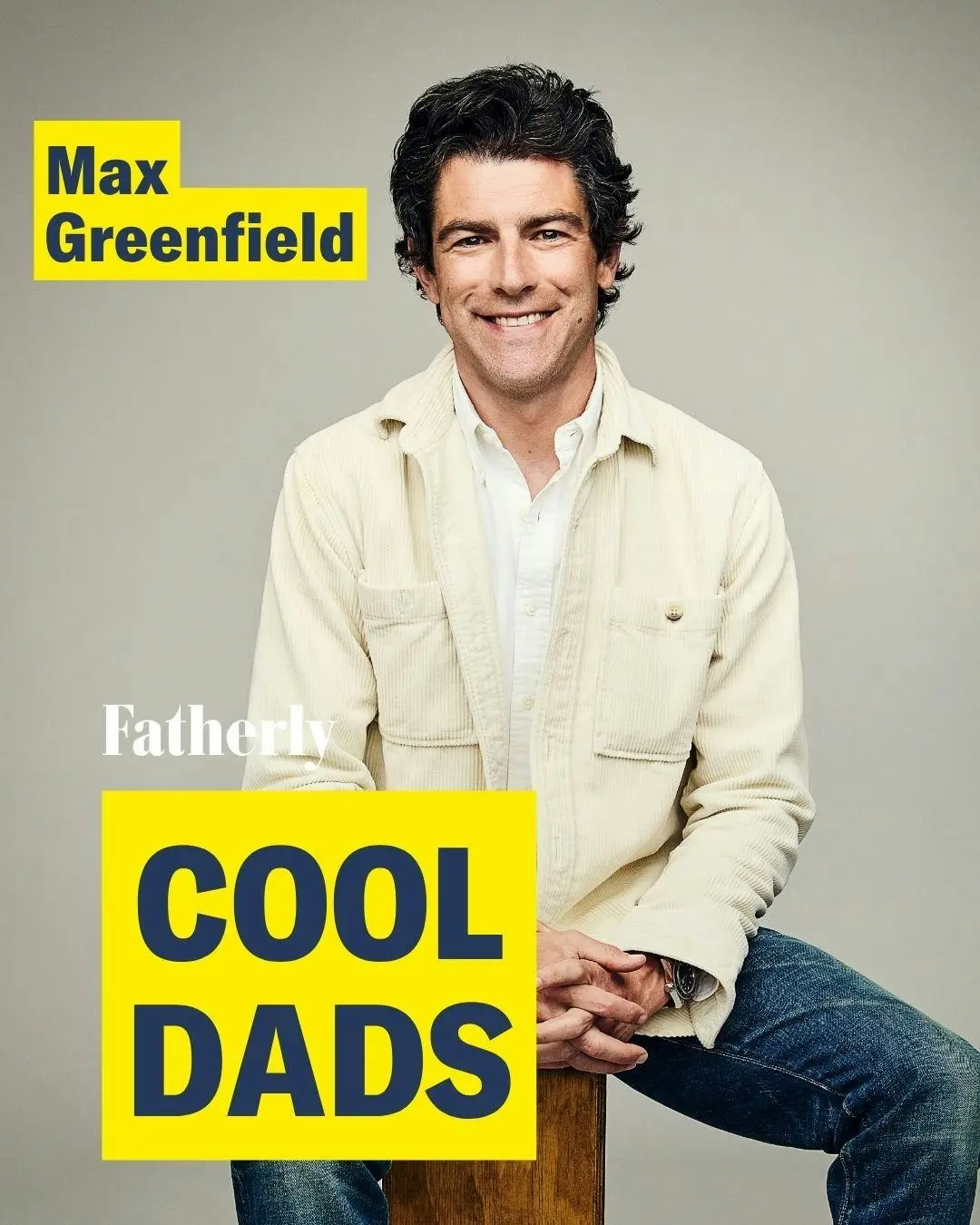
The first thing audiences may notice about the central father figure in Netflix’s upcoming teen drama Don’t Say Good Luck is that his hair looks immaculately styled. That detail, however, is merely the introductory marker of the aspirational cues projected by the character, brought to life with nuance by actor Max Greenfield. In this delicate balancing act of a family drama that shifts effortlessly between sharp humor and emotional devastation, Greenfield’s character is tasked with an immense load: managing a demanding career, raising elementary-aged twins, supporting a deeply feeling teenager, and grappling with his wife’s sudden cancer diagnosis.
While the immense weight of these life-altering events frequently leaves him feeling unmoored, the character never stumbles blindly through his adversity. Instead, in nearly every frame, he consciously discovers pathways to remain an emotionally available parent and an empathetic, steadfast partner. For Greenfield, stepping into this role required very little theoretical heavy lifting when it came to understanding the emotional landscape of the patriarch.
Reflecting on the production, Greenfield notes that a tremendous portion of his own personal identity bled into the performance. The connection he felt to the material was instantaneous and profound, driven largely by real-world parallels in his own family life. With a daughter currently navigating high school who shares mutual acquaintances with the film’s young lead, Sunny Sandler, Greenfield found that the authentic realities of adolescent social circles and parental support resonated deeply with his everyday existence both on and off the stage.
Finding the Truth in Parental Roles
In a candid discussion about the film, balancing patience, and confronting the inevitable anxieties of modern parenting, Greenfield opened up about the emotional toll of the project, the blurring lines between his real life and his cinematic counterpart, and even the heavily debated culinary landscape of Los Angeles bagel shops.
When asked about his immediate reaction to viewing the completed film and the heavy emotional response it evokes, Greenfield admits that the promotional press cycle has proven to be a moving target for his tear ducts. As television networks and interviewers frequently play preview clips before diving into conversations, he finds himself constantly requesting brief pauses to collect his composure.
The intensity of the film stems from its grounded honesty, leading many viewers to wonder just how much of Greenfield’s actual parenting style mirrors the character on screen. According to the actor, the overlap was the primary catalyst for his involvement in the project. Having never worked on a project associated with Adam Sandler, Greenfield was acutely aware of the legendary reputation that Sandler’s sets hold for cultivating supportive, positive environments. His primary objective upon joining the production was ensuring that Sunny Sandler—Adam Sandler’s daughter and the film’s lead—had an exceptionally positive, comparable experience working alongside an adult co-star.
Greenfield admits that while he questioned his technical acting choices at times during the shoot, he possessed an unwavering confidence in his fundamental ability to inhabit the role of a father. Knowing the social ecosystems of modern teenagers, understanding the local school geography, and sharing mutual connections within his daughter’s peer group meant that communicating openly and supportively with a young lead came naturally to him. He did not have to search for the right notes to strike because the environment felt entirely familiar.
This sense of familiarity extended directly to his younger castmates as well. Working alongside the two young boys portraying the twins in the film offered a unique brand of unscripted chaos. Greenfield notes that the young actors were rarely "acting" in the traditional sense, instead channeling their natural energy into running around the set. Although the twins are slightly younger than Greenfield’s own son, the actor drew heavily from his recent real-world experience coaching his son’s basketball team. Wrangling a pack of energetic children, keeping them engaged, and directing their collective focus served as ideal preparation for managing the youthful dynamism on the film set, ultimately injecting a vibrant sense of fun into the collaborative process.
Heavy Conversations and Cinematic Authenticity
That authentic chemistry laid the groundwork for some of the film’s most devastating dramatic encounters. Later in the narrative, the story pivots toward a profoundly raw moment between the father and his teenage daughter, a scene that strikes close to home for anyone who has walked through the corridors of medical trauma during adolescence. The dynamic mirrors the lived experiences of viewers who watched loved ones battle severe illness during their formative high school years—moments where emotional isolation threatens to overwhelm the household.
One particular sequence, set quietly inside the confines of a car, captures a masterclass in understated grief. When the daughter quietly asks her father if he is okay, he turns the question back onto her. Both characters look at one another and offer the same, devastating response: "No."
Greenfield reveals that the creation of that pivotal scene was the result of extensive, collaborative dialogue with director and co-writer Julia Hart, alongside co-writers Laura Hankin and Jordan Horowitz. The creative team maintained an open dialogue, generously incorporating Greenfield’s input as they shaped the emotional apex of the father-daughter relationship. After reviewing earlier cuts of the film and analyzing the narrative trajectory leading up to that moment, the team exchanged multiple script drafts before collectively locking in on the final approach.
The core objective was to honor the emotional buildup that preceded the scene without offering cheap narrative resolutions or artificial fixes. The creators deliberately avoided presenting a neat Hollywood answer to an impossible situation, choosing instead to let both characters fully inhabit and feel the weight of their collective pain. Greenfield recalls that filming the sequence was an intensely heavy, overwhelming experience that left a lasting impression on the entire cast and crew.
The Modern Parenting Paradox and LA Bagel Culture
Given that his character operates a bagel shop within the narrative, the conversation inevitably turned toward the actor’s personal culinary preferences. Exhibiting a health-conscious, quintessential Los Angeles sensibility, Greenfield offers up a couple of distinct orders depending on his mood. His classic choice leans toward an everything bagel topped strictly with cream cheese, fresh onions, tomatoes, and lox—a combination he describes as a fail-safe masterpiece. Alternatively, when seeking a lighter option, he opts for a spread of light cream cheese or a thoughtfully curated hummus paired with crisp, fresh vegetables, seasoned meticulously with dressing, salt, and pepper.
The discussion of local staples also touched upon the internet-famous Courage Bagels in Los Angeles. Initially deterred by the legendary, mile-long lines wrapping around the block, Greenfield was eventually convinced by his daughter to brave the wait. Sampling the establishment’s vegetable-forward creations left the actor thoroughly impressed, validating the massive public hype surrounding the local landmark.
Beyond culinary debates, the core thematic undercurrent of Don’t Say Good Luck addresses the delicate art of disclosure to children—navigating the fine line between what information should be shared, what should be withheld to protect them, and the eventual pitfalls of keeping secrets when transparency is desperately needed.
Reflecting on his personal approach to parenting, Greenfield believes he has successfully fostered an environment where his children feel comfortable broaching difficult subjects on their own terms. By allowing his kids to digest information at their own pace and keeping lines of communication fluid and ongoing, he has observed that they are significantly more resilient when confronting complex or frightening concepts than he initially anticipated.
However, as his children have grown into teenagers—with a 16-year-old daughter and an 11-year-old son—Greenfield’s overarching parenting philosophy has undergone a radical transformation. Gone are the predictable stages of baby and elementary school management, replaced by a phase defined by frequent mistakes and an ever-shrinking margin for error.
The actor points out the constant internal struggle of distinguishing between necessary guidance and the unhealthy impulse to control situations simply to soothe his own parental anxieties. Operating from a fear-based framework, he notes, is an inefficient and counterproductive zone for any parent.
This realization became starkly evident when his daughter recently earned her driver’s license. Confronted with the terrifying reality of watching his teenager drive away to volleyball practice alone for the first time, Greenfield faced a distinct brand of genuine, tangible fear—the kind of primal anxiety that forces a parent to confront the fragility of the world head-on. By stripping away the everyday, generalized worries regarding work and the distant future, Greenfield discovered a newfound clarity. Sitting in the passenger seat while his daughter navigated the road provided a sobering benchmark: real fear is specific, immediate, and appropriate to the situation, enabling him to cast aside the background noise of everyday anxiety and appreciate the difference between actual peril and imagined dread.