
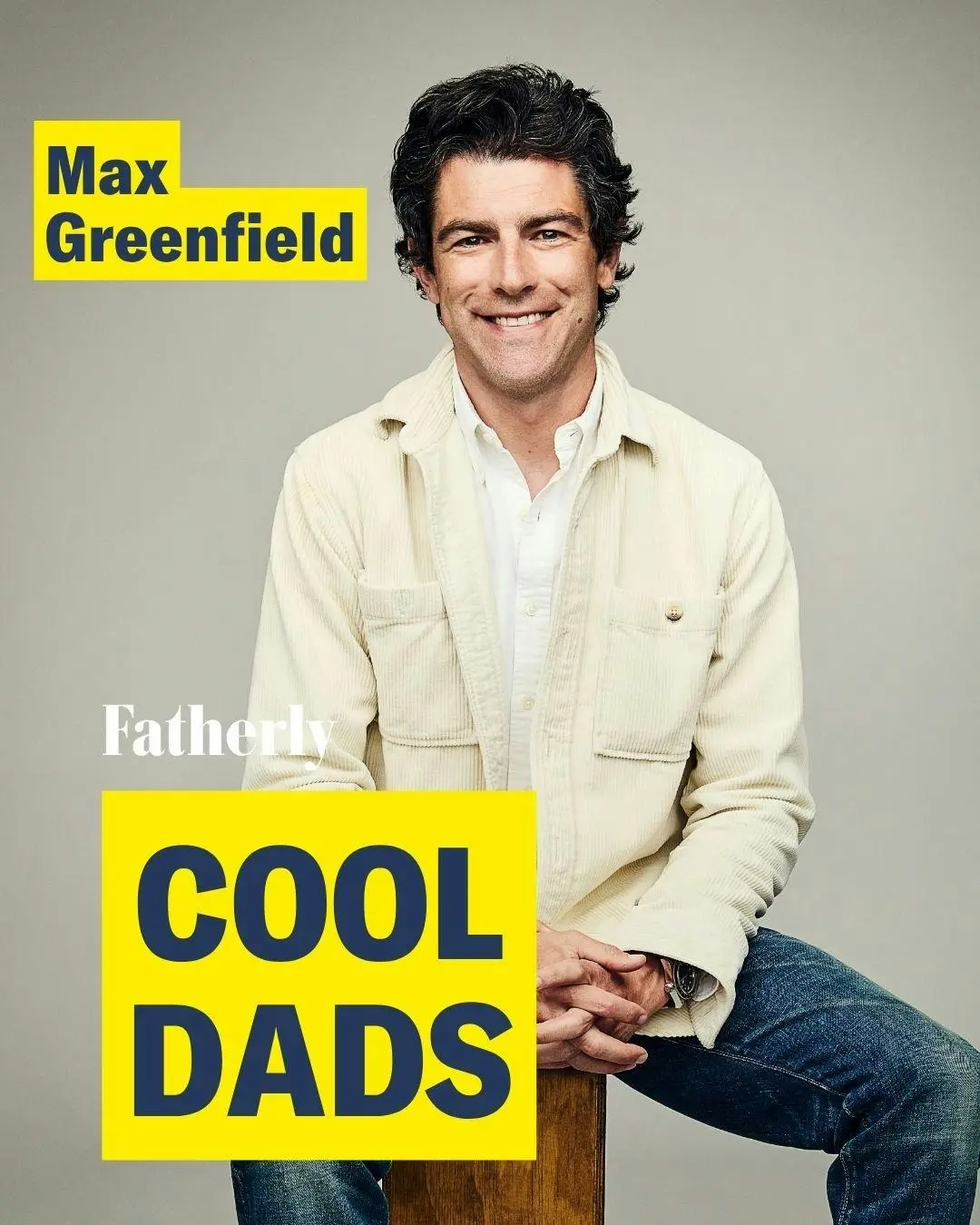
The first thing viewers might notice about the father figure in Netflix’s upcoming teen drama Don’t Say Good Luck is that his hair looks immaculately styled. That detail, however, is merely the opening marker of the aspirational yet grounded cues radiated by the character played by Max Greenfield. In this deeply funny and undeniably tear-jerking family drama, Greenfield’s character is tasked with navigating an overwhelming landscape: juggling professional demands, raising elementary-aged twins, supporting a teenager with big emotions, and coming to terms with his wife’s sudden cancer diagnosis.
While the immense weight of life’s curveballs occasionally leaves him feeling off-kilter, Greenfield’s character refuses to stumble blindly through the crisis. In scene after scene, he models what it means to be a truly emotionally available parent and an unwavering partner, striking a chord that resonates deeply with anyone who has ever stared down a family medical emergency.
According to Greenfield, channeling that specific brand of parental empathy came naturally. “There’s so much of me that’s in that movie,” he explained in a recent interview. “I felt so close to what we were doing.”
That profound sense of connection is hardly accidental. In his personal life, Greenfield’s daughter is roughly the same age as the film’s lead actress, Sunny Sandler. Furthermore, the two teenagers share mutual acquaintances, and Greenfield found himself intimately familiar with the unique ecosystem of high school life as navigated through a teenager’s eyes—and through theatrical stages.
Reflecting on the production, Greenfield noted that while he harbored typical actorly doubts about his performance, his confidence as a father anchored him throughout the shoot. He had heard that sets run by Adam Sandler are famously supportive and positive, and he wanted to ensure that Sunny had a wonderful, nurturing environment.
“I didn’t know if I was going to be very good in the movie as an actor, but I was like, ‘I think I know how to be the dad,’” Greenfield recalled.
That natural paternal instinct extended beyond his on-screen daughter to include the two young boys playing the twins in the film. Because the young actors were constantly running around and behaving like regular kids rather than hardened professionals, Greenfield found himself drawing directly from his real-world experiences. Having recently coached his own son’s basketball team, he was well-versed in the chaotic art of wrangling energetic youngsters, getting them to focus, and keeping them engaged. That background made managing the young actors effortless and injected genuine fun into the dynamic of the film.
Everything on set felt remarkably close to home for the actor. Whether he was interacting with Sunny or corralling the twins, the relationships mirrored his everyday reality, giving the emotional beats of the story an authentic, lived-in feel.
That authenticity culminates in several intensely dramatic moments later in the film, including a pivotal scene in a parked car between Greenfield’s character and his teenage daughter. In the sequence, after the daughter asks, “Are you okay?” and the father responds with, “Are you okay?”, both characters eventually admit, “No.”
The scene has already begun generating buzz for its raw emotional power, striking a chord with viewers who have lived through similar real-world traumas. Greenfield noted that crafting that specific moment was a collaborative and heavily deliberated effort alongside the film’s director and writer, Julia Hart, who co-wrote the script with Laura Hankin and Jordan Horowitz.
The creative team held extensive discussions about how to handle the emotional peak of the father-daughter relationship. After sending various drafts back and forth, the group collectively settled on a script that honored everything that had been built up in the narrative while setting the stage for the emotional fallout that follows. Greenfield emphasized that the goal was deliberately not to provide a neat television fix or a quick answer to an impossible situation, but rather to let both characters—and the audience—fully feel the heavy weight of the moment. Filming the sequence proved to be an intensely heavy and emotionally taxing experience for the cast.
Within the narrative fabric of Don’t Say Good Luck, Greenfield’s character operates a bagel shop, a detail that naturally invites questions about his personal culinary preferences. Reflecting his years living in Los Angeles, Greenfield admitted his tastes have evolved toward a healthier, decidedly West Coast profile, offering two distinct go-to orders.
His first choice is a classic: an everything bagel layered simply with cream cheese, onion, tomato, and lox—a combination he describes as a foolproof favorite. His second preference leans toward a lighter spread, utilizing either a carefully selected hummus or a light cream cheese accompanied by fresh vegetables, dressed with the right seasoning, salt, and pepper.
Greenfield also shared his recent discovery of Courage Bagels, a notoriously hyped Los Angeles establishment known for its miles-long queues. Initially reluctant to wait in line, he and his daughter eventually decided to brave the crowd, sampling a vegetable-heavy creation that left the actor thoroughly impressed.
Beyond the emotional trials of illness and family dynamics, Don’t Say Good Luck dives headfirst into another universal parenting dilemma: disclosure. The film explores the delicate boundary of what information parents choose to share with their children, what secrets are kept to protect them from harsh realities, and the inevitable fallout when protective withholding backfires.
For Greenfield, navigating this tightrope in real life requires a deliberate strategy centered around open-ended communication. Rather than forcing heavy conversations, he aims to cultivate an environment where his children feel safe bringing topics up on their own terms. By easing into difficult discussions based on the specific questions his children ask, he allows the dialogue to evolve naturally over time. As a result, he has found that his children are far more comfortable processing information that adults often fear will prove confusing or frightening, simply because they are allowed to absorb it at their own pace.
Now past the foundational years of baby and elementary school parenting, Greenfield finds himself looking at family life through a radically different lens with a 16-year-old daughter and an 11-year-old son. The transition has brought a humbling realization: he is making more mistakes than ever before.
The dividing line between exercising parental responsibility and knowing when to let go grows thinner by the day. Greenfield admits to wrestling with the temptation to control his environment in order to feel safe amidst the terrifying unknowns of raising teenagers, acknowledging that operating from a fear-based parental mindset is ultimately counterproductive.
That fear became painfully tangible when his daughter recently earned her driver’s license. Standing in the driveway, Greenfield and his wife found themselves grappling with the surreal reality of letting their teenager drive independently to routine destinations like volleyball practice. Stripping away the parental panic reveals a logical progression: she practiced, worked toward the goal, passed her legal tests, and earned the right to drive. Yet the emotional shift remains jarring.
During the process of teaching his daughter to drive, Greenfield experienced a profound realization about the nature of anxiety. Sitting in the passenger seat while his teenage daughter navigated live traffic, he recognized that his everyday worries about the future, work, and general life stressors were largely illusory. True fear, he realized, looks entirely different. It is heavy, tangible, and immediate—akin to encountering a shark in the water.
Recognizing what genuine, situation-appropriate fear feels like has ultimately provided Greenfield with a clarifying perspective on anxiety. Outside of those rare, high-stakes moments, he is able to step back, evaluate his worries, and recognize that the rest of his daily anxieties are simply not real.