
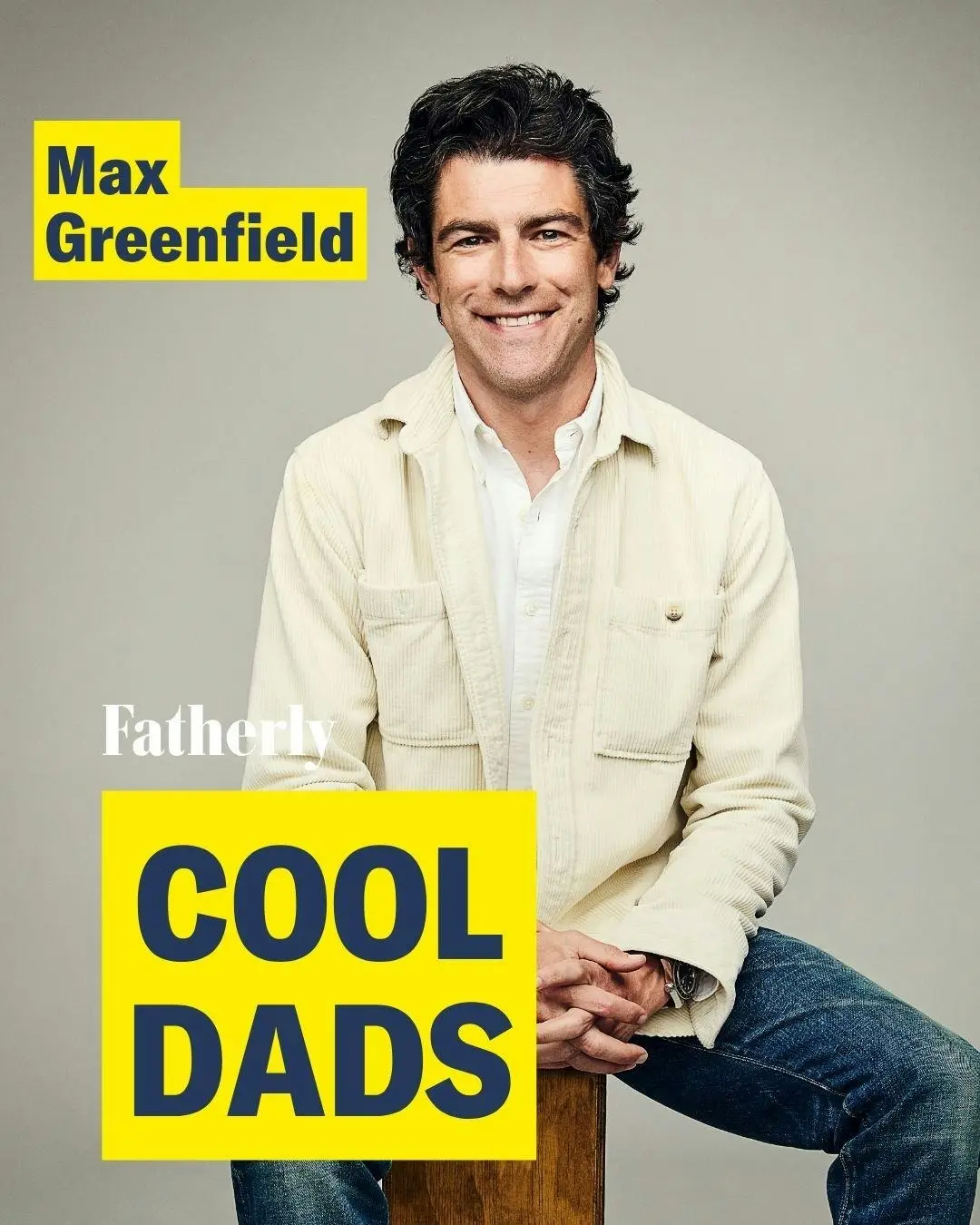
The first thing viewers might observe about the father figure in Netflix’s upcoming teen drama Don’t Say Good Luck is that his hair looks immaculately styled. Yet, that polished exterior is merely the threshold of the aspirational cues projected by the character, brought to life by actor Max Greenfield. In this deeply moving, emotionally resonant family drama that seamlessly balances moments of levity with genuine heartbreak, Greenfield’s character navigates a complex labyrinth of responsibilities. He must effortlessly juggle a demanding professional life, the daily chaos of raising elementary-aged twins, the profound emotional turbulence of a teenager, and the devastating reality of his wife’s cancer diagnosis.
While the immense weight of life’s unpredictable challenges occasionally knocks him off balance, this particular cinematic father never simply bumbles his way through the crisis. In scene after scene, he actively discovers meaningful ways to anchor his family, proving himself to be a reliably present, emotionally available parent and partner.
Reflecting on the role, Greenfield admits that tapping into the emotional core of the character proved to be remarkably straightforward. Speaking candidly about the project, he notes that a substantial portion of his own personality and lived experience bled directly into the movie. That deep sense of personal alignment was the primary catalyst that drew him to the script in the first place, establishing an instant familiarity with the emotional landscape the filmmakers were trying to capture.
This connection likely stems from Greenfield’s own family dynamics. Much like his character on screen, Greenfield is a parent to a teenager navigating the complex halls of high school. In a delightful coincidence of real life mirroring art, his daughter shares mutual friends with the film’s young lead actress, Sunny Sandler. Furthermore, his daughter’s firsthand experiences performing onstage and navigating the social hierarchy of modern high school life provided Greenfield with an intuitive understanding of the environment, making the emotional stakes of the script resonate on a profoundly personal level.
For Greenfield, stepping onto the set did not require a dramatic psychological transformation as much as it called for leaning into his everyday reality as a father. When discussing the collaborative process behind the scenes, he recalls his initial uncertainties regarding his performance, admitting that while he questioned his technical prowess as an actor for this specific material, he felt entirely confident in his ability to embody the role of a supportive father. Having spent years managing the everyday unpredictability of raising children, the paternal instincts required for the role felt entirely natural.
This effortless transition into the family dynamic was further aided by the youthful energy of the actors portraying his younger children. The two young boys cast as the twins brought an authentic, unscripted spontaneity to the production, rarely feeling as though they were acting at all as they bounced around the set. Greenfield found that his recent experience coaching his own son’s basketball team—an exercise in wrangling, encouraging, and focusing a large group of energetic children—served as exceptional preparation for managing the youthful chaos on set. That background not only made the scenes function smoothly but also injected a genuine sense of fun into the grueling filming process, reinforcing the feeling that the fictional family dynamics closely mirrored his own domestic life.
Among the narrative’s most powerful sequences is a dramatically heavy scene arriving later in the film, one that explores the raw, unfiltered aftermath of a devastating family health crisis. The emotional weight of the moment struck a chord with audiences who have lived through similar circumstances, echoing the real-life trauma of watching a parent battle a serious illness during formative adolescent years. The pivotal car scene—where Sunny Sandler’s character softly asks if her father is okay, leading to an equally vulnerable counter-question and a mutual, heart-wrenching admission that neither of them is doing alright—stands as a masterclass in understated emotional honesty.
Bringing that sequence to life required extensive collaboration between Greenfield and the creative team behind the camera. Director and writer Julia Hart, alongside co-writers Laura Hankin and Jordan Horowitz, engaged in numerous deep discussions with the actor, maintaining an open-door policy regarding his creative input. As the production evolved and the preceding narrative stakes became clearer, the creative team exchanged multiple drafts of the scene back and forth, meticulously refining the dialogue until they struck the exact right emotional chord. The overarching goal was to avoid offering a neat, artificial Hollywood resolution or an easy fix to an impossible situation, choosing instead to honor the emotional groundwork laid by both characters. When the cameras finally rolled on that particular day of shooting, the atmosphere on set was undeniably heavy, capturing a tangible grief that resonated deeply with everyone involved.
Beyond the emotional gravity of the family drama, Greenfield’s character also operates a local bagel shop within the narrative, prompting inevitable curiosity about the actor’s genuine culinary preferences. Embracing his status as a resident of Los Angeles with refined tastes, Greenfield confesses to holding a deep appreciation for the city’s robust and often underrated bagel culture. When pressed for his definitive order, he offers two distinct variations depending on his mood. The first is a classic, foolproof favorite: an everything bagel generously layered with cream cheese, fresh onion, tomato, and lox—a combination he notes can never possibly miss.
The alternative order leans into a lighter, health-conscious preference featuring either a light cream cheese spread or a high-quality hummus paired with crisp, fresh vegetables, enhanced with the proper dressing, salt, and pepper. This culinary enthusiasm recently led him to brave the notoriously long lines at Courage Bagels, a heavily hyped Los Angeles establishment. Accompanied by his daughter after initially balking at the wait time, Greenfield sampled their vegetable-forward creation, describing the experience with unadulterated enthusiasm as genuinely unbelievable.
Central to the narrative themes of Don’t Say Good Luck is the delicate, often agonizing dance of parental disclosure—specifically determining what information to share with children, what details to withhold to protect them, and the unintended consequences that arise when well-meaning parents attempt to shield their kids from harsh realities. When asked how he navigates this intricate balance in his personal life, Greenfield emphasizes the importance of cultivating an environment of trust. Rather than forcing heavy conversations, his approach centers on creating a safe space where his children feel entirely comfortable bringing difficult topics to him on their own terms.
By allowing his children to guide the pace of the discussion and easing them into complex topics gradually as their curiosity dictates, Greenfield has found considerable success in keeping communication channels permanently open. As a result, he has observed that his children display a remarkable level of comfort when confronting information that might otherwise seem confusing or frightening, precisely because they were permitted to process it at their own natural speed.
This philosophy on communication has evolved significantly as Greenfield has transitioned away from the demanding trenches of toddler and elementary school parenting into the complex world of adolescence, with children now aged 16 and 11. Acknowledging that his parenting style is far from infallible, he admits to making substantially more mistakes as the stakes grow higher. The once-clear boundary between maintaining responsible oversight and knowing when to let go shrinks visibly with each passing day, forcing him to confront the parental temptation to exert absolute control simply to alleviate his own fears about a frightening world. Operating from a place of fear-based parenting, he notes, is an inherently counterproductive zone.
That reality became starkly apparent when his teenage daughter recently earned her driver’s license. Reflecting on the initial anxiety shared by both him and his wife regarding everyday logistics—such as whether she would simply drive herself to volleyball practice—Greenfield highlights the mental shift required to strip away irrational panic. By recognizing that his daughter had diligently prepared, practiced, and legally passed her driving test, he realized that anxiety was simply the natural byproduct of a child growing up.
Drawing a sharp distinction between everyday generalized anxiety about the future and the visceral, unmistakable terror of sitting in the passenger seat while his newly licensed teenager navigates active traffic, Greenfield views the latter as a healthy, grounded response to a tangible situation. Encountering that level of real-world fear has ultimately given him a clearer perspective, allowing him to dismiss lesser worries about the future as background noise. Equipped with that understanding, Greenfield continues to balance his demanding career with the ongoing, beautifully imperfect journey of parenting teenagers, bringing both empathy and authenticity to the screen and to his own home.