
Just weeks after its initial launch, Meta is moving swiftly to solidify its position in the consumer artificial intelligence space. At the company’s annual Connect event held in Menlo Park on Wednesday, CEO Mark Zuckerberg made it clear that the social media giant is placing its largest bet yet on consumer-facing AI through its new personal agent, Muse.
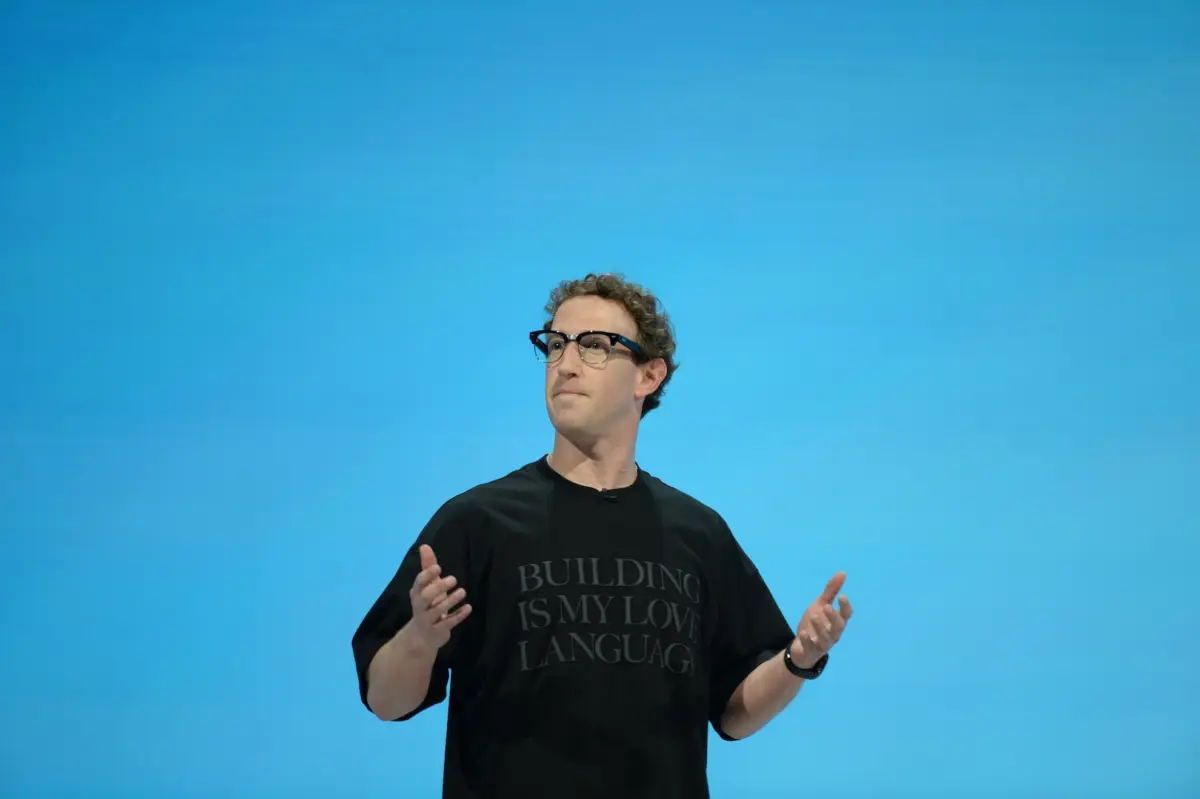
Taking the stage in khakis and a black T-shirt bearing the phrase "Building is My Love Language," Zuckerberg framed the software as the cornerstone of Meta’s future strategy. The Muse agent, whose physical avatar has been dubbed "Jolly" by the executive team, is engineered to manage everyday administrative and digital chores by seamlessly connecting with a user’s existing applications and services, including calendars and email platforms. During the keynote address, Meta introduced a sweeping array of new integrations and capabilities designed to embed Muse even deeper into the daily workflows of consumers. If users choose, the AI will be accessible across a multitude of devices, including Meta’s proprietary line of smart glasses.
Powered by Muse Spark—Meta’s custom multimodal AI model explicitly built for agentic work—the software was launched in early September. The company has consistently pitched Muse as a more accessible alternative to competing agentic platforms, aiming to provide a helpful assistant that immediately takes over the tedious busywork of daily life from the moment of activation.
"The centerpiece of our vision for what we’re building is Muse," Zuckerberg told the audience during his opening remarks. "In the coming years, I expect that Muse is going to grow into the personal superintelligence that billions of people around the world are going to use to accomplish their goals and improve their lives."
Beyond personal productivity, Zuckerberg outlined a financial vision where Muse ultimately generates revenue for both its users and, eventually, Meta itself. The company plans to encourage widespread adoption by offering the core agentic capabilities for free across a massive volume of tokens, with the long-term expectation of generating profit by collecting modest transaction fees.
"We’re standing behind this by making Muse free for a huge number of tokens, with the expectation that over time we will profit by taking a small fee from transactions," Zuckerberg explained.

Muse Gets Its Own Digital Avatar
In one of the more visually striking announcements of the event, Meta revealed that users will soon be able to conjure a distinct digital avatar for their specific AI agent and engage in real-time video chats with it. Powered by a newly developed AI model called Muse Realtime Avatar, this feature aims to give Meta’s previously faceless software a concrete face, body, and voice, substantially increasing its personal feel.
Demonstrated live on stage at Connect, the feature carries subtle echoes of Meta’s broader metaverse ambitions. Users will have the ability to maintain live, conversational interactions with the avatar, assigning tasks and asking questions as if speaking to a human assistant.
Simultaneously, Meta announced that Muse is being deeply integrated into its popular smart glasses lineup. This integration will enable users to communicate with their agent entirely hands-free by speaking directly to their eyewear. Activated via a designated wake word, the agent will be capable of guiding users through personalized workout routines, logging daily meals, scheduling appointments, and assisting with the purchase of products seen in the real world. Meta noted that Muse is designed to operate quietly in the background, executing requests and checking back in with the user once tasks are completed. While a precise rollout date has not been finalized, the company indicated that the smart glasses integration is slated to arrive in the coming months.
Soon, You’ll Be Able to Let Muse Run Your Mac
Meta also provided deeper details regarding the expansion of Muse into desktop environments, specifically targeting Apple’s macOS. Building on previous announcements regarding the agent’s arrival on Mac computers, Wednesday’s presentation showcased how users will be able to delegate complex tasks to the software, allowing Muse to operate desktop applications much like similar tools developed by competitors like OpenAI and Anthropic.
"You can have it help you run your small business, or just get work done for you," said Meta’s Chief AI Officer Alexandr Wang during the keynote presentation. "You can walk away from your computer and it keeps working for you on all the jobs you lined up."

Muse Will Get Its Own Email Address
Because Muse is designed to function continuously in the background, Meta has recognized the necessity of giving the agent its own dedicated email address. Wang announced that this capability is currently in development and will launch soon, though a specific deployment timeline was withheld. Users will be able to directly include Muse on active email threads or forward messages to the agent so it can manage correspondence on their behalf.
To facilitate commerce, Meta has secured high-profile partnerships with major fintech and payments platforms, including Stripe and Shopify, reinforcing the company’s view of Muse as a powerful tool for online shopping. According to Wang, Muse can access the entire Shopify product catalog agentically, utilizing Lync and Shop Pay to facilitate purchases across the internet. Meta has also expanded its payment support to include PayPal.
These integrations are supported by a new wave of partnerships with prominent retailers such as Best Buy, Gap, Sephora, Walmart, and Wayfair. Muse will connect directly with these retail applications, alongside travel booking services like Expedia and, in the near future, Instacart. Other corporate connectors unveiled at the event include GitHub, Granola, and Notion.
In an effort to court small businesses and independent developers, Meta recently opened its ecosystem to allow external builders to create their own custom connectors. Wang reported that the platform received more than 1,500 applications in less than a week.
"I think this could be a generational opportunity to start building for a new platform as it takes off, and the response so far has been really great," Wang said.