
As the global stock market continues to scale new heights, investors are once again grappling with an old and familiar anxiety: the creeping suspicion that a record-breaking valuation must inevitably precede a catastrophic crash. This current economic boom is fueled largely by the frenzied rise of Artificial Intelligence, drawing comparisons to past technological manias and leaving many retirement-conscious savers wondering if their nest eggs are built on a house of cards.
For those who manage to tune out the daily economic drama, the modern AI narrative can be broken down into rapid infrastructure investments, massive corporate valuations, and shifting expectations regarding future workplace productivity. Yet, the underlying worry among investors remains that the mania is moving too fast and reaching too high, paving the way for a modern equivalent of the early 2000s dot-com crash. For veterans of the financial landscape—such as financial commentators who navigated the tech boom that spurred early careers before threatening livelihood and citizenship applications—these boom-and-bust cycles are a well-worn script.

Addressing these recurring anxieties has become a central theme for long-term retirement advocates. Recently, discussions centered on the intersection of market bubbles and psychological resilience have been taken to live events, including the Camp FI Midwest gathering, with broader presentations scheduled for upcoming financial literacy conferences such as the Bogleheads event in November.
Will the AI Bubble Ruin Our Retirement?
Reaching milestones like two decades of retirement brings a certain comfort with long-term financial planning, yet the foundational questions from peers often remain remarkably consistent. Friends and observers frequently voice deep concerns about how anyone can remain retired and sleep soundly amid a constant backdrop of global turmoil.

When people consume a steady diet of financial news, the list of existential threats feels perpetually overwhelming. In the current climate, worriers point to turbulent geopolitical figures like Donald Trump and Vladimir Putin, stubborn inflation eroding purchasing power, towering national debt levels, and simmering international conflicts in Ukraine and the Middle East. All of these factors are frequently framed as catalysts tipping the global economy toward imminent destruction.
Interestingly, these exact fears are far from novel. When a similar question was posed to long-retired savers back in 2006, the worries were remarkably parallel, albeit tailored to a different decade. Two decades ago, the public anxiety centered on leaders like George W. Bush, Saddam Hussein, and Osama Bin Laden, alongside ongoing conflicts in Iraq, persistent national debt, inflation, and an overvalued housing market rather than an AI-driven one. Back then, widespread panic focused on the outsourcing of jobs to India and China, alongside fierce debates over Peak Oil—the theory that fossil fuel consumption would outpace supply and plunge industrial civilization into darkness.

Looking back at the twenty-year trajectory that followed those 2006 anxieties reveals a surprising reality. While the world did experience the Great Financial Crisis—the most severe economic downturn since the Great Depression, born of irrational exuberance in housing prices and complex mortgage leverage—the broader historical view paints a different picture. A standard investment portfolio weathering both the 2008 crash and the subsequent 2020 pandemic volatility still multiplied significantly over the long haul.
Simultaneously, the broader human condition improved by measurable metrics. Extreme poverty rates globally dropped dramatically over a twenty-year span, and infant mortality rates were cut in half. Clean energy adoption surged as solar panels plummeted in price, making solar generation a dominant source of new power capacity worldwide. Pure electric vehicle sales transitioned from a statistical anomaly to a significant percentage of global automotive sales, demonstrating that technological adaptation consistently outpaces doomsday predictions.

Prosperity Comes from Productivity
This historical resilience points to a fundamental economic truth that financial fear-mongers frequently overlook: true prosperity is not derived from the volatile movements of the stock market or the complex machinery of the financial system, which are ultimately human constructs represented by numbers on digital screens.
Instead, genuine prosperity stems from productivity. The mechanics of global capitalism are inherently choppy, subject to wild emotional swings and periodic corrections. However, beneath the turbulent surface of the financial markets, real people continue to perform real work, solve complex logistical challenges, and invent tangible tools that enhance human capability.

If a financial system experiences a systemic failure because market participants lose faith in digital valuations, society possesses the capacity to reset the metrics and return to productive labor—a mechanism successfully deployed during the 2008 financial crisis and numerous historical precedents prior. The underlying infrastructure of human productivity, innovation, and standard of living remains intact regardless of daily market fluctuations.
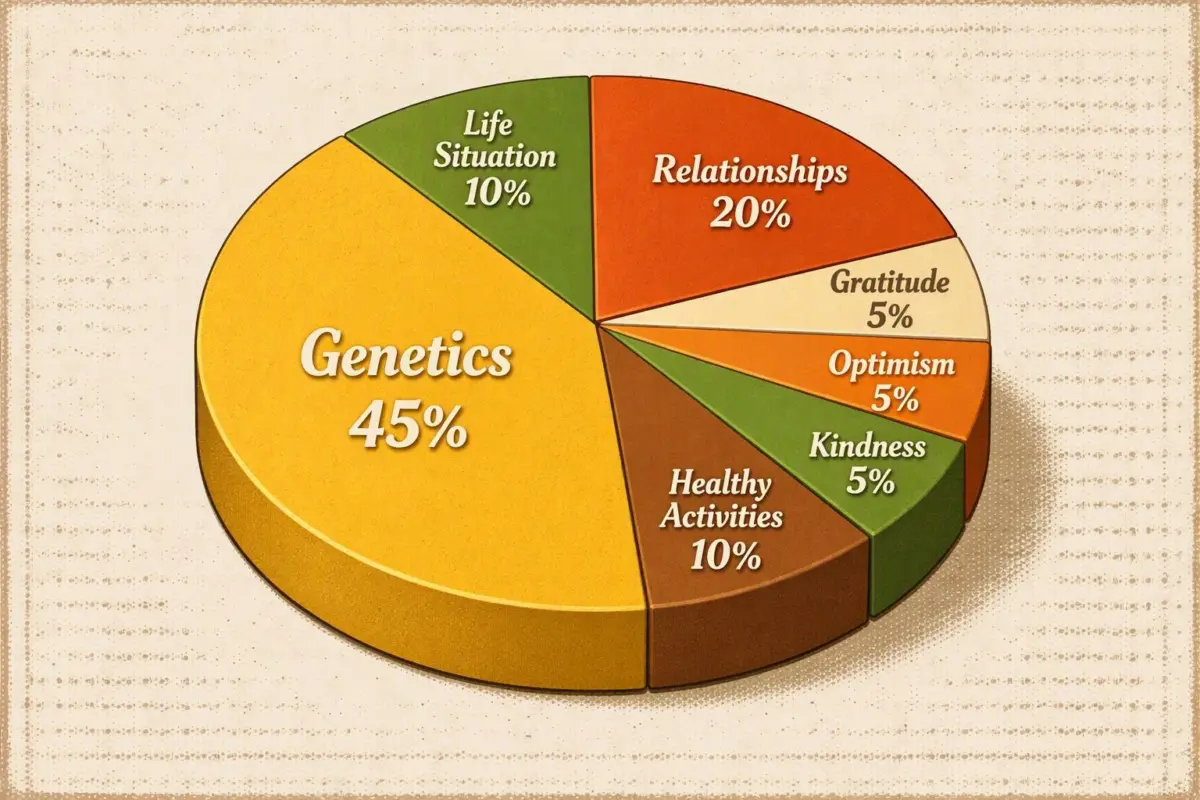
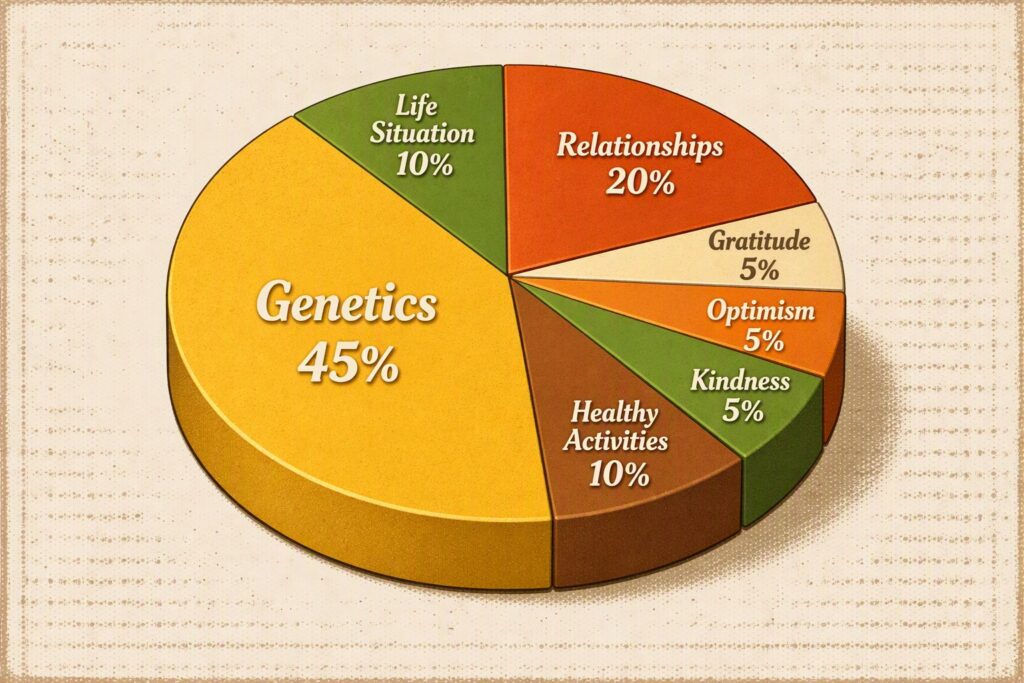
Beyond economic output, human well-being relies heavily on factors far removed from portfolio balances. Once a society achieves a baseline standard of living that fulfills basic survival needs—a threshold crossed decades ago in the developed world—further increases in wealth yield diminishing returns regarding overall happiness. Psychological and lifestyle factors, including strong interpersonal relationships, gratitude, optimism, and engagement in physical activity, occupy a far greater share of personal fulfillment than investment returns.

Understanding and Managing Fear
Despite historical evidence demonstrating that long-term economic trends skew positive, financial anxiety persists even among experienced savers and early retirees. This phenomenon is largely rooted in human evolutionary biology. Humans function fundamentally as danger-detection machines, an adaptive trait designed to protect ancestral populations from immediate physical threats.
When acute physical dangers are mitigated by modern civilization, this vigilance does not simply switch off. Instead, the brain shifts its focus to new targets, moving the goalposts from physical survival to food scarcity, social exclusion, career security, and eventually financial optimization. In advanced stages of wealth accumulation, this anxiety can manifest as hyper-focus on tax strategies, estate preservation, or mandatory government withdrawals from retirement accounts.

Combating this pervasive background fear requires conscious self-awareness and an understanding of personal history. Many individuals inherit scarcity mindsets from parents who lived through generational economic hardships, or they harbor anxieties stemming from past personal trauma. Recognizing that these emotional responses are often echoes of the past rather than accurate assessments of the present is a critical first step.
Taking decisive action serves as an effective antidote to fear. By engaging directly with unfamiliar challenges—whether through financial planning, personal projects, or lifestyle changes—individuals build resilience and confidence. Furthermore, curating one’s mental diet by minimizing exposure to sensationalized daily news cycles helps reduce unnecessary psychological distress. Shifting focus toward constructive behaviors, physical health, and a community of optimistic, productivity-oriented peers fosters a balanced perspective on the future.

The AI Era as an Ongoing Experiment
Approaching major societal shifts through the framework of experimentation rather than existential dread alters the entire dynamic of technological progress. Viewing developments like the current artificial intelligence wave as a grand experiment transforms a source of anxiety into an object of fascination.
Rather than succumbing to doom-scrolling and pessimistic headlines, examining the underlying drivers of technological innovation reveals both significant potential and clear economic shifts. Artificial intelligence functions essentially as a cognitive tool designed to enhance efficiency and productivity. Much like the invention of the internet or the proliferation of mobile smartphones, AI increases output while simultaneously displacing certain administrative and technical roles.
While productivity technologies historically concentrate financial rewards among capital owners and shareholders, they also lower the cost of services and catalyze the creation of entirely new industries. Artificial intelligence represents another operational tool in the long history of human innovation—an opportunity to adapt, learn, and apply rational decision-making rather than yield to reactionary fear.