
When it comes to interior design, dividing an open-concept layout or carving out a functional nook without putting up permanent walls has long presented a creative challenge. Fortunately, the room divider has evolved far beyond its humble origins as a basic utilitarian screen. Today’s functional partition wall alternatives serve as striking decor items in their own right, offering homeowners a seamless blend of spatial definition and artistic expression.

Whether you are looking to separate a sleep and play area in a child’s bedroom, delineate a home office in a bustling studio apartment, or simply introduce a new textural element into an empty corner, there is a folding screen, bookshelf, or panel designed to meet the moment. From vintage heirlooms used by high-profile designers to contemporary pieces crafted from vegan leather, rattan, and steel, the modern room divider proves that dividing a space does not have to mean sacrificing style or natural light.

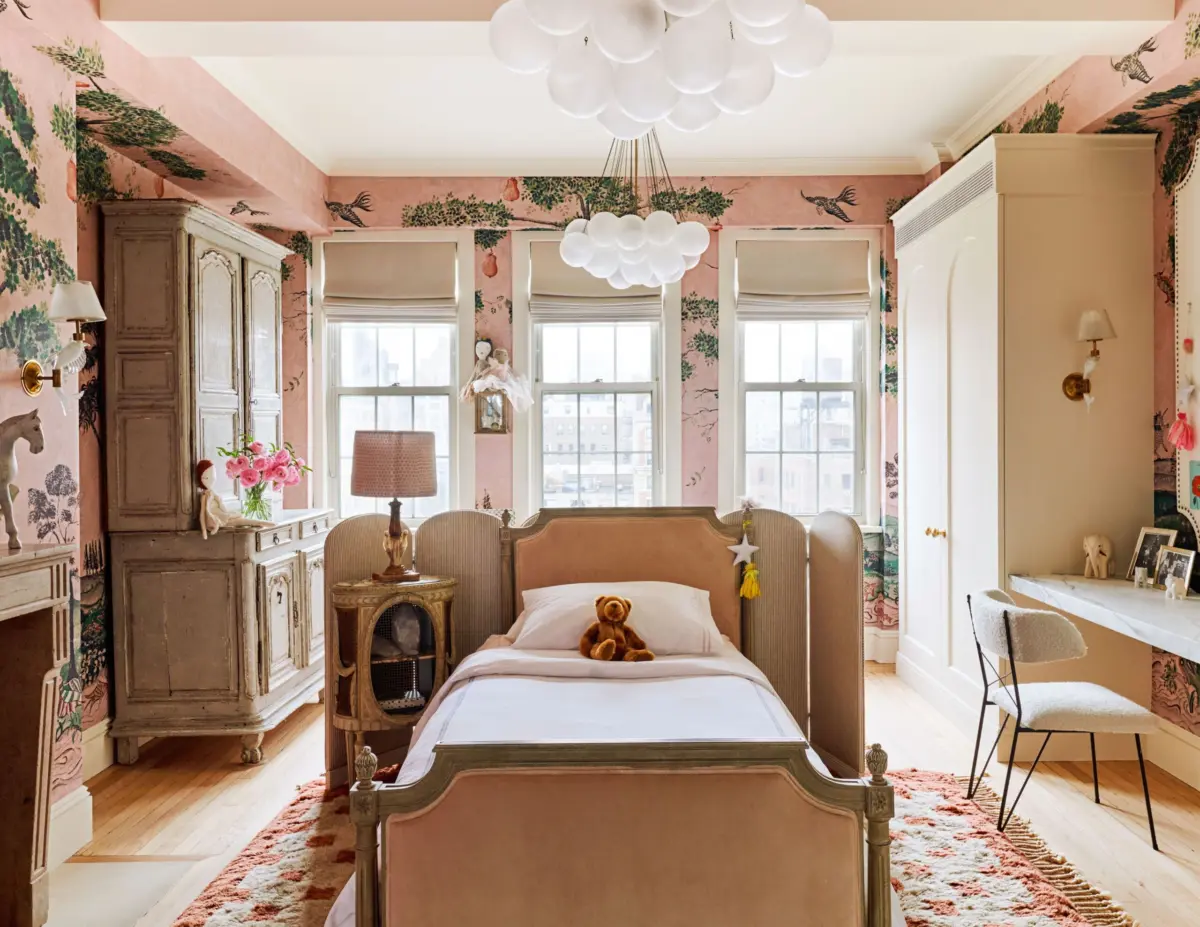
The versatility of the room divider is perhaps best demonstrated in the high-end residential projects of prominent designers. In Nate Berkus and Jeremiah Brent’s Manhattan family home, their daughter Poppy’s room utilizes a vintage folding screen upholstered in Rose Tarlow Melrose House linen. Functioning as both an extension of the headboard and a physical separation between the sleep and play areas, the piece highlights how a simple screen can anchor a room’s layout while introducing softness and sophisticated texture.

For those working with smaller footprints, traditional furniture can often double as a subtle partition. The IKEA KALLAX shelving unit, for instance, remains a sturdy and reliable staple whose agnostic design suits almost any aesthetic. In studio apartments and compact urban dwellings, open-backed bookshelves offer an exceptional way to delineate a bedroom area from a living room without the finality of a freestanding partition wall. Many urban dwellers have relied on these modular units for years to create dedicated office nooks in tiny spaces. Beyond merely creating spatial separation, shelving units allow residents to fine-tune the amount of visible open space by curating the empty shelves with books, ceramics, and personal decor.

For those seeking dedicated decorative screens, the market offers an expansive array of styles, materials, and historical influences. Among the recent releases making waves in the design world is the Hide and Seek Room Divider by Casa Dean, part of the CB2 collaboration with Grammy-winning producer Kasseem “Swizz Beatz” Dean. Striking a balance between retro flair and sleek modernity, this vegan leather piece offers privacy infused with distinct artistic panache. Swizz Beatz noted that his goal for the collection was to design what he envisioned as a creative home for creators across all mediums.

For spaces leaning toward a more relaxed, organic aesthetic, options like the West Elm Zeze Room Divider bring a sense of 1970s grooviness and coastal warmth to neutral-toned interiors. Crafted from woven rattan, this three-panel divider permits natural sunlight to filter through, making it an ideal choice for those who want to establish a separate work-from-home zone without forfeiting natural illumination. Similarly, the Bayou Breeze Daejon single-panel partition subverts the industrial and overly modular look often associated with single-panel screens. Featuring a semi-transparent rattan screen, it communicates understated elegance, looking entirely at home in a bedroom or dressing room with a silk robe casually draped over the top.

History and minimalism also heavily influence contemporary room divider offerings. Shoji screens, whose style traces back to eighth-century Japan as an adaptation of heavier Chinese folding screens, continue to be celebrated for their lightness and ability to diffuse light. Options like the Red Barrel Studio Niemann Shoji Room Divider incorporate fiber-reinforced rice paper within a spruce frame, standing nearly six feet tall to serve as a flexible wall in shared bedrooms or dressing areas. Because of their lightweight construction and accordion folds, these screens can easily be stored away when not in use.

For outdoor living spaces, the need for privacy from nearby neighbors has driven the popularity of weather-resistant partitions. The AllModern Screen Series Privacy Screen, constructed from durable corten steel, offers a simple yet light-filtering design for patios and balconies. Because these freestanding panels are heavy and stable, they resist tipping in the breeze, while also doubling as structural trellises for climbing plants and greenery.

On the more luxurious and architectural end of the spectrum, pieces like the Four Hands Duane Room Divider utilize dual-sided chenille panels and solid-wood frames with brass hardware. Reminiscent of fixtures found in exclusive members-only clubs and dimly lit restaurants, this heavy, substantial screen creates a solid barrier that completely blocks sightlines while adding a formal, polished finish to an empty corner or open-plan layout.

Eclectic and global influences remain prominent in designs such as the Oriental Furniture Tropical Philippine Room Divider, which blends Art Deco lines with resort-style craftsmanship. By combining tightly woven bamboo and abaca—a species of banana plant—with ornate bent hardwood, the piece lightens its visual weight while adding a sophisticated layer to home offices and living rooms.

Similarly, the Zara Wood and Linen Room Divider pairs stretched linen with a rubberwood frame to evoke an airy, coastal atmosphere reminiscent of a Mediterranean villa. Its accordion-style hinges allow the three panels to fold flat for easy storage behind a door. For those seeking curves and architectural interest to break up the rigid monotony of boxy rooms, the Lulu and Georgia Carrick Room Divider offers an asymmetrical, Art Deco-inspired silhouette framed in warm-hued wood with natural linen panels.

Functional hybrid furniture continues to expand the category beyond simple folding screens. The Crate & Barrel Steppe Bookcase Room Divider functions as both an airy, sculptural open shelving unit for displaying ceramics and a concealed storage solution with cabinets accessible from either side in a natural walnut finish. Meanwhile, historic designs remain enduringly popular, such as the Artek Screen 100 Room Divider, originally designed by 20th-century architect Alvar Aalto 90 years ago. Composed of vertical pine-wood slats linked by webbing, this flexible partition can be adjusted to fit any corner or simply rolled up and stored in a hall closet.

Other modern interpretations focus on artistic expression through negative space and bold imagery. The AllModern Haddis Panel Room Divider features irregular cutouts in its panels that cultivate light filtration while maintaining a sense of openness. At the artistic end of the spectrum, pieces like the Red Barrel Studio Falkmar Folding Screen function almost as folk art or statement paintings, offering a dramatic backdrop that can anchor a living room, serve as an unconventional headboard, or define a dining area.

Ultimately, whether chosen for privacy, acoustic softening, or pure aesthetic enhancement, the modern room divider proves to be an indispensable tool for shaping and personalizing interior spaces.