
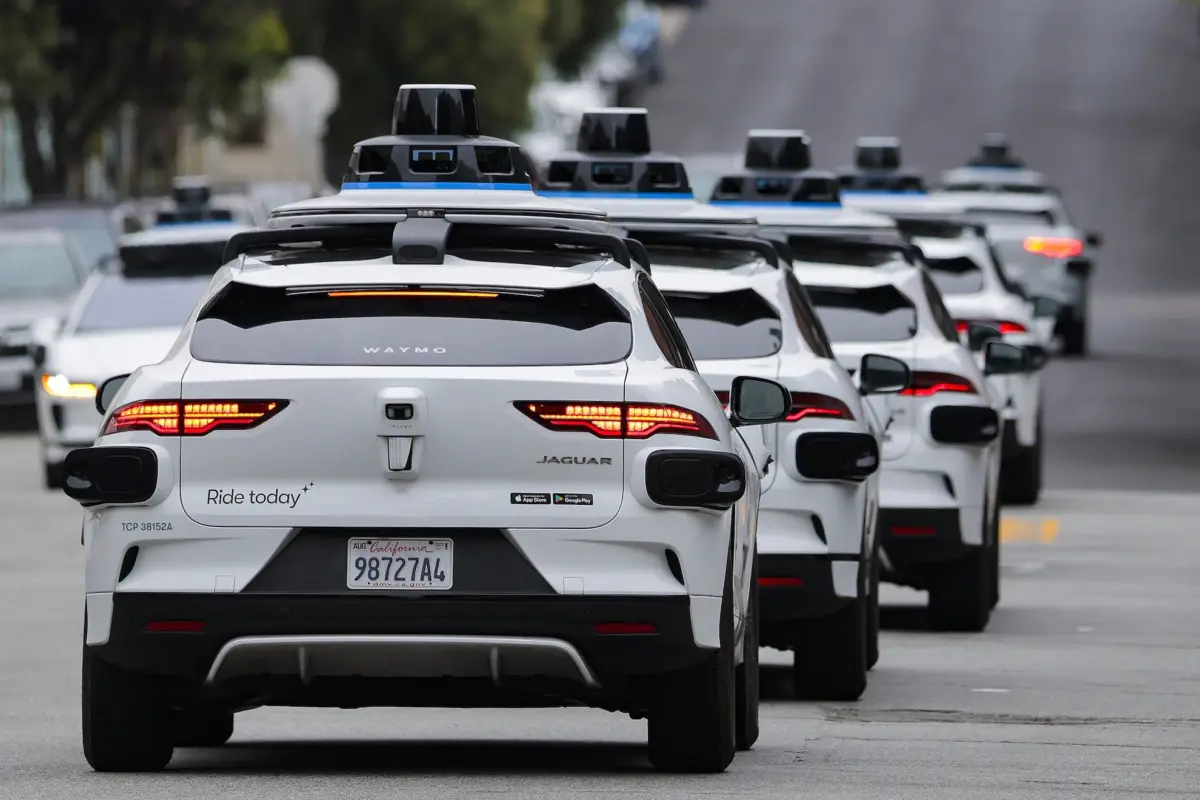
Autonomous vehicle developers, including major industry players like Tesla, Waymo, and Zoox, will soon face strict new operational requirements and potential financial penalties in California when their driverless vehicles cause traffic disruptions, block emergency responses, or become disabled on public roadways.
Under Senate Bill 1246, which was officially signed into law by California Governor Gavin Newsom, AV companies are required to provide first responders with direct, local, on-the-ground support whenever their autonomous fleets encounter serious operational problems. Furthermore, the legislation establishes clear punitive measures, allowing regulators to penalize companies if a disabled robotaxi blocks police officers, firefighters, or medical personnel from performing their duties for more than 30 minutes during an emergency.
The passage of the new law follows a mounting series of high-profile incidents across California where commercial robotaxis unexpectedly broke down, created unexpected traffic gridlock, inadvertently drove directly into active crime scenes, or otherwise impeded the critical work of emergency first responders.
The vast majority of these documented disruptions have involved Waymo, currently the largest operator of commercial robotaxis in the United States. Waymo operates an expansive national fleet comprising approximately 4,000 autonomous vehicles across various testing and commercial markets, with about 1,200 of those vehicles deployed within the San Francisco Bay Area alone. An investigative report published earlier this year documented numerous instances in which Waymo vehicles encountered technical difficulties on public streets and subsequently relied on municipal first responders to manually maneuver or drive the vehicles out of problematic positions.
These persistent roadway disruptions ultimately prompted heightened scrutiny from both state and federal lawmakers, who increasingly voiced concerns regarding how autonomous vehicles behave around emergency personnel and active response zones. The mounting pressure even led the National Highway Traffic Safety Administration to intervene, dispatching an official letter to major autonomous vehicle developers demanding that they formulate immediate, effective solutions to mitigate interference with first responders.
The newly enacted California legislation represents a direct legislative effort to address these growing public safety concerns at the state level.
“California has embraced autonomous vehicles, but we cannot embrace innovation at the expense of public safety. When an autonomous vehicle crashes, breaks down, blocks a roadway in an emergency, or gets in the way of law enforcement or first responders, there must be clear accountability,” said state Senator Dave Cortese, the author who introduced the legislation.
In addition to addressing emergency response blockages, the new law establishes targeted regulations regarding how AV companies utilize human intervention from afar. Under the statutory requirements, autonomous vehicle developers are restricted to employing remote drivers who are physically based within the United States, and those designated individuals must hold a valid U.S. driver’s license. This specific mandate is intended to address ongoing regulatory and security concerns regarding how companies manage remote operations when self-driving software encounters scenarios it cannot safely navigate independently.
The broader concept of remote operations has historically been interpreted across the technology industry in varied ways, leaving external observers with limited insight into the exact mechanisms utilized by individual firms. However, the terminology defined within the California law is significantly more specific, denoting a human operator who directly oversees, steers, or operates the vehicle from a remote location. Among major industry participants, Tesla is currently the only company that has publicly confirmed employing remote operators who maintain the capability to take direct, active control of its robotaxis when necessary.
Other prominent AV developers utilize alternative operational models. Waymo, for instance, has publicly stated that its architecture relies on forms of remote assistance rather than direct remote driving. In Waymo’s system, the onboard self-driving software maintains continuous active control of the vehicle, while human employees stationed in command centers can provide high-level guidance, situational verification, or transmit specific software commands to help the vehicle navigate complex obstacles. Waymo maintains a global network of remote assistance personnel, which includes staffing in the Philippines alongside domestic command operations centers situated in Arizona and Michigan. Meanwhile, rival developer Zoox maintains its remote operations teams entirely within the United States, according to corporate disclosures.
Beyond remote oversight rules, the legislation introduces direct communication and localized logistical mandates. AV companies will be legally required to notify municipal authorities, local towns, and regional jurisdictions regarding the exact geographic location and operational status of their vehicles during widespread system-wide software failures or network outages. Additionally, companies must maintain a designated workforce of local incident technicians who can be deployed rapidly to assist with autonomous vehicle accidents, collisions, or severe roadway obstructions. If an autonomous vehicle remains stationary and blocks first responders during an active emergency for a duration exceeding 30 minutes, the operating company can face formal financial penalties.
Major commercial operators have indicated that they intend to comply with the statutory requirements once they take effect.
“Chúng tôi rất biết ơn những sửa đổi được thực hiện đối với dự án luật, đảm bảo các nhà điều hành xe tự lái vẫn có thể phục vụ người dân California một cách khả thi,” một phát ngôn viên của Waymo cho biết trong một tuyên bố được gửi qua email. “Waymo cam kết làm cho các con đường ở California trở nên an toàn hơn và liên tục cải thiện dịch vụ của chúng tôi.” (Note: Translated statement context indicates cooperation and appreciation for legislative amendments allowing continued service.)
The new regulatory framework is scheduled to officially go into effect in July 2028. Ahead of that implementation date, the California Department of Motor Vehicles, the state agency responsible for overseeing and regulating autonomous vehicle testing and commercial deployment, will establish detailed administrative guidelines regarding specific enforcement mechanisms, including the exact standards and metrics for required response times.