
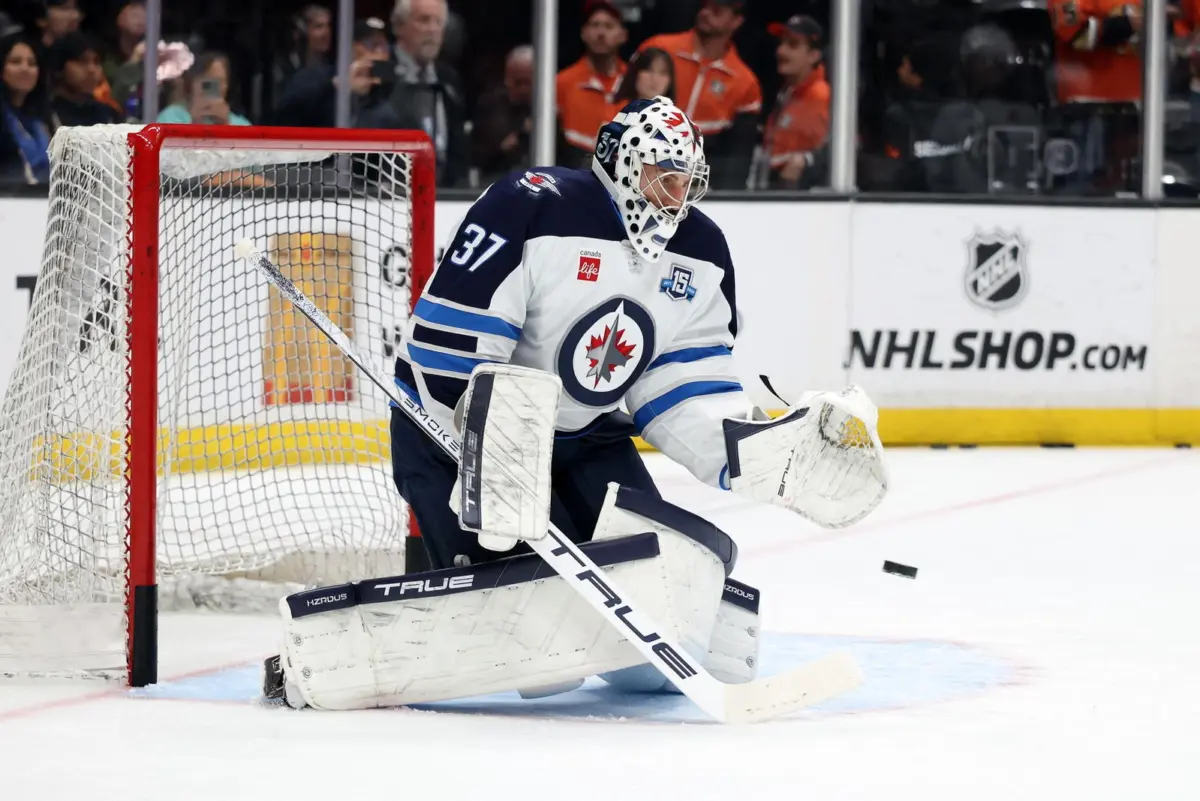
As the National Hockey League season moves past its second week, a high-stakes game of organizational chicken is playing out across the continent. There has been no significant movement on two prominent NHL stars currently locked in a trade-demand showdown with their respective front offices, highlighting a tense clash between modern player empowerment and old-school management resolve.
In Detroit, the Red Wings are navigating a delicate situation with star center Dylan Larkin. A former team captain and proud Michigan native, Larkin has asked out of Motown, creating a complex narrative for a franchise trying to find its footing. Meanwhile, thousands of miles away in Winnipeg, superstar goaltender Connor Hellebuyck has taken an even harder line. Hellebuyck has not only demanded a trade but also refused to appear at training camp, a drastic step that prompted the Jets to suspend the elite netminder indefinitely.
These twin disputes underscore an era where the concept of player empowerment is deeply embedded in the modern NHL landscape. Driven by a variety of personal and professional factors, stars increasingly feel justified in charting their own courses, seeking out destinations that match their competitive timelines or lifestyle preferences as players, spouses, and fathers.
Yet, as the calendar turns deeper into October, Red Wings interim general manager Shawn Horcoff and Jets general manager Kevin Cheveldayoff are pushing back with equal resolve. Just as it can be argued that Hellebuyck and Larkin are entirely within their rights to try and control their destinies, it is equally true that NHL teams are acting well within their rights—and fiduciary responsibilities—to do what they feel is best for the organization as a whole.
Larkin and Hellebuyck might not want to hear it, but the bottom line for all parties involved in a trade demand battle is that teams ultimately dictate the value of their players. Those are the high stakes for Cheveldayoff and Horcoff at this moment. Neither franchise can afford to accept a trade that fails to deliver what the Red Wings and Jets desperately need at this particular juncture in their respective competitive cycles. And, crucially, those are two very different things.
For a trade to materialize, a multitude of moving parts must align perfectly. Not only do teams have to be entirely satisfied with the trade return package for star players they are dealing away, but the prospective partner clubs also need to possess the right amount of salary cap space to fit in high-earning players under the strict confines of the league’s financial umbrella.

This financial and logistical reality explains why it has been virtually impossible for Cheveldayoff to pull the trigger on a Hellebuyck trade. Interested teams generally fall into a few problematic buckets: they either do not have the necessary cap space to be cap-compliant after acquiring a marquee contract, they lack the high-end trade capital required to satisfy Winnipeg’s steep demands, or they suffer from both limitations. In some cases, a team might have the overall means to trade for Hellebuyck, but only if they sent a veteran goaltender back to Winnipeg in return. For the Jets, taking on another high-priced veteran netminder could be a total deal-killer, halting negotiations in their tracks.
Larkin’s situation in Detroit presents a different texture. Unlike Hellebuyck’s complete boycott of training camp, Larkin did report to the club and has actively played in games. However, his underlying trade request has not been rescinded, and there has been no indication that the star center has fundamentally changed his mind about wanting to leave the organization.
While Horcoff may not necessarily require immediate roster help or players who can contribute right away in a potential return package, the interim GM still needs to be able to defend any Larkin trade—not only for the immediate optics, but for the long-term health of the franchise. It is only natural that Horcoff is erring on the side of caution rather than simply shipping Larkin off to a preferred destination just to appease the player and his representation.
At the end of the day, general managers like Cheveldayoff and Horcoff are primarily beholden to two critical groups of people: team ownership and the fans who fill the arenas and buy the merchandise. While maintaining healthy, professional relationships with players is undoubtedly important, it ultimately falls a tier below a general manager’s core obligation to look ownership and consumers straight in the eye and state, without a single reservation, that they have done what is best for the long-term future of the team.
If fulfilling that responsibility means waiting out the market and enduring months of uncomfortable trade speculation, then so be it. Jets fans and their Red Wings counterparts deserve executives who are not afraid of stepping on a few toes as they try to navigate the complex chess match that leads to a Stanley Cup championship.
Players, naturally, can complain about the constraints of their contracts and team control, just as general managers frequently complain about the proliferation of no-trade and no-move clauses that tie their hands. But this is the system that both sides have collectively bargained through the collective bargaining agreement. Until the rules of engagement change, these high-stakes standoffs will remain an inevitable part of the NHL business.