
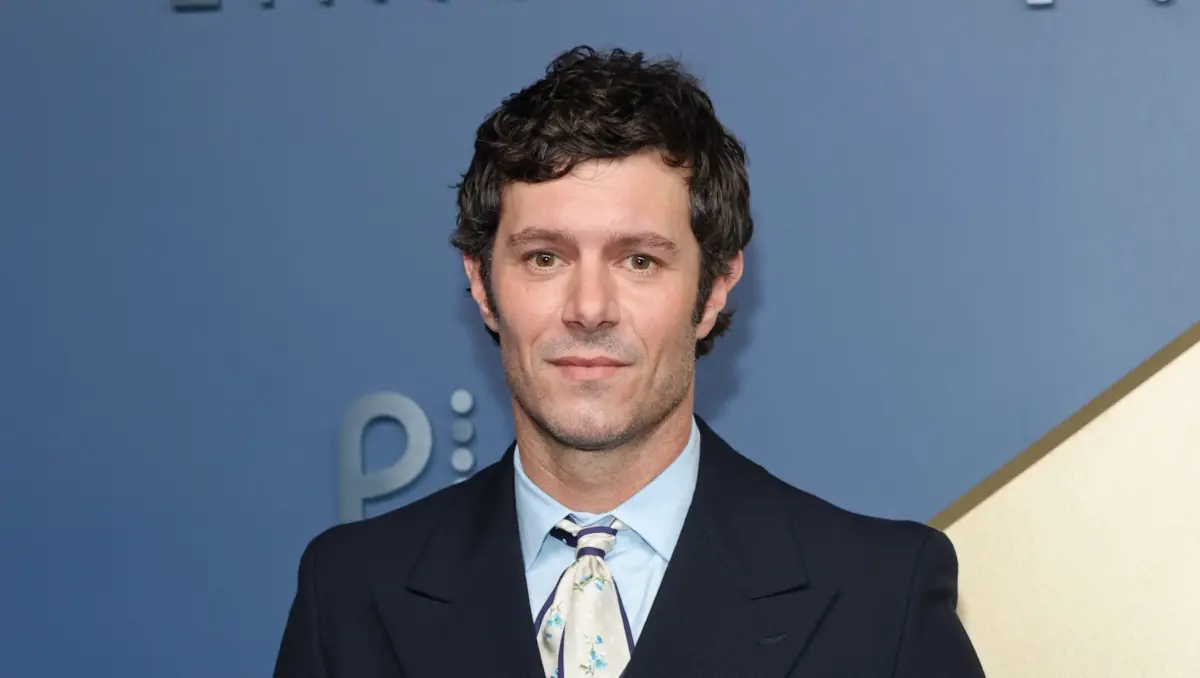
Adam Brody, the celebrated star of Netflix’s hit romantic comedy series Nobody Wants This, is opening up about his political beliefs and sharing his unfiltered perspective on the ongoing Israel-Gaza war. In a wide-ranging new interview with GQ, the actor declared his support for “a free Palestine,” while also discussing his views on shifting political dynamics within Hollywood, the challenges of public discourse in the entertainment industry, and how recent global events have reshaped his outlook on colleagues and society at large.
The conversation with GQ touched on various aspects of Brody’s career and personal life, prominently featuring his thoughts on modern political activism. When asked by the interviewer whether he believes Hollywood has grown more conservative in recent years, Brody offered a candid and thoughtful assessment of the current cultural climate within the entertainment capital.
“I guess outspokenly so, yes,” Brody told the publication. Elaborating on the psychological and social pressures that tend to align individuals with dominant institutional or industry power structures, he added, “Again, as one side has more power, it makes sense that it draws people to it for all the human reasons that would be attractive: groupthink, your own well-being, your own money and success.”
The actor, who has enjoyed a major career resurgence following his acclaimed work on television, admitted that the turbulent socio-political events of recent years have deeply affected him. He noted that the cumulative impact of global crises has opened his eyes to viewpoints and realities he previously might not have fully recognized.
“Between COVID, a second Trump term, Israel-Gaza, it’s really brought out some different beliefs that I was ignorant to, and then disheartened by,” Brody reflected during the interview.
While Brody is widely recognized for his public profile and his prominent roles across television and film, he noted that he has largely kept his specific views on the Middle East conflict out of his public social messaging. When the GQ interviewer specifically inquired about how the Israel-Gaza war has manifested in his public commentary, Brody was direct about his past approach.
“Truthfully, it hasn’t,” he answered. “I have spoken a lot about it privately. I haven’t spoken much about it publicly.”
When the interviewer followed up by asking if he would like to use the platform to share his thoughts on the subject, The O.C. alumnus did not hesitate to make his stance explicit.
“Put me down as thinking it’s a genocide,” Brody said. “Put me down as wanting a free Palestine.”
Expanding on his emotional reaction to the devastation overseas, Brody expressed sorrow over the human cost of the conflict and voiced cautious optimism regarding future political leadership.
“It’s awful that it’s taken so much death and misery, but it does feel like it’s reaching a breaking point that it should have a while ago,” he continued. “I’m hopeful that another administration can really do some good and correct some of these policies that are helping that situation be as awful as it is.”
Brody’s candid remarks arrive as Netflix prepares for the rollout of the third season of Nobody Wants This, its popular Jewish-themed romantic comedy series co-starring Kristen Bell. The show, which has captured widespread audience attention and critical acclaim, is scheduled to premiere its third season on October 22. Brody’s portrayal of Noah Roklov, a charming modern rabbi navigating an interfaith romance with an agnostic podcast host, has earned him immense praise. His standout performance garnered a Primetime Emmy Award nomination for 2025, followed by a victory for best comedy actor at the Critics Choice Awards later that same year.
The series itself has occasionally found itself at the center of cultural conversations regarding Jewish representation on television. In an August 2025 interview with The Hollywood Reporter, series creator Erin Foster discussed the intentional creative choices behind the show and its approach to cultural identity.
“It was really important to me and continues to be really important to tell positive Jewish stories,” Foster told The Hollywood Reporter at the time. “I know that it can be polarizing, but it shouldn’t be. This is not the show to tackle conflict in Israel and Palestine.”
Foster further elaborated on why the creative team chose to steer clear of geopolitics within the framework of a romantic comedy, emphasizing the distinct nature of the project.
“I’m not the person to tell that story,” Foster added. “And after [the attacks on] Oct. 7 happened, there were conversations around if we were going to dive into it, and the truth is, the way that I can get my message across best is by shedding a positive light on Jewish characters and Jewish traditions. I don’t think somebody watching wants to see another voice give you their opinion on what’s happening.”
As Brody steps forward to share his personal convictions with a wider audience, the intersection of celebrity influence, political expression, and creative storytelling continues to be a prominent fixture of discourse within the entertainment industry.