
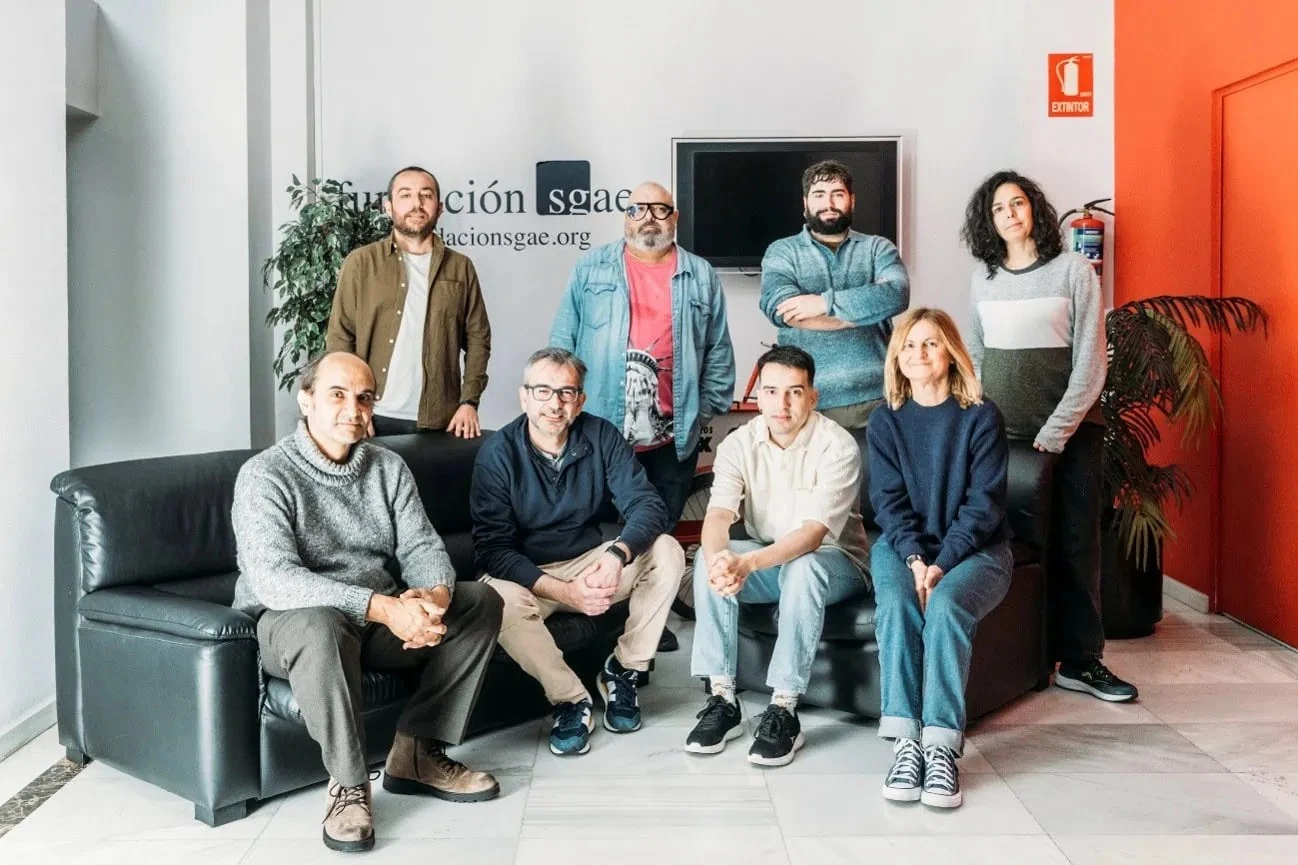
The vibrant capital of Spain is currently serving as the central hub for the global Ibero-American audiovisual sector as the sixth edition of Iberseries & Platino Industria unfolds in Madrid this week. Among the diverse and bustling schedule of conferences, screenings, and networking sessions, one of the most anticipated highlights takes place on Thursday, Oct. 1. This special presentation shines a bright spotlight on six distinct series projects developed by seven talented screenwriters, emerging from a strategic and creative collaboration with Fundación SGAE, Spain’s primary collective management organization dedicated to safeguarding and advancing intellectual property rights.
The selected series take center stage during one of the premier pitching events of the summit, where creators have the unique opportunity to present their visions directly to a curated room of influential producers, network buyers, financial investors, and other key audiovisual industry professionals. Organizers of the international event emphasize that the showcase is specifically designed as an invaluable opportunity to foster the production, financing, and broader international reach of cutting-edge fiction projects. Furthermore, it actively reinforces one of the core foundational objectives of Iberseries & Platino Industria as a whole: to facilitate deep, lasting connections between emerging creative talent and the diverse array of institutional and commercial players operating within the dynamic Ibero-American audiovisual landscape.
As industry executives, creatives, and press gather in Madrid to witness the unveiling of these concepts, anticipation has reached a fever pitch. Below, a closer look is taken at the six original series projects being pitched this week in the Spanish capital, detailing their narrative foundations and the creative visions driving them forward.
La librería by Virginia Burgos and Juan Sánchez
Set against the atmospheric backdrop of the early 1990s, La librería follows the courageous journey of a woman who decides to open the very first LGBT bookstore in the country. Over the course of several transformative decades, the modest storefront organically evolves far beyond a retail space, ultimately becoming a vital cultural refuge and a discreet political backroom for an entire marginalized community. However, time marches forward, and the day eventually arrives when the very neighborhood and society she helped build, shape, and protect turns its back on her. Stripped of the community she championed, she is left with no choice but to confront a devastating existential question: What do you do when nobody needs you anymore?
The project presents a compelling character study of an LGBT community force and pioneering figure facing the creeping shadows of isolation and change. The emotional weight of the premise naturally raises the question of whether audiences will find themselves eager to discover more about this resilient woman and the shifting world surrounding her.
Avión by Miguel Cavadas
Moving from the urban complexities of a bookstore to the unique rural geography of northwestern Spain, Avión introduces viewers to the eponymous village that serves as the ultimate living embodiment of the utopia of Galician emigration—the classic narrative of leaving home in poverty and returning years later wealthy. During the bleak winter months, the location mirrors countless other examples of rural precarity, aging populations, and depopulation. Yet, when summer arrives, the village transforms overnight into a dazzling festival of money, booming ranchera music, and vibrant Mexican flags. The local population quadruples as expatriates return home to celebrate, enjoy the fruits of their labor, and proudly display their transatlantic feats.
The resulting narrative explores a fascinating microcosm that feels suspended between two worlds that have little to nothing to do with one another: community versus individualism, past versus present, and Galicia’s lowest pensions contrasting sharply against Mexico’s greatest fortunes. The central dramatic engine of the show asks a potent question: What happens when those two distinct worlds finally collide? Rather than offering a lighthearted or whimsical portrait of the region, the project promises a much darker social clash drama that urges observers to take a much closer look at the complexities of modern Galicia.
El capricho by Alberto Grondona
Shifting genres into historical satire, El capricho offers a darkly comedic look at high-stakes power struggles during a turbulent era. The narrative centers on three formidable women fiercely vying for influence and dominance at the 18th-century Spanish court: Queen María Luisa of Parma, the charismatic Duchess of Alba, and the enlightened Duchess of Osuna. Their relentless battles for political influence, public image, and personal desire unfold against the backdrop of a Spanish empire visibly teetering on the brink of collapse. Adding a unique layer to the storytelling, these intricate maneuvers are observed, judged, and narrated with a fierce, cutting irony by Francisco de Goya. The celebrated painter serves as an uneasy, observant witness who transforms the madness of palace intrigue into a surprisingly contemporary mirror of political ambition and societal decay.
The project has already drawn thematic comparisons to a female-led, comedic interpretation of Game of Thrones, infused with distinct Spanish fire and unexpected narrative twists. Even as it reminds viewers of the looming specter of an empire’s end times, the satirical edge and historical scope are expected to turn significant heads among prospective buyers and co-producers in Madrid.
Teléfonos fijos by Ángel Mirou
Delving into the realm of high-concept psychological mystery and supernatural dread, Teléfonos fijos unfolds in the modest and unassuming Recalde neighborhood of Bilbao. In the dead of night, landline telephones begin to ring in the early hours of the morning, forcefully waking up the dwindling number of residents who still maintain traditional landline connections in their homes. When the startled inhabitants pick up the receivers, they are met with the unmistakably familiar voices of relatives, friends, or acquaintances from their past. The callers, despite their disparate backgrounds in life, share one terrifying common denominator: they are all dead.
The narrative grapples with a chilling ambiguity, leaving characters and viewers alike to wonder whether these unexpected phone calls constitute undeniable proof of an afterlife or merely an elaborate, malicious fraud engineered through cutting-edge technology. Whichever the truth may be, the lives of everyone involved are irrevocably altered. The premise taps directly into modern anxieties surrounding communication, grief, and technological deception, prompting the uneasy realization that in an age defined by sophisticated tech scams and artificial intelligence, trusting one’s own ears—or eyes—has never been more complicated.
La edad menor by Roberto Osa
Pushing boundaries into speculative fiction and dystopian drama, La edad menor presents a chilling inversion of familial hierarchy set within a heavily altered Madrid. In this unsettling future, children legally become the legal guardians of their parents as the older generation ages. The story follows María, a devoted daughter who finds herself in fierce opposition to the rigid apparatus of the state when her mother is admitted to La edad menor, a formalized and irreversible bureaucratic process of state-mandated infantilization. While María attempts to fight the system, her brother finds himself dangerously torn between loyalty to his sister and the intoxicating allure of institutional power. As the conflict escalates, a devastating family secret emerges, threatening to prove that neither personal resistance nor ultimate sacrifice will ever be enough to stop the crushing wheels of institutional oblivion.
The dystopian premise immediately evokes a sense of deep unease and visceral dread, presenting a scenario where the traditional bonds of care and responsibility are bureaucratically dismantled. As the project is introduced to industry professionals in Madrid, observers are left waiting to uncover the deeper layers of what is truly happening beneath the surface of this unsettling narrative framework.
Trueque by Pedro Pablo Picazo
Rounding out the selection of six projects is Trueque, a contemporary domestic comedy created by Pedro Pablo Picazo that tackles the universal trials of modern parenting. The story revolves around three families who share a close, long-standing friendship, yet each is fighting a daily, exhausting battle with the challenging teenagers living under their respective roofs. Interestingly, while each family feels thoroughly unequipped to handle their own offspring, they all firmly believe they possess the exact solutions needed to fix the behavioral issues of each other’s children. This collective confidence leads to a hazardous and comedic proposition: What if they simply swap them?
Playing on the chaotic fallout of such an unconventional domestic experiment, the project leans into high-energy familial mishaps. For audiences familiar with classic body-swap tropes, the pitch effectively reimagines traditional family comedies with a modern, chaotic twist, posing the ultimate question of just how disastrous an adolescent exchange program among friends could possibly become as the creators pitch their vision to prospective international partners this week.