
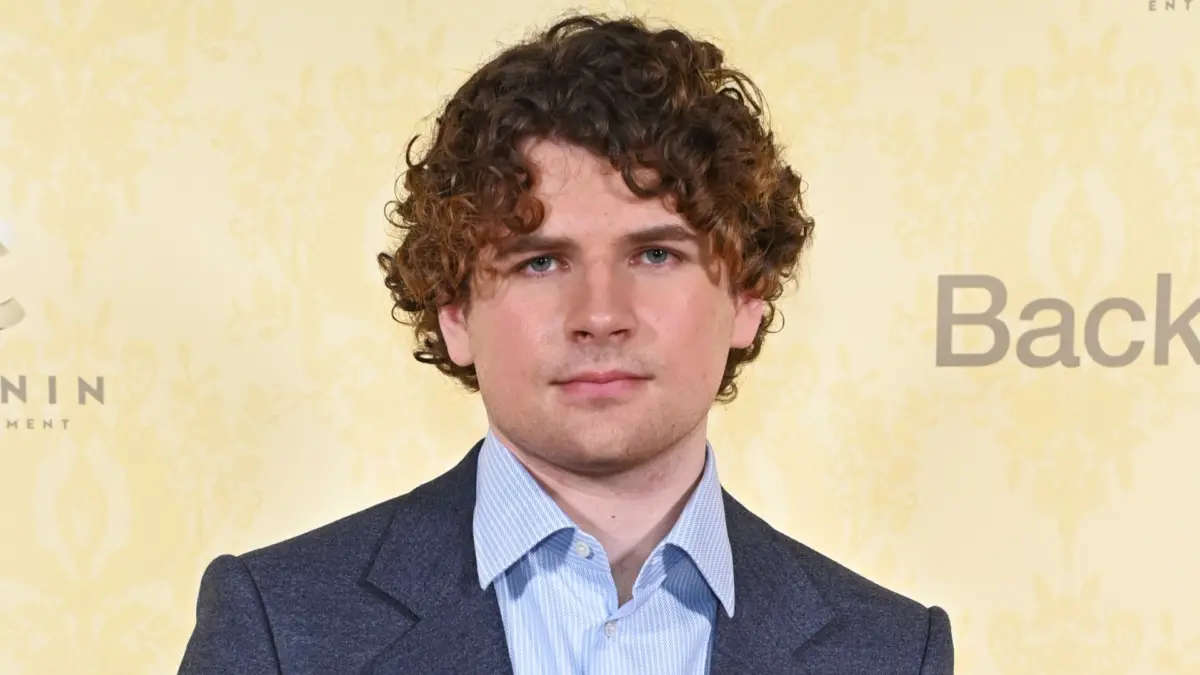
Twenty-one-year-old filmmaker Kane Parsons is still reflecting on what can only be described as a whirlwind summer, a season where the theatrical box office was remarkably bolstered by the release of his feature-length directorial debut, Backrooms. Speaking to some of the entertainment industry’s top executives and creative minds at the Zurich Film Festival Summit on a Saturday afternoon, the young director opened up about the unexpected health and vitality of the 2026 box office. The current theatrical landscape has notably catapulted digital-native creators—including Parsons and Obsession filmmaker Curry Barker—straight to the upper echelons of Hollywood prestige and commercial viability.
During a prominent industry panel session titled “The Theatrical Box Office Resurgence! How to Get Audiences’ Attention in the Era of Social Media and Online Platforms?”, the Backrooms creator found himself seated alongside a high-powered roster of industry heavyweights. He was joined on stage by Academy CEO Bill Kramer, Mattel President and Chief Content Officer Robbie Brenner, and Sony Pictures Classics Co-President Michael Barker. Together, the panel explored the shifting paradigms of modern filmmaking, theatrical distribution, and the evolving habits of contemporary moviegoers who are increasingly looking for authenticity over recycled cinematic formulas.
Despite the film being distributed by A24 and widely classified as a terrifying cinematic entry, Parsons candidly confessed during the discussion that he never actually conceptualized Backrooms—which stars Renate Reinsve and Chiwetel Ejiofor—as a traditional horror film. He admitted that the genre assignment was largely a byproduct of industry packaging rather than his initial artistic intention.
“I didn’t direct it like a horror film. I don’t view it as a horror project. I think that’s just naturally the path of least resistance from a marketing perspective, and it’s what seems comfortable to people as a framing device,” Parsons explained to the attentive audience of industry professionals. Looking toward his future creative endeavors, he added, “But I’m going to try to stay as oblivious to those labels as possible, and just focus on [what] think I have greater control now with future projects, so those sort of structures [should] probably be a little less forceful, I think.”
When the conversation turned toward how A24 approached the delicate task of sculpting the marketing and distribution strategy for such a unique piece of internet lore, Parsons offered a remarkably candid assessment. He noted that prior to the film’s actual theatrical rollout, there wasn’t entirely “a real sense of what it would be.”
“I don’t think there [was] a feeling for what this would really be tapping into with people […] all these people who were familiar with [Parsons’ YouTube series] the Backrooms for years in some vague way,” he recalled. The cultural anticipation reached a fever pitch the moment promotional materials dropped online. “Suddenly, as soon as a trailer [came] out, it just activated a desire to see: ‘How did Hollywood mess this up?’ Or it [was] just a curiosity at the very least. And I like to think we did the core idea that they were familiar with justice.”
Calling it “justice” might very well be an understatement. The A24 release went on to generate a staggering, eye-watering $401 million at the global box office following its wide release in May. During the panel in Zurich, the astronomical success of Backrooms was repeatedly cited as a prime, undeniable example of a younger generation’s burning, unquenched desire to experience cinema communally on the big screen, directly countering the prevailing pessimistic narratives about the death of movie theaters.
“There’s an appetite,” Parsons observed, pointing directly to the unique nature of his project. He described Backrooms as a pre-existing but decentralized intellectual property presence that had already grown organically online. “I think people are just looking for that newness, [a] detachment from more cyclical cultural icons that keep eating themselves,” he elaborated, offering a sharp critique of Hollywood’s ongoing reliance on overworked, cyclical intellectual property that endlessly regurgitates familiar franchises.
Academy CEO Bill Kramer chimed into the discussion to share his own insights, admitting that he had previously underestimated just how deeply connected the worlds of YouTube content creation and traditional theatrical moviegoing could be. “In a way that I don’t think we thought was possible. That for me was a big takeaway of this summer,” Kramer continued, expressing renewed optimism for the commercial and cultural future of the medium. “And it gives me great hope for the film industry because […] we’re seeing young people come back to the movies, and that’s really key.”
To illustrate his point, Kramer shared encouraging statistics straight from the institution he leads. “More than half of our ticket buyers [at the Academy Museum] are under the age of 40, and we sell out every screen. So people love seeing movies in movie theaters. We just needed to attract new fans, and you helped do that, this summer,” Kramer said, directly acknowledging Parsons’ role in driving youth engagement.
The conversation naturally gravitated toward broader cultural assumptions regarding the attention spans of Generation Z and younger demographics. Parsons pushed back against prevailing industry myths about young audiences and digital media consumption. “I think the notion that people around my age gravitate towards short-form material is…,” Parsons began, before Kramer sharply interjected with the word, “Reductive.”
The young director readily agreed with the assessment. “Yeah, it’s reductive. I hear that come up a fair bit. [It might be] statistically truthful, but I feel like the sentiment is more that [short-form content] is weaponized, algorithmically incentivized, and it’s not really something I think most people enjoy about their own wiring. They don’t love that their attention spans are being sucked into the spiral of mostly consuming stuff that is that short.”
For those unfamiliar with the cinematic adaptation, Backrooms follows therapist Dr. Mary Kline, brilliantly portrayed by Renate Reinsve, who finds herself venturing into a disorienting, labyrinthine alternate dimension after one of her patients mysteriously vanishes inside it. The feature film serves as a grand-scale expansion and adaptation of Parsons’ immensely viral, lo-fi YouTube series, which he initially began producing and publishing online as a teenager from his bedroom.
Despite the record-shattering financial returns and the massive critical interest surrounding the film’s narrative universe, Parsons remained understandably tight-lipped and coy regarding the inevitable industry speculation about a potential sequel. When pressed about whether audiences might see a follow-up feature exploring the eerie corridors of the alternate dimension, he offered a simple, non-committal response to the Zurich crowd: “We’ll see.”
The 22nd Zurich Film Festival runs from September 24 through October 4, continuing its tradition of bringing together the brightest emerging talents and the most powerful studio executives to debate the future of the global entertainment industry.