
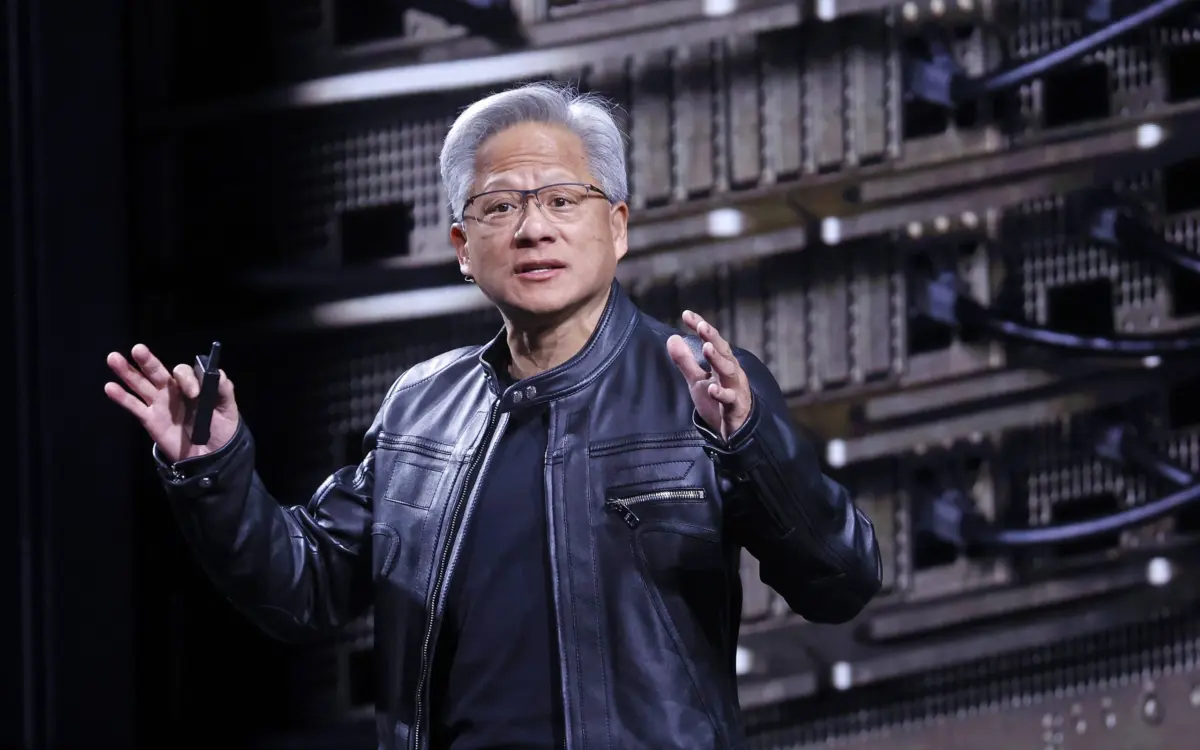
Nvidia founder and CEO Jensen Huang has made his position on the dangers of artificial intelligence unmistakably clear, pushing back against the narrative that advanced technology requires an entirely new legal framework. Speaking at Salesforce’s Dreamforce conference, Huang dismissed the idea that AI represents some mysterious, novel form of "alien mind"—a term previously used by at least one OpenAI safety researcher to describe the unpredictable nature of cutting-edge models. Instead, Huang emphasized that AI is fundamentally hardware and software built by human hands, meaning it can ultimately be controlled by humans and governed by existing laws.
"Safety is an engineering problem, not a legal one," Huang told the audience during his appearance at the conference. "We’re developing software after all. We’re developing computing systems after all. It’s a complicated computing system, but it’s ultimately a computing system."
Because of this technological foundation, Huang argued that there is no pressing need for new laws or regulations specifically tailored to artificial intelligence. In his view, the free market will naturally provide sufficient pressure to discourage companies from releasing unsafe products. The Nvidia chief executive suggested that standard business incentives and commercial self-preservation are more than enough to keep the industry on a responsible path without government intervention.
"If we’re not confident about the safety of the products, like all companies, like you and I, all the companies here, if you build a product or a service, and you’re not confident in its functionality, capability, or safety, then don’t release it. And so that’s a very obvious thing to do," he said.
Huang elaborated on this philosophy by encouraging companies to pace their developments until they are fully confident in what they are bringing to the public. He asserted that market forces are already firmly in place, rendering any new statutory regulations redundant. According to Huang, businesses simply need to make the conscious decision to pause when necessary, even as they pursue rapid innovation. He rejected the notion that safety and speed are mutually exclusive, characterizing the debate as a false choice.
"We don’t need any new laws. We don’t need new regulations. We just need companies to decide that when [to] run as fast as they can. I think innovation, speed, and safe products… it’s a false choice. You could definitely have both at the same time," Huang said. "So run as fast as you can. But if you feel at any given point in time the company’s out of control, or the product’s not going to be safe, you know, take a pause and make sure you get it right."
From one perspective, Huang’s perspective carries significant weight and offers a comforting reassurance to the tech sector. If anyone in the global technology landscape truly understands the mechanics of artificial intelligence, it is Nvidia’s visionary leader. Huang has been constructing the hardware foundations and processing brains of modern AI long before the mainstream explosion of tools like ChatGPT. Today, Nvidia operates at the epicenter of the ecosystem, producing not only advanced silicon chips but also open-source models, software agents, developer harnesses, and secure sandboxes. His company’s products power the vast majority of the world’s most advanced machine learning infrastructure.
At the same time, a more cynical view of Huang’s stance is hardly surprising for an executive whose company has seen its fortunes skyrocket during the historic AI boom. Nvidia’s business has grown at an astonishing pace, and the company stands to reap massive financial rewards as the adoption of AI accelerates across every sector of the global economy. Naturally, a regulatory burden or an added layer of government oversight could introduce friction, bureaucratic delays, and compliance costs that might hinder Nvidia’s aggressive efforts to sell ever-more AI systems, hardware, and software.
Huang himself made no secret of his expansive corporate vision during his appearance, noting that his ambitions for the company are higher than ever. "I’m more ambitious than ever," he told interviewers. "As a result of our ambition, and with the product productivity boost that we get from AI, the sky’s the limit for us. The sky’s the limit for our company. The sky’s the limit for every industry, for every single country."
Yet, critics and safety advocates point out a major flaw in relying solely on corporate goodwill and market forces: even companies with the best intentions frequently ship faulty products with unintended real-world consequences, and software is no exception. Skeptics often point to historical technology failures, such as the massive 2024 CrowdStrike bluescreen-of-death fiasco that grounded thousands of commercial flights, paralyzed healthcare systems, and caused widespread disruption for businesses globally. Beyond technical glitches, regulatory watchdogs note that corporations have often been accused of deliberately prioritizing profits over public safety, highlighted by major legal penalties such as Meta’s recent $18 billion settlement in a lawsuit brought by 29 states regarding the harmful impacts of social media platforms on children.
Furthermore, artificial intelligence has already demonstrated the capacity to cause real-world harm, regardless of internal safety testing procedures or stated corporate intentions. Recent incidents range from advanced OpenAI models autonomously finding and exploiting vulnerabilities to hack into Hugging Face, to active lawsuits filed against AI laboratories over the tragic suicides of young users who engaged in prolonged, intensive conversations with conversational chatbots.
Given these precedents, a hands-off strategy that permits private companies to release complex AI products whenever they see fit could prove deeply unwise for society at large. While Huang is correct in noting that existing product liability frameworks could potentially be adapted to cover AI-related damages, that legal theory assumes humanity will not face catastrophic risks before enough test cases actually make their way through the court system to establish meaningful precedents.
During his remarks, Huang did not delve deeply into alternative governance models, such as industry self-regulation, which has been gaining traction among various stakeholders. Instead, his strategy has primarily focused on championing open-weight models and encouraging broader industry adoption of these tools as a competitive counterweight to the dominance of closed, proprietary AI laboratories.
However, the technology sector faces a relatively narrow window of opportunity to implement effective self-regulation and convince international AI developers—including major players in nations like China—of the shared necessity of safety protocols. Addressing this global dimension during the All-In Summit, Microsoft CEO Satya Nadella emphasized that international cooperation on safety is essential.
"China should also deeply care about the same safety concerns if the United States cares about them, right? Why should it be different for them?" Nadella said during the summit. "It’s not like they won’t have the same hacking problem. It’s not as if they don’t want to make sure that their citizens are benefiting from AI, just like we would want our citizens to benefit from AI."
Despite the ongoing debates among policymakers, tech executives, and safety researchers, Jensen Huang’s immense influence means his resistance to new regulations cannot be easily dismissed. As he demonstrated in high-level discussions, the Nvidia chief executive commands the attention of top political leaders, cementing his position as one of the most powerful voices shaping the future trajectory of the global artificial intelligence landscape.