
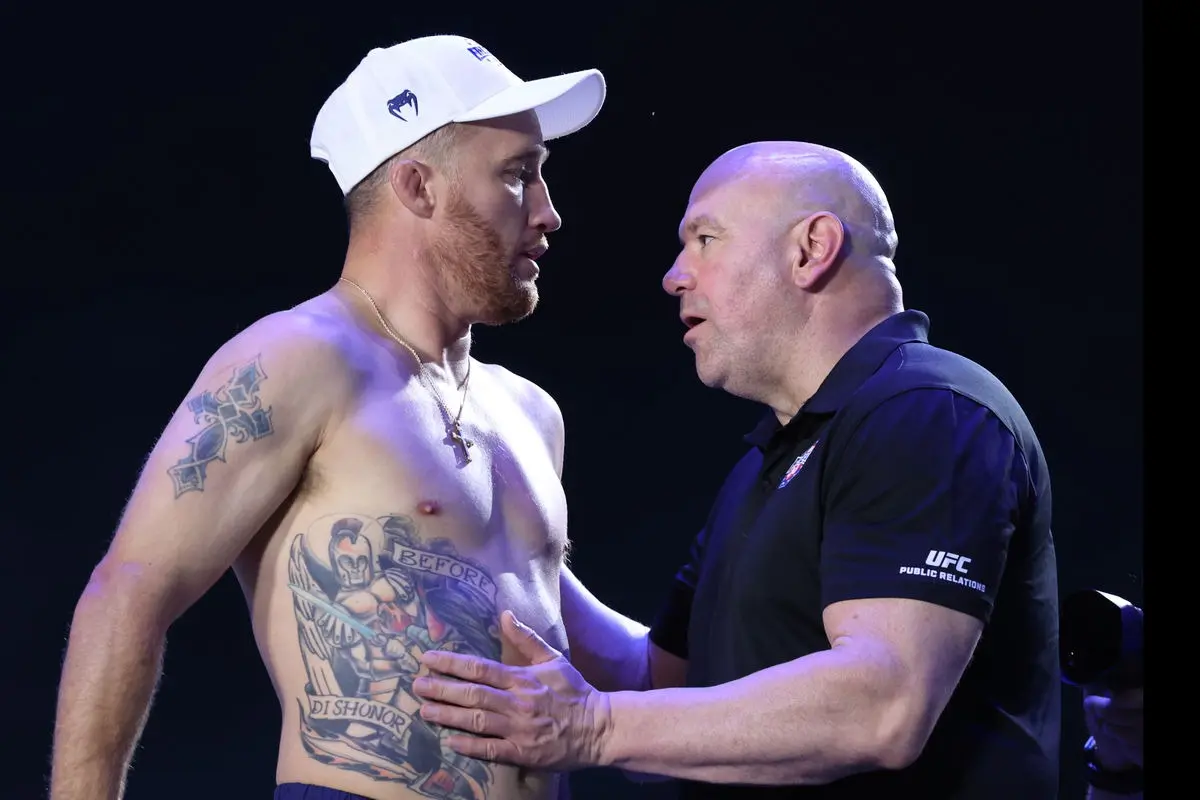
The Ultimate Fighting Championship has always been locked in a relentless pursuit of its next transcendent superstar. Within the ecosystem of modern mixed martial arts, every rising prospect is routinely anointed as the future of the sport, every viral knockout is heralded as a monumental paradigm shift, and every young contender climbing the rankings is supposedly just one decisive performance away from seizing complete control of their division.
Yet, this hyper-fixation on tomorrow often obscures a compelling reality about the present: what happens when some of the most defining names and fierce competitors from the previous generation are still actively winning fights, still commanding massive global attention, and quietly—or not so quietly—beginning to contemplate the final chapters of their storied careers?
For the matchmakers in the promotion, the solution does not require artificially manufacturing another promotional vehicle or rushing an unproven contender into the spotlight. Instead, the answer lies in delivering one final, blockbuster encounter that respects the legacies of the veterans while electrifying the fanbase. A matchup featuring former featherweight kingpin Alexander Volkanovski and perennial lightweight terror Justin Gaethje makes an extraordinary amount of sense for the current landscape of the sport.
Consider the pedigree involved. This is a pairing of two definitive future Hall of Famers, two former champions who have spent well over a decade willfully putting their bodies through absolute torment inside the Octagon. Both men have openly discussed the realities of retirement as they navigate the twilight of their respective athletic primes. If the premier mixed martial arts organization in the world is genuinely interested in booking a superfight that truly feels worthy of the terminology, this is the exact collision course they should pursue.
Volkanovski, at 38 years old, remains fiercely protective of his standing near the absolute summit of the featherweight division, continually proving his mastery of distance, timing, and championship-level endurance. Across the cage, Gaethje, at 37, continues to hold his reputation as one of the most terrifying, explosive, and violent lightweights on the planet, capable of changing the trajectory of a bout with a single heavy low kick or a devastating right hand.
Crucially, neither man requires a cross-divisional superfight simply to validate their professional résumés or secure their historical standing in the sport. That exact dynamic is precisely why the concept works so effectively. This is not a desperate, manufactured cash grab between two past-prime stars desperately attempting to squeeze one final payday out of a fading name recognition. Rather, it is a rare, high-stakes opportunity to witness two elite veterans step under the bright lights for one more massive, legacy-defining swing before they ultimately decide to walk away from active competition.
Furthermore, the macro-timing for such a venture could hardly be more opportune.
The UFC Gets a Superfight Without Screwing Up Two Divisions
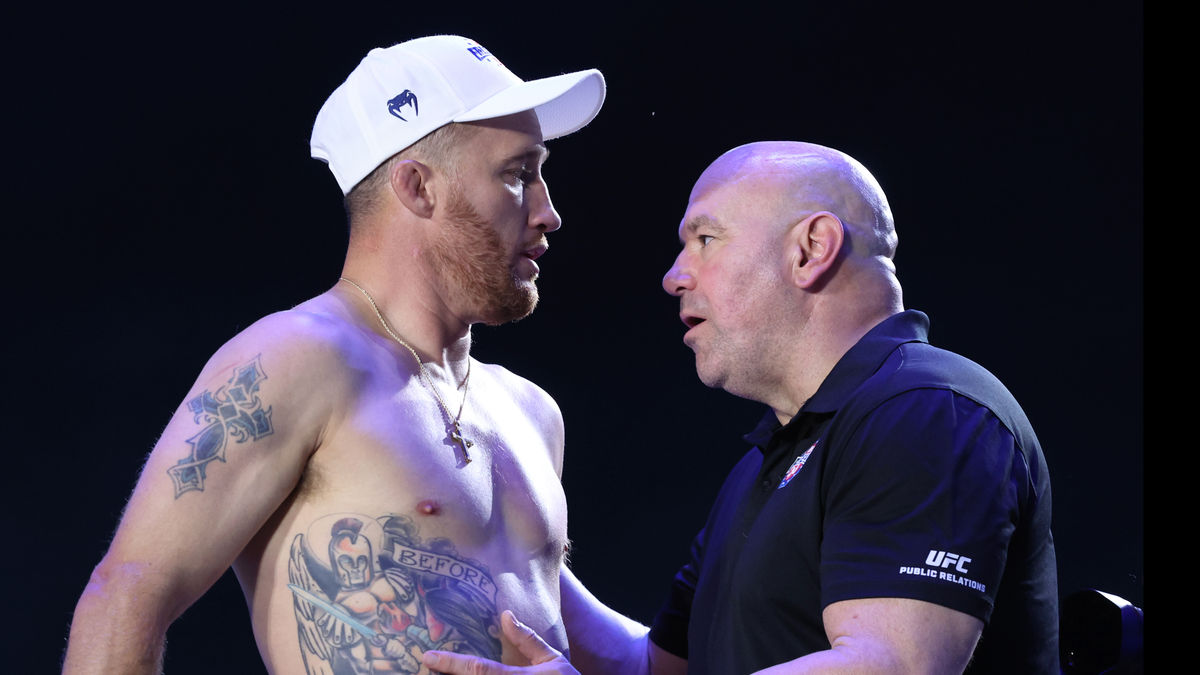
Historically, superfights in the UFC carry a notoriously disruptive double-edged sword. They are endlessly fun to conceptualize and build, right up until the moment they inadvertently hold an entire weight class completely hostage. A dominant champion decides to move up in weight to challenge for a second belt, a championship strap gets tangled in promotional delays, top contenders are forced to sit on the sidelines waiting for clarity, and suddenly half of a division finds itself trapped in limbo while the organization builds a single mega-event.
Combat sports fans do not have to look far back in history to remember the logistical fallout of such bookings. The booking of Georges St-Pierre against Michael Bisping at UFC 217 delivered an unforgettable, electric night at Madison Square Garden, but the aftermath left the middleweight division scrambling when GSP promptly vacated the title shortly after securing the victory.
Fortunately, a potential clash between Volkanovski and Gaethje does not need to devolve into that kind of administrative mess or divisional gridlock.
The blueprint for booking this type of encounter cleanly is straightforward: promote the bout as a special, standalone attraction, keep the championship belts entirely out of the equation, and let both the featherweight and lightweight divisions carry forward without interruption. By treating the matchup as a special attraction rather than a title-mandated roadblock, the organization secures a major pay-per-view event anchored by two universally recognizable, elite fighters without forcing two separate championship pictures to pause.
Under this framework, rising contenders in both divisions can continue to test themselves against one another, official rankings can maintain their natural fluidity, and the next generation of fighters can continue their uninterrupted climb toward the top of the mountain. That represents the inherent beauty of this specific pairing. It does not have to derail the ecosystem of either weight class; in fact, it can act as a natural clearing of the runway.
The featherweight division possesses a surging wave of young, hungry contenders eagerly waiting to prove they are fully prepared to take over the mantle from Volkanovski. Meanwhile, the lightweight division is perpetually stacked to the absolute brim with elite talent, always featuring another generation of aggressive contenders eager to make their mark. The promotion has a fundamental obligation to build those fresh names, but achieving that goal becomes exceedingly difficult if every major promotional storyline perpetually revolves around the exact same veteran guard year after year.
A superfight between Volkanovski and Gaethje offers the promotion a golden opportunity to properly celebrate the old guard while simultaneously creating much-needed physical and promotional space for the emerging era. Under this approach, nobody needs to be unceremoniously pushed out the door before their time, and nobody has to pretend that these established legends suddenly matter any less simply because they are navigating the later years of their athletic careers.
The organization truly can accommodate both realities: treating its fan base to one final, high-level blockbuster for two deeply established stars while preserving a clear, unobstructed path forward for the divisions developing directly behind them.
Legacy, Styles, and the Right Time for a Clash
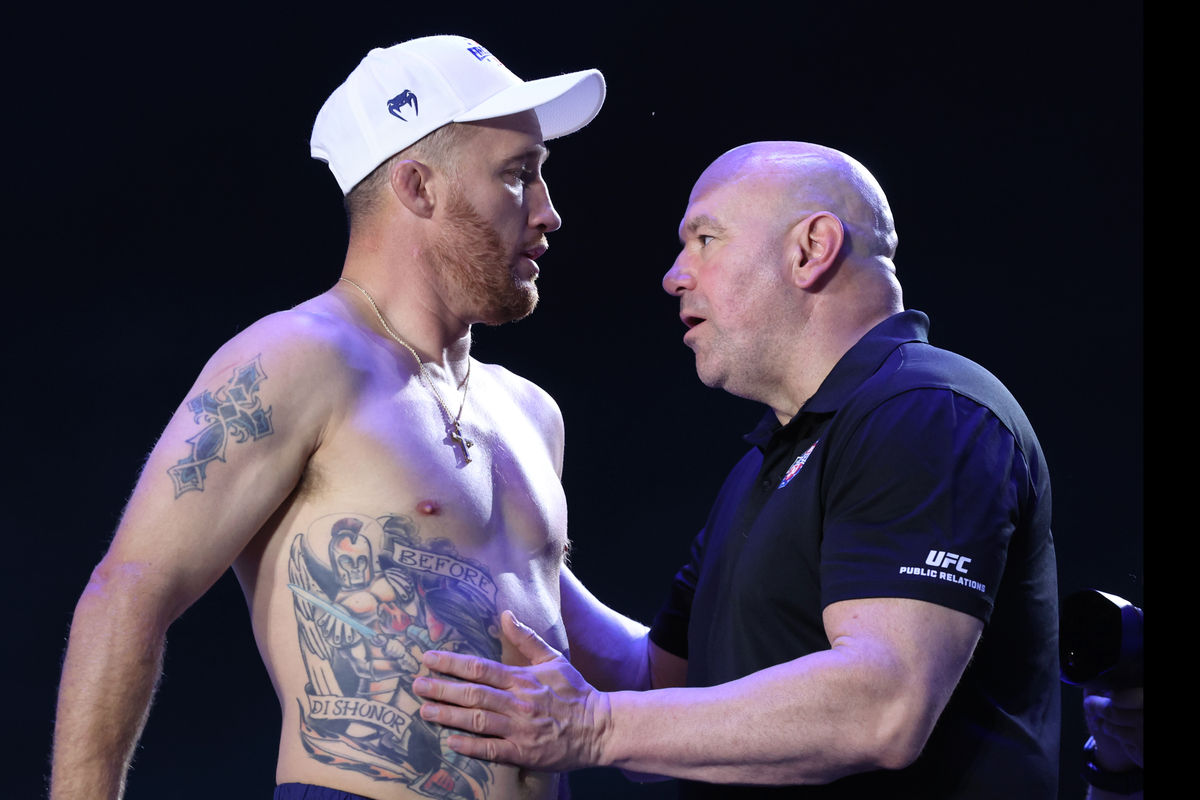
An objective look at the careers of both men reveals that they built their hard-earned reputations by consistently taking on the most difficult challenges available. Neither Volkanovski nor Gaethje has ever relied on manufactured personal animosity, scripted trash talk, or reality-show-style drama to sell a pay-per-view event. Their respective résumés speak loudly enough on their own.
Volkanovski has spent years systematically dismantling elite featherweights, demonstrating a remarkable capacity to adapt to vastly different tactical styles while proving that his overall fight IQ operates on an entirely different echelon. Gaethje, meanwhile, has delivered some of the most violent, memorable, and thrilling fights of his generation, consistently testing his mettle against the absolute best lightweights the world has to offer without ever taking a step backward.
From a purely tactical perspective, the stylistic matchup is nothing short of fascinating. Gaethje brings undeniable, concussive power, relentless forward pressure, and devastating leg kicks that can fundamentally alter the landscape of a fight within a matter of seconds. Volkanovski counters with elite lateral movement, fluid multi-strike combinations, and the kind of sharp in-fight tactical adjustments that have historically made him one of the most difficult puzzles to solve in the history of the lower weight classes. Both competitors possess iron chins and legendary durability, ensuring that neither man will step into the cage looking for an easy night or a passive outing.
There is also an undeniable legacy dimension at play. Both athletes are already securely cemented in the conversation regarding the greatest fighters of their era. A victory over the other would not magically diminish the loser’s historical standing, but it would unquestionably provide the victor with yet another monumental, career-defining moment to add to an already extraordinary body of work.
Because both men have spoken candidly about the looming reality of retirement, the temporal window feels uniquely appropriate. Neither fighter has formally announced a definitive end to his career, which remains a critical distinction. This should never manifest as a forced retirement fight foisted upon competitors who still possess the burning desire to test themselves at the highest level. Instead, it should materialize as an organic opportunity they actively choose to embrace simply because the athletic challenge and the historical appeal are far too compelling to pass up.
The promotion has occasionally fallen into the trap of chasing the next big breakout star while inadvertently overlooking the fact that its established, veteran marquee names are precisely what make the sport uniquely special. Volkanovski and Gaethje are far more than just nostalgic relics of the past; they remain elite, dangerous martial artists who have thoroughly earned the sovereign right to decide the exact terms under which they close out their professional journeys.
Granting them a massive global stage, letting them test their skills against one another, and subsequently allowing the respective divisions to march forward represents the ideal path. The next generation of talent is arriving whether the organization actively accelerates the timeline or not. The promotion does not need to prematurely sacrifice its living legends in order to make adequate room for younger stars; rather, it needs to curate momentous events that gracefully bridge the gap between two eras.
A showdown between Volkanovski and Gaethje accomplishes precisely that balance. It features two future Hall of Famers, delivers a genuinely compelling superfight, and leaves two vital divisions completely unencumbered by administrative stagnation. Let the legends have their signature moment under the brightest lights, and then let the next wave of contenders battle for what comes next.