
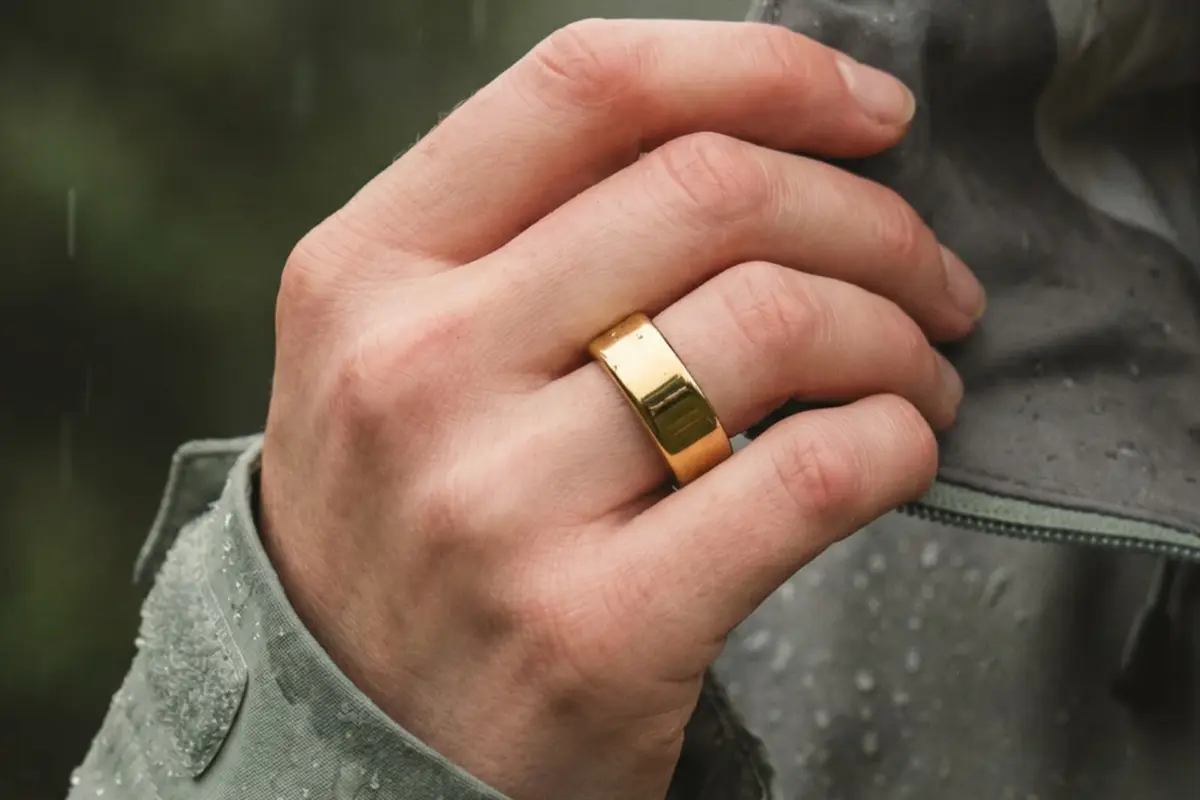
Smart ring pioneer Oura has escalated its ongoing legal battle with Indian rival Ultrahuman, filing a fresh federal lawsuit that seeks to block U.S. sales of the startup’s flagship Ring Pro. The legal action comes just months after a redesign allowed the Bengaluru-based company to make a triumphant return to the American market following a damaging import ban. The case marks only the latest chapter in an aggressive legal campaign waged by Oura to protect its intellectual property against a growing cohort of competitors entering the increasingly lucrative wearable technology sector.
In the complaint, filed Thursday in a federal court in Texas, Oura alleges that Ultrahuman’s Ring Pro directly infringes upon two critical patents held by the company. These patents cover both the distinct industrial design of the ring and its complex internal components, including its specialized battery architecture and internal sensors. Seeking to halt further distribution, Oura is pursuing both substantial monetary damages and a permanent injunction that would effectively bar Ultrahuman from selling, importing, or manufacturing the device within the United States.
The legal confrontation arrives hot on the heels of a hard-fought market reentry for Ultrahuman. The startup launched its redesigned Ring Pro in February, subsequently securing a favorable ruling from U.S. Customs and Border Protection in March. That decision paved the way for the company to resume American sales after an import ban had previously sidelined its earlier generation device, the Ring Air. The original ban went into effect after Oura successfully secured a patent infringement ruling from the U.S. International Trade Commission in August of last year.
Oura’s leadership remains firm in its stance that its intellectual property is being systematically appropriated. A spokesperson for Oura stated that Ultrahuman has a clear history of copying the company’s innovations, pointing directly to the 2025 ITC ruling as evidence. According to Oura, while Ultrahuman introduced a redesigned ring, it failed to resolve the underlying issue of patent infringement, choosing instead to capitalize on Oura’s years of research, development, and market leadership.
The legal nuances of the new complaint center on specific patents that Oura argues were untouched by the previous Customs review. While the border protection ruling addressed the specific intellectual property tied to the earlier dispute, Oura’s latest lawsuit cites two entirely different patents: design patent D804,471 and utility patent 12,769,363. To protect its hard-earned patent rights, the company asserts that it was forced to take legal action once again.
Adding intrigue to the timeline, the utility patent cited in the lawsuit is remarkably fresh. Issued to Oura on October 20—just two days before the lawsuit was formally filed—patent 12,769,363 covers an innovative smart ring design that integrates sophisticated internal components, such as a curved battery, a specialized circuit board, tiny magnets, and advanced sensor arrays.
Oura has also expanded the scope of its legal action by naming Texas-based electronics manufacturer SVTronics as a co-defendant. According to the court filing, SVTronics manufactures the Ring Pro at a specialized production facility located in Plano, Texas, operating under the direct instruction and control of Ultrahuman. The lawsuit alleges that both companies are collectively liable for infringing Oura’s patents through the domestic manufacture, importation, and commercial sale of the contested wearable device.
Ultrahuman leadership has responded to the legal challenge with defiance. Mohit Kumar, co-founder and CEO of the startup, expressed absolute confidence in the legitimacy of the Ring Pro and vowed to contest the allegations vigorously through the judicial system.
Kumar noted the unusual timing of the litigation, highlighting that Oura chose to assert entirely new patents, including one issued just forty-eight hours before the complaint was lodged. He emphasized that Ultrahuman intends to defend its market position resolutely, assuring customers that no court order currently affects the Ring Pro, which remains fully available for purchase across the United States.
The hostilities between Oura and Ultrahuman date back to 2023, when Oura initially sued the Indian startup over the Ring Air—a device that had instrumentalized Ultrahuman’s rise and helped it establish a foothold in the American market. Oura subsequently escalated the matter by bringing a separate case before the U.S. International Trade Commission in 2024, culminating in the import ban that temporarily halted the startup’s U.S. momentum.
However, Ultrahuman is far from the only competitor caught in Oura’s legal crosshairs. The Finnish wearable technology maker has pursued similar patent infringement claims against a wide array of smart-ring manufacturers, including major consumer electronics players like Samsung, as well as niche competitors such as RingConn, Circular, and Zepp Health. While some of these confrontations have resulted in prolonged courtroom battles, others have concluded through formal business resolutions. Notably, companies like RingConn and Circular opted to settle their disputes by entering into multi-year patent licensing agreements, agreeing to pay ongoing royalties to Oura to maintain uninterrupted sales of their products in the U.S. market.
These aggressive legal maneuvers are unfolding against the backdrop of a rapidly expanding global smart ring industry. Market research firm IDC projects that global shipments for smart rings will surge by 12.8% this year, reaching an estimated 4.9 million units, and continue on a steep upward trajectory to hit approximately 6.3 million units by 2030. While Oura has long maintained its position as the dominant category leader, energetic challengers like Ultrahuman are fighting aggressively for market share.
The timing of the lawsuit also coincides with broader corporate developments for Oura. Just weeks prior to filing the complaint, Oura shelved its planned $2.2 billion initial public offering, pointing to lingering uncertainty in the broader financial markets. Despite holding off on its public market debut, the company has maintained a rapid pace of product development, rolling out new software features and fitness metrics designed to help users better understand how physical activity impacts their cardiovascular health.
Meanwhile, Ultrahuman has been aggressively shoring up its own financial and technological standing. In September, the startup successfully secured $70 million in a funding round backed by prominent investors, including Qualcomm Ventures and Labcorp, pushing its valuation to approximately $365 million. Furthermore, Ultrahuman has been actively collaborating with Qualcomm to develop a next-generation smart ring capable of running more complex software directly on the device. This strategic pivot aims to expand the ring’s utility far beyond traditional health and fitness tracking, pushing into advanced realms such as artificial intelligence interactions and gaming.