
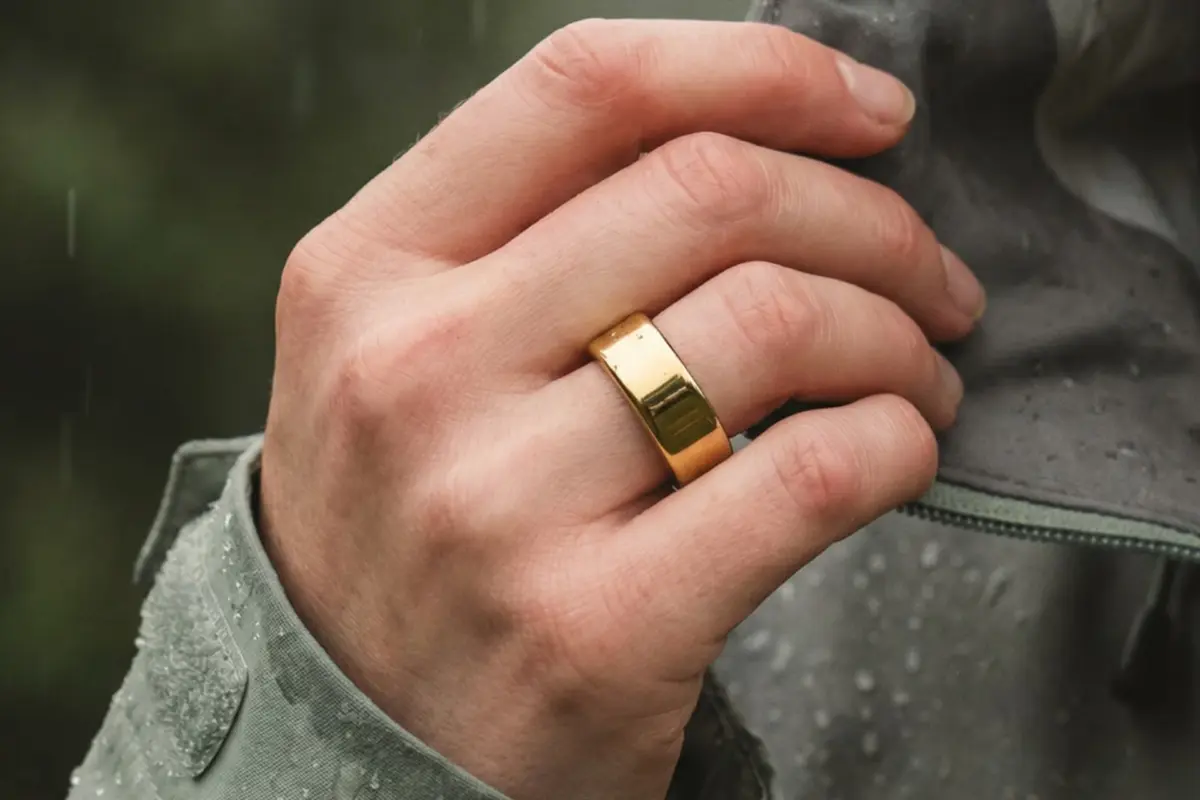
Smart ring pioneer Oura has escalated its legal battle in the wearable technology sector by filing a fresh patent infringement lawsuit against Indian rival Ultrahuman. The legal action aims to block United States sales of Ultrahuman’s newly redesigned Ring Pro, arriving just months after the Bengaluru-based startup successfully returned to the American market following a damaging import ban. The case marks only the latest chapter in an aggressive legal campaign waged by Oura to protect its intellectual property against a rapidly expanding field of competitors, which includes industry giants like Samsung as well as specialized startups like RingConn.
In the complaint filed Thursday in a federal court in Texas, Oura alleges that the Ultrahuman Ring Pro infringes upon two distinct patents held by the company. These patents cover both the outward industrial design of the ring and its complex internal components, including its battery architecture and specialized sensors. Seeking to halt the commercial momentum of its rival, Oura is asking the court for monetary damages alongside a permanent injunction that would completely bar Ultrahuman from importing, marketing, and selling the device in the United States.
The legal confrontation comes on the heels of a hard-fought market reentry for Ultrahuman. The startup launched its redesigned Ring Pro in February, and by March, it secured a favorable ruling from U.S. Customs and Border Protection. That regulatory green light cleared the path for Ultrahuman to resume its commercial push in the lucrative American market. The clearance was particularly critical for the startup because it directly followed a sweeping import ban on its previous flagship device, the Ring Air. That earlier ban took effect after Oura secured a decisive patent infringement ruling from the U.S. International Trade Commission in August of last year.
Oura’s leadership maintains that its competitor has systematically borrowed from its research and development pipeline. An Oura spokesperson stated that Ultrahuman has a documented history of copying the company’s innovations, a pattern underscored by the 2005 and 2025 ITC rulings against the firm. According to Oura, while Ultrahuman introduced a redesigned ring, it failed to address the ongoing infringement of Oura’s proprietary technology, choosing instead to capitalize on the market leadership and technological breakthroughs that Oura has spent years establishing.
Addressing the technical scope of the current litigation, Oura asserts that the recent U.S. Customs ruling applied strictly to the single patent at the center of the previous dispute, leaving two entirely separate patents exposed and unprotected. Those two patents, designated as D804,471 and 12,769,363, form the bedrock of the new federal complaint. To defend its intellectual property rights, Oura stated that it was forced to initiate formal legal proceedings for patent infringement.
The timing of the patents highlights the aggressive nature of the intellectual property strategy. One of the cited patents, designated as number 12,769,363, is exceptionally new, having been officially issued to Oura on October 20, merely two days before the company filed the lawsuit in Texas. This patent covers a sophisticated smart-ring design framework that integrates miniature internal components, including a curved battery configuration, a specialized circuit board, tiny alignment magnets, and high-precision biometric sensors.
In addition to targeting Ultrahuman directly, Oura has also named Texas-based electronics manufacturer SVTronics as a co-defendant in the lawsuit. According to the court filing, SVTronics manufactures the Ring Pro at a specialized production facility located in Plano, Texas, operating under the direct control and instruction of Ultrahuman. The complaint alleges that both companies are jointly responsible for infringing Oura’s patents through the domestic manufacture, commercial importation, and retail distribution of the device within the United States.
Ultrahuman leadership has responded to the legal challenge with defiance, signaling its intent to mount a vigorous defense. Mohit Kumar, co-founder and CEO of Ultrahuman, expressed complete confidence in the legitimacy of the Ring Pro and confirmed that the company would fight the new allegations through the legal system. Kumar noted that Oura has deliberately chosen to assert entirely different patents, including one issued just forty-eight hours before the litigation commenced. He emphasized that no current court order restricts the distribution of the Ring Pro, and the device remains fully available for purchase by customers across the United States.
The legal animosity between Oura and Ultrahuman dates back to 2023, when Oura initially sued the Indian startup over the Ring Air, a product that had successfully propelled Ultrahuman into the international spotlight and established its presence in the American wearable tech landscape. Oura subsequently escalated the matter by bringing a separate case before the U.S. International Trade Commission in 2024, culminating in the import prohibition that temporarily disrupted Ultrahuman’s U.S. operations.
Ultrahuman is far from the only company navigating legal turbulence originating from Oura. The Finnish-rooted ring maker has pursued similar patent infringement claims against an array of competing smart-ring manufacturers, including major technology conglomerates like Samsung, as well as specialized brands such as RingConn, Circular, and Zepp Health. While some of these legal battles have escalated into prolonged court conflicts, others have found resolution outside the courtroom. For instance, both RingConn and Circular opted to negotiate licensing agreements, agreeing to pay recurring royalties to Oura to maintain the legal right to sell their products in the United States.
This wave of litigation unfolds against the backdrop of a rapidly expanding global market for smart rings and wearable health technology. Industry research from firm IDC indicates that worldwide shipments of wearable rings are projected to surge by 12.8% to reach approximately 4.9 million units, with market volumes expected to climb toward 6.3 million units annually by the year 2030. While Oura has long maintained a dominant market share and strong brand recognition in the category, Ultrahuman has emerged as one of its most persistent and formidable international challengers.
The federal lawsuit also arrives during a significant period of corporate transition for Oura. Just weeks prior to filing the complaint, Oura shelved plans for a heavily anticipated $2.2 billion initial public offering, pointing to broader macroeconomic uncertainty within the public financial markets. Despite stepping back from its IPO ambitions, Oura has continued to aggressively develop its software ecosystem, introducing advanced fitness tracking metrics designed to help users monitor the direct impact of physical exertion on their cardiovascular health.
Meanwhile, Ultrahuman continues to secure financial backing and expand its technological horizons. In September, the startup closed a $70 million funding round backed by prominent investors including Qualcomm Ventures and Labcorp, pushing the company’s valuation to roughly $365 million. As part of this growth trajectory, Ultrahuman has been collaborating with Qualcomm on the development of a next-generation smart ring powered by advanced computing hardware. This initiative aims to run software applications directly on the wearable device, allowing the company to expand its product offerings beyond conventional health and fitness tracking into advanced artificial intelligence interactions and gaming applications.