
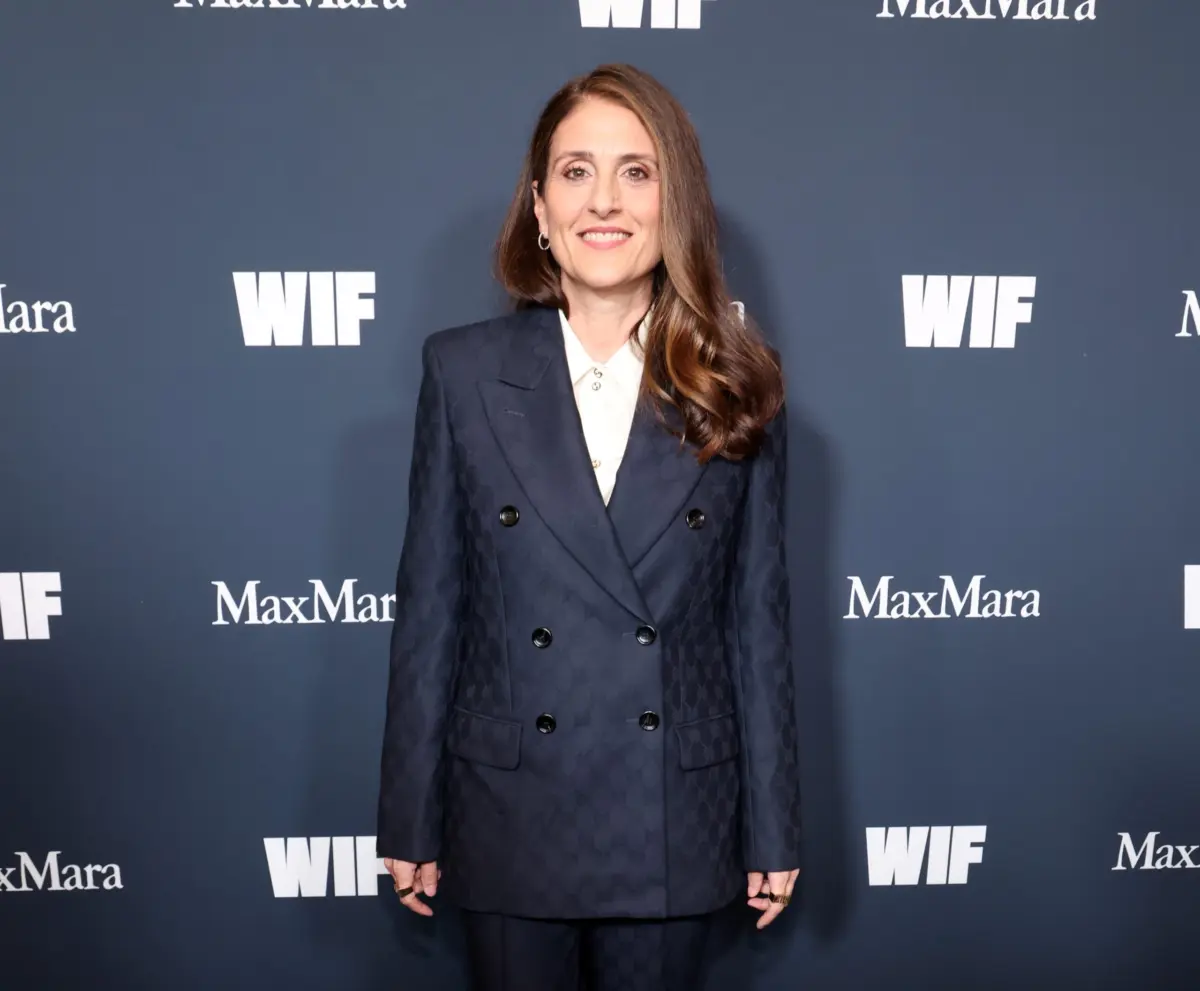
In her first public appearance since she and Mike De Luca were ousted from Warner Bros., veteran film executive Pamela Abdy took the stage at Women in Film’s annual WIF Honors event on Thursday evening, delivering a fiery, unvarnished speech that addressed the realities of navigating the entertainment industry as a woman in power.
The high-profile gathering inside the Beverly Hilton provided a charged backdrop for Abdy, who received the inaugural Vanguard Award—a recognition bestowed upon a leader whose career embodies the qualities that actively move the industry forward. The honor, presented to her by celebrated filmmaker Nancy Meyers, was officially announced prior to her exit from the legacy studio. That departure took place amid massive corporate restructuring as the Paramount Skydance $111 billion merger with Warner Bros. was finalized last month, a seismic shift that sent shockwaves through the Hollywood ecosystem and resulted in the departures of several top-tier executives.
Taking to the podium, Abdy reflected on her storied three-decade career, noting that she has worked alongside some of the greatest filmmakers of all time while striving to champion films that spark valuable conversations and cultural debate. However, she quickly pivoted to the sobering realities of the modern entertainment landscape, pointing out that executive decisions are increasingly made under the harsh glare of a media ecosystem that has largely abandoned deep analysis and factual reporting in favor of the persistent trap of clickbait.
From there, Abdy used her platform to systematically highlight the women who have shaped her career. She ran through a comprehensive list, personally thanking every female director she has produced or worked with to date, followed by similar acknowledgments of the female executives and producers who have stood by her through the ebbs and flows of the business.
Yet, as the address progressed, the tone shifted from gratitude to an unmistakable expression of fury. Abdy admitted that while her appreciation for these women has only deepened over the years, other emotions—and one in particular—have recently risen to the surface with undeniable ferocity. That feeling, she told the attentive and sympathetic crowd, is pure, unadulterated rage.
Elaborating on the source of that anger, Abdy explained that she feels rage for these women, rage for herself, and an even greater sense of rage for the entire generation of women who deserve to have their full potential recognized and elevated without artificial barriers. She condemned the ways in which women remain under attack across society, noting how female health and well-being perpetually seem to come second to arbitrary expectations of how they must present themselves in a room.
Addressing the double standards baked into corporate leadership, Abdy highlighted the impossible tightrope walk required of female executives. She pointed out that as a leader who happens to be a woman, she is frequently expected to sublimate her anger, to keep her emotions locked away, and to maintain a placid demeanor under pressure. Challenging that conventional wisdom with a striking metaphor, she remarked that when people tell you to tamp down a fever, sometimes it simply burns hotter.
Abdy shared numerous personal experiences with institutional bias, recounting how she has been labeled difficult, emotional, and combative throughout her professional journey. She recalled being told to put on her big-boy pants and to smile more, as well as facing persistent industry myths suggesting that movies starring and directed by women do not generate adequate box office revenue and possess inherently limited audiences. She noted that traditional Hollywood tracking often creates a pervasive nervousness among financiers when women lead a film, rooted in the archaic assumption that male moviegoers simply will not show up. Furthermore, she called out male directors for failing to support female filmmakers with the same systemic solidarity that men routinely offer one another.
The veteran executive argued that the landscape is actively getting harder, not easier, for women trying to build lasting careers in the business. While acknowledging the comforting narrative that a handful of pioneering women breaking through to chairperson seats represents a definitive breakthrough that paves the way for the next generation, Abdy expressed deep skepticism about whether that progress is genuine or lasting. To illustrate her point, she drew attention to the ubiquitous media lists highlighting the most powerful women in Hollywood, observing dryly that there is no equivalent list for men because men simply are the list.
Turning her attention toward the future, Abdy raised critical questions about the legacy current leaders are leaving behind. She asked whether the industry is truly healthy enough to welcome the next generation of storytellers and executives, and whether it can provide an environment where women can enter with open hearts and minds rather than having to continually fight the same exhausting battles she and her peers have fought for decades.
Despite the heavy subject matter, Abdy found glimmers of hope, pointing to recent political developments where numerous women have been appointed to top leadership positions. She also took a moment to express profound gratitude to the key people in her life, including her frequent collaborator Mike De Luca, thanking them for remaining steadfast through the highs, the lows, the major successes, and the very public failures that inevitably accompany a high-stakes career in entertainment.
Bringing her 15-minute speech to a powerful close, Abdy reflected on the personal evolution required to survive and thrive in Hollywood. She noted that it has taken her 31 years in the industry to finally speak in her authentic voice and to completely stop caring whether someone chooses to label her as difficult. She explained that when confronted with that critique now, her response is a definitive rejection. If being passionate about getting movies made earns someone the label of difficult, she declared, she is more than willing to suffer the fools who cannot tell the difference, and she will continue fighting to do what she loves. Concluding to a wave of applause, Abdy affirmed that she is deeply grateful for her career thus far, emphasized that she is far from finished, and expressed her enduring pride in being part of the creative community.
Earlier in the evening, Abdy spoke directly with reporters regarding her immediate plans following her departure from Warner Bros., admitting candidly that she has no idea what her next professional chapter will hold, but adding that not knowing is actually a rather nice feeling. She also addressed the broader industry trend that saw a wave of top female executives culled during recent corporate restructurings and layoffs. Alongside Abdy’s exit, Cindy Holland recently departed her post as Paramount’s streaming chief, while Bela Bajaria was ousted from her role as Netflix’s chief content officer.
Characterizing the collective departures as upsetting to witness, Abdy emphasized the resilience of the women involved. She noted that all of these leaders possess incredible careers and that single moments or corporate maneuvers do not define a professional’s worth. Instead, she asserted, a career is defined by the body of work left behind, the impact of past contributions, and the ongoing commitment to supporting the next generation of artists and storytellers.
The evening’s celebrations extended beyond Abdy’s keynote address, honoring several other notable figures across film and television. Adria Arjona was presented with the WIF Max Mara Face of the Future Award, while Gemma Chan and director Beth de Araújo received the Crystal Award for Advocacy in Film in recognition of their collaborative work on Josephine. Additionally, Hannah Waddingham was honored with the Crystal Award for Advocacy in TV for her standout role in Ted Lasso, and Salma Hayek Pinault accepted the prestigious Jane Fonda Humanitarian Award, which was presented to her by Fonda herself.