
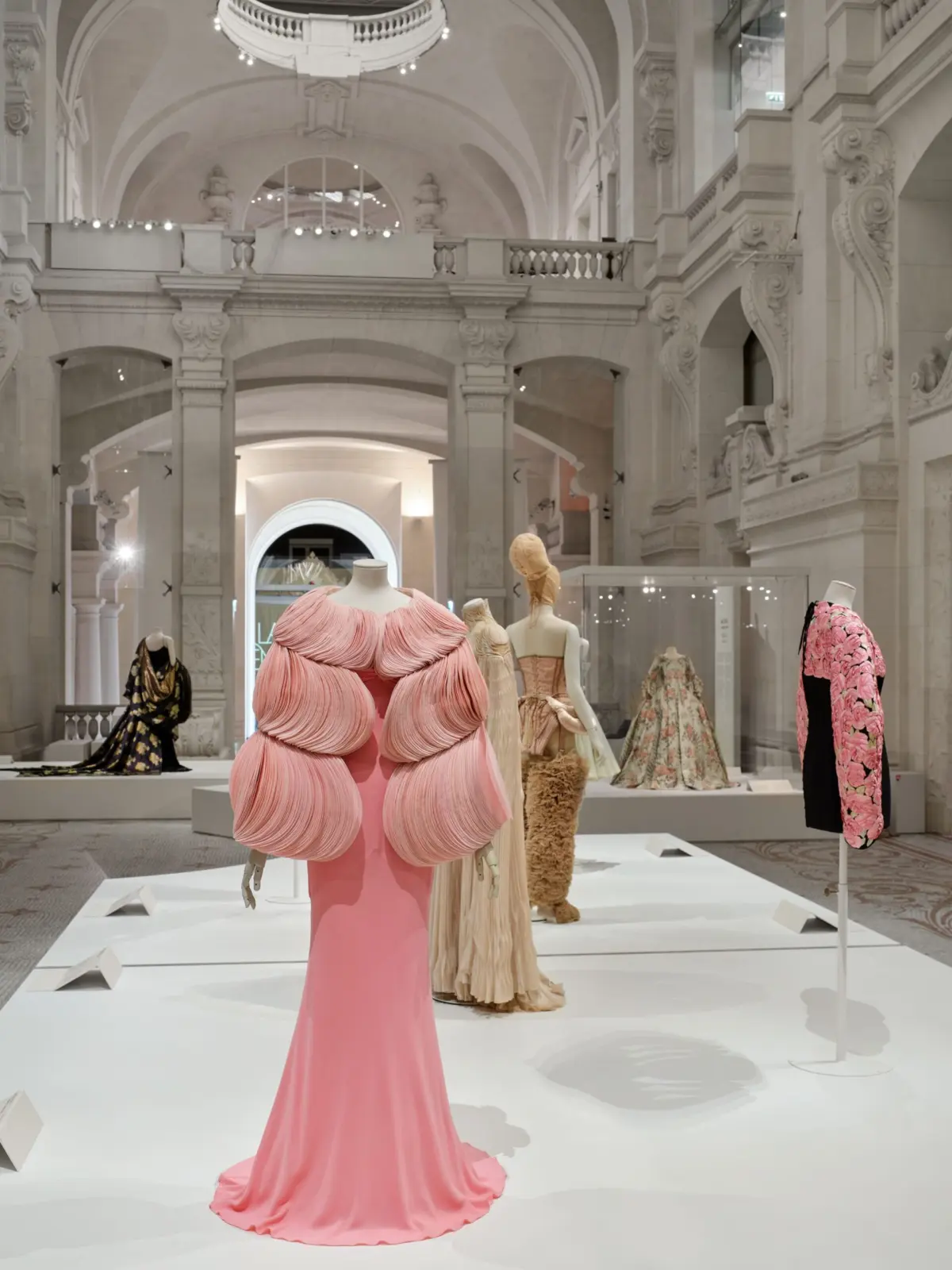
Is fashion art? Does it belong in a museum? At the Musée des Arts Décoratifs (MAD) in Paris, the answer is a resounding oui. Tonight, the esteemed institution will welcome the global fashion crowd for the official opening of "Look: 40 Years of Fashion at the Museum," a milestone exhibition featuring a carefully curated selection of forty stellar designs culled from decades of landmark shows. Ranging from 18th-century French court attire to brand-new contemporary acquisitions—among them a striking Alainpaul ensemble from the designer’s fall 2026 collection, inspired directly by the inner workings of the MAD itself—the showcase represents just an infinitesimal fraction of a massive archive that runs more than 80,000 pieces deep.
"It’s like a major flashback," curator Sophie Lemahieu commented during an exclusive press preview ahead of the opening. The overarching arc of the show, she explained, is designed to cover the entire lifespan of a garment from its conception to its legacy. "It begins inside a designer’s mind, how they share ideas, what happens in the atelier—then how things arrive at a moment of consecration, why they become part of an exhibition, and then what goes into preserving and valorizing them."
This expansive vision of fashion as both a creative discipline and a cultural artifact drives the entire scenography of the exhibition. Among the rarely displayed treasures brought out from the museum’s deep vaults are the scaled-down wooden mannequin that Madeleine Vionnet famously used to drape every single one of her revolutionary creations, alongside tissue paper-lined drawers brimming with bejeweled shoes designed by Roger Vivier. Visitors will also encounter intimate ephemera that capture the creative spark, such as the magical, feminist mood board meticulously assembled by Maria Grazia Chiuri for her very first Christian Dior haute couture show in spring 2017. Another standout piece of backstage history is a magpie’s dream of a "mood box" put together by Josephus Thimister during his tenure at Balenciaga in the 2010s, playfully stuffed with raw fabric swatches, miscellaneous accessories, and glittering silvery star sequins.

As visitors step into the museum’s central nave, they are immediately greeted by iconic, gravity-defying moments from both the high-fashion runway and broader pop culture history. Highlights include a stunning haute couture black and gold kimono ensemble designed by John Galliano for Dior during the spring 1998 collections, paired alongside the cheek-grazing, backless black velvet dress by Guy Laroche that famously scandalized audiences when actress Mireille Darc wore it onscreen in 1972.
The exhibition weaves together seminal creations from an extraordinary roster of visionary designers. Works by Thierry Mugler, Yves Saint Laurent, Christian Dior, Hubert de Givenchy, Alexander McQueen, Christian Lacroix, Helmut Lang, Hussein Chalayan, Iris van Herpen, Valentino, Nicolas Ghesquière, Paco Rabanne, Rei Kawakubo, and Karl Lagerfeld for Chanel mingle effortlessly with pieces that were worn to memorable, highly publicized effect in the public eye. Among these pop culture touchstones are a quilted satin corset and ruffled leg design by Jean Paul Gaultier, and the sculptural black ruffled mini-dress from Alexandre Vauthier’s spring 2020 couture collection that Rihanna famously wore to the exclusive Oscars after-party hosted by Beyoncé and Jay-Z. Another prominent focal point is a closeup view of a dramatic pink cape and gown by Valentino—a breathtaking millefeuille confection crafted from silk organza, crepe, and silk from the designer’s haute couture fall 2007 collection—which originally starred in the designer’s 45th-anniversary exhibition and now takes center stage on the official poster for this new show.
Yet the exhibition avoids leaning exclusively into staged runway drama, ensuring that fashion is also examined through its most grassroots and everyday expressions. Notably, the scenography touches upon the original neon yellow safety vest that inadvertently sparked the widespread gilets jaunes uprising of 2018. The inclusion nods to the striking historical footnote of Karl Lagerfeld wearing one such vest for a major public road safety campaign with the tongue-in-cheek tagline: "It’s yellow, it’s ugly, it doesn’t go with anything—but it could save a life." In the surrounding galleries, an array of original sketches, posters, doll-sized mannequins, mood boards, swatch albums, clothing patterns, buttons, embroideries, and experimental toiles work together to retrace the laborious, intricate process of how fashion is actually made and, years later, meticulously preserved for posterity.
Reflecting on more than 70 distinct exhibitions staged over the course of 40 years, Lemahieu noted that while the retrospective gives celebrated pieces another much-deserved encore, it also serves as a vital opportunity to revisit design inspirations that have been all but forgotten by contemporary observers. The sense of cross-pollination across eras is particularly striking when one realizes, for example, how a look from Galliano’s viral, critically acclaimed Maison Margiela Artisanal couture show of spring 2024 can be traced directly back to a russet fringed silk couture dress presented by Madeleine Vionnet exactly one hundred years prior.

Similarly, the exhibition demonstrates how a 19th-century textile pattern filters down a century and a half later into an ensemble by Dries Van Noten, who reprised both its distinctive tulip motif and the loose, multicolored threads on its underside for a pair of coats showcased in his spring 2014 collection. While few contemporary fashion enthusiasts might recognize the name Maggy Rouff today, a 1930s-era waxed silk satin slip dress attributed to her looks so remarkably modern that it could easily have stepped off a runway yesterday.
"That’s the thing about the archives," Lemahieu offered, summarizing the enduring mission of the institution. "It’s not just about storage—every time we look at them, we discover something new."
"Look: 40 Years of Fashion at the Museum" will run at the Musée des Arts Décoratifs from September 30, 2026, through April 4, 2027.