
In recent weeks, the conversation surrounding the role of wonder in education has found renewed urgency through the work of educators, researchers, and administrators. From Substack reflections on educational assessment to doctoral research and school board committees, professionals across the academic landscape are beginning to question whether traditional metrics of student engagement go far enough. At the heart of this growing discourse is a fundamental proposition: what would happen if education placed wonder, rather than mere mechanical curiosity or rigid testing outcomes, at the center of the learning environment?
The discussion builds on a long-standing dialogue among psychologists, educators, and creative thinkers regarding how schools handle inquiry and imagination. Observers note that while traditional educational models often prioritize standardized performance and immediate answers, they frequently risk stifling the deeper, more exploratory states of mind that drive true learning. By re-evaluating how educators approach both their own professional practices and their daily interactions with students, proponents of wonder-centered pedagogy argue that schools can transform from compliance-driven institutions into vibrant ecosystems of shared intellectual adventure.
What Happens When Students Wonder?
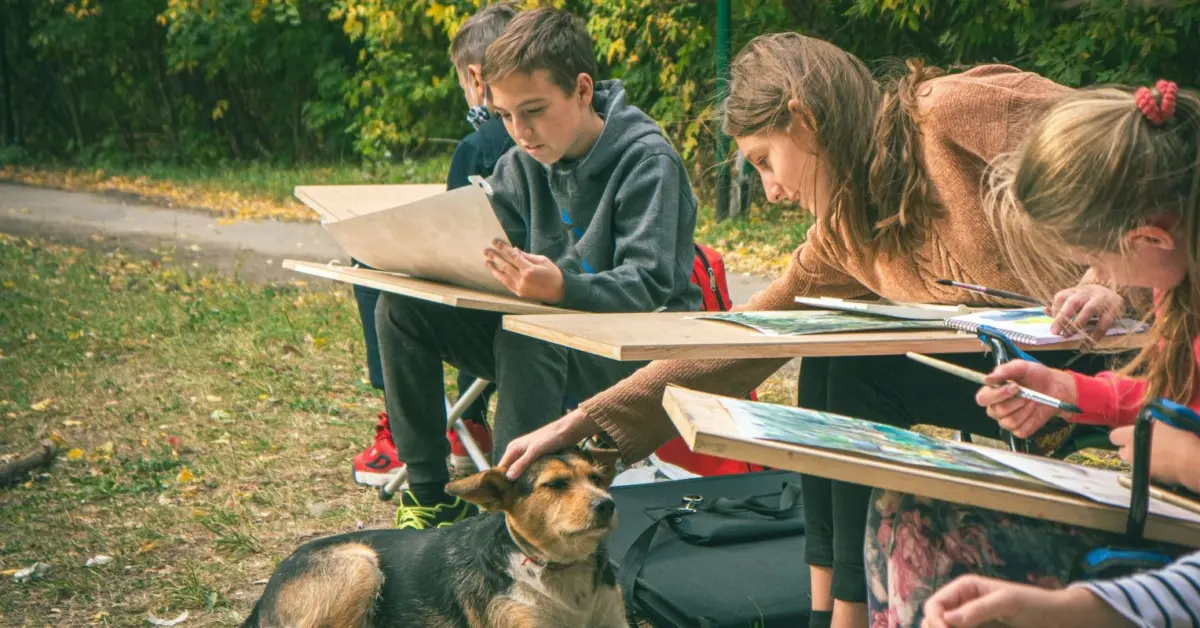
To understand the transformative potential of wonder, educational designers point to how students respond when given the structural freedom to explore their own fascinations. A notable phenomenological study led by Andrew Gilbert and Steph N. Dean of Clemson University examined an eight-week "wonder-infused" project involving students in grades three through five. Situated primarily within an outdoor learning laboratory and directed toward scientific inquiry, the project provided children with considerable autonomy to pursue topics that genuinely captured their interest.
Throughout the project, teachers established various outdoor observation stations across related scientific fields. Students maintained dedicated wonder journals to record spontaneous observations, formulate personal questions, and investigate self-selected natural phenomena, culminating in a school-wide Wonder Fair. Rather than viewing science as a rigid set of facts to memorize, the students encountered wonder as an active journey with immediate relevance to their daily lives.
Reflecting on the experience, one participating student described how the approach helped open up the mind, preparing them for the broader world and teaching them how to figure out answers independently. With careful guidance from educators, these students successfully transitioned from initial moments of open-ended bewilderment into formulating testable questions and conducting their own experiments.
Researchers also documented a phenomenon they termed "joyful struggle." While the young learners inevitably encountered difficulties when attempting to construct hypotheses or reach consensus with their peers, the overarching context of wonder reframed these challenges as light-hearted and engaging obstacles rather than frustrating roadblocks. Advocates suggest that fostering a culture of joyful struggle is essential, given that intellectual friction is an unavoidable component of any meaningful endeavor.
But What About the Teachers?
A critical dimension of integrating wonder into schools involves the adults who facilitate the learning process. In the Clemson study, teachers did not simply act as passive supervisors; they actively participated in the wondering alongside their students, creating an atmosphere of shared vulnerability. Instructors shared their own spontaneous moments of curiosity, encouraging students to do the same. One participating teacher noted how the project made her realize how often she had walked through local woodlands without truly observing her surroundings. Steph N. Dean has emphasized the importance of helping science teachers view themselves simultaneously as scientists and educators—individuals who do not need to hold every answer, but who are willing to share questions openly with their classrooms.
This perspective aligns closely with research on "wonder-full education" by scholars Wolbert and Schinkel. Their work suggests that a teacher’s personal capacity to wonder is a prerequisite for cultivating wonder in students. According to their framework, effective educators do not treat wonder merely as a mechanical instructional delivery tool. Instead, they inhabit both contemplative wonder—wondering at the world—and inquisitive wonder, which involves wondering about specific phenomena and aligns more closely with traditional definitions of curiosity.
This approach inevitably exposes a degree of professional vulnerability. Teachers, who are historically conditioned to project authority and possess definitive answers, must become comfortable admitting uncertainty. Observers note that this openness dismantles traditional hierarchies and creates psychological safety, allowing students to feel secure in their own exploratory quests.
Similar conclusions emerged from a 2017 qualitative study conducted by Gilbert and Byers at George Mason University, which examined pre-service elementary teachers. The research demonstrated that wonder-based pedagogy helped future educators fundamentally reconsider their relationship with science and envision dynamic new possibilities for classroom instruction. Furthermore, experts emphasize that wonder is not exclusively a developmental milestone meant for young children. For years, advocates have argued that wonder is equally vital for adults, serving as a radical tool for ongoing professional and personal renewal.
Workshops conducted with undergraduates at Western Connecticut State University and doctoral candidates at Boston College have consistently revealed that adult learners often crave explicit permission to wonder openly. When given the space to do so, participants experience a palpable sense of relief, recognizing that they can integrate imaginative inquiry into rigorous academic and professional pursuits.
Cultivating a Culture of Wonder
Realizing this vision requires more than isolated classroom activities; it demands a comprehensive, school-wide ethos of wonder, as described by educational theorists. Developing such a culture begins long before a lesson plan is drafted. It starts with the educators and administrators themselves, prompting a series of reflective questions about their own relationship with learning.
When educational leaders and teachers are encouraged to reconnect with what initially inspired their passion for their fields, the resulting enthusiasm often proves contagious. By examining what currently surprises them, where they find room for professional experimentation, and how they handle their own unanswered questions, adults can lay the groundwork for environments where true intellectual exploration thrives.