
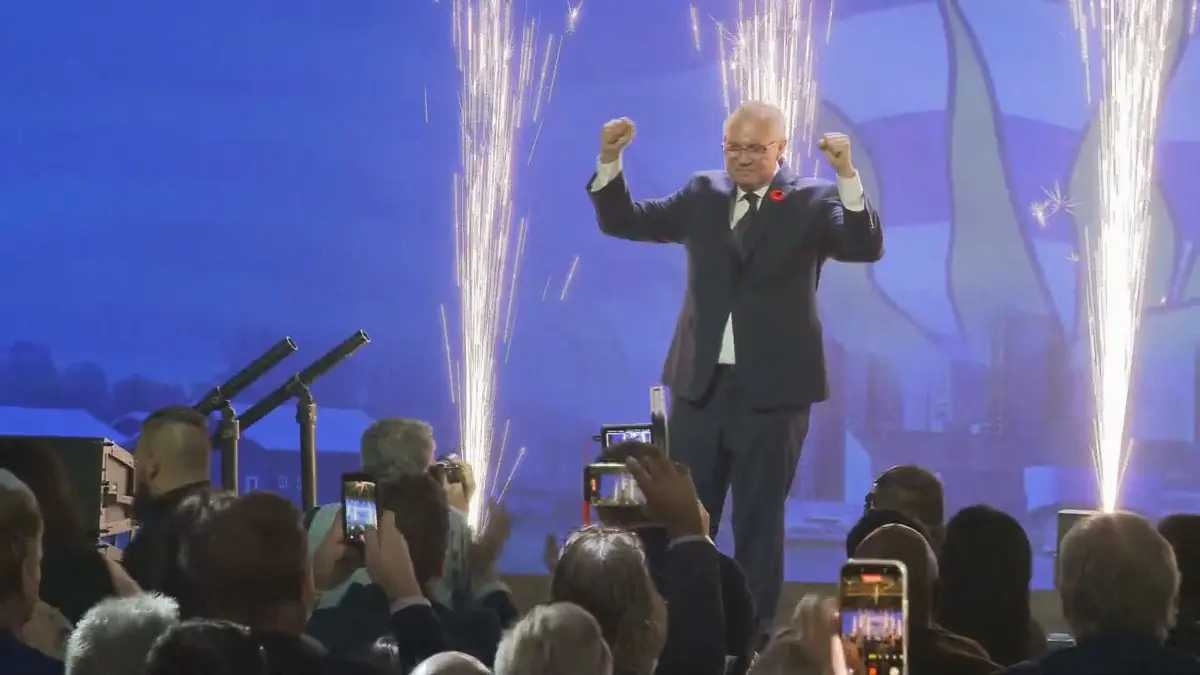
British Columbia Premier-designate Lorne Doerkson has begun outlining a series of policy and administrative objectives for his government’s first 100 days in office, as the full magnitude and political complexity of the challenges facing the incoming administration come into clear focus. Transitioning from the campaign trial to the responsibilities of governance, Doerkson and his team are confronting a packed early agenda that spans internal party organization, major executive cabinet appointments, severe fiscal headwinds, and looming political confrontations with First Nations leadership across the province.
Among the immediate administrative tasks facing the Premier-designate is formalizing his leadership standing on paper. While Doerkson is leading the government transition as Premier-designate, he remains technically the interim leader of the BC Conservative Party. Addressing his leadership status on Sunday, Doerkson characterized the title distinction as a procedural formality that is being actively resolved. He noted that his position as leader is firmly in place, explaining that the distinction remains an administrative detail and confirming that further official details regarding his leadership confirmation will be released imminently as party processes are finalized.
Simultaneously, the Premier-designate is turning his attention to constructing his executive council, a process that will define the core policy direction and operational focus of his administration. Assembling a cabinet requires filling several high-stakes roles, with the health and finance portfolios standing out as the largest, most complex, and most critical appointments. These ministers will be tasked with overseeing major portions of the provincial budget and addressing widespread public interest in healthcare delivery and economic management. In tandem with cabinet selection, Doerkson is evaluating the legislative calendar to determine precisely when the Legislative Assembly of British Columbia will resume sitting.
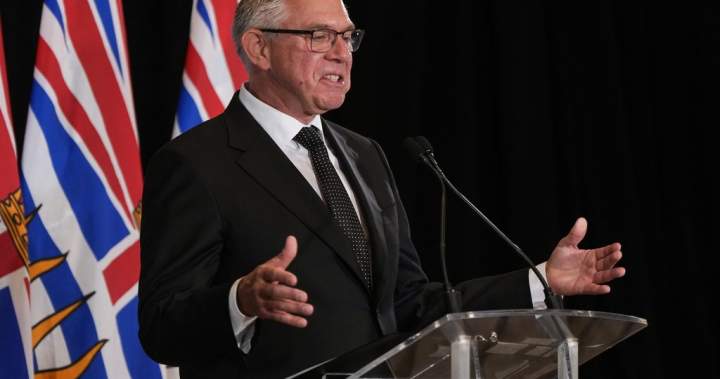
The timing of the legislature’s return remains an open operational question for the new government. Doerkson stated on Sunday that he is keeping all options on the table regarding the parliamentary calendar, emphasizing that he does not want to rule out a fall sitting of the legislature. He noted that keeping the option open is important for the administration as it prepares its legislative agenda. However, he acknowledged that a significant amount of preparatory work, administrative organization, and political planning must be completed before a definitive decision can be made on recalling MLAs to Victoria before the end of the year.
A major priority of Doerkson’s initial agenda in office is establishing a clear picture of British Columbia’s public finances. The Premier-designate announced on Sunday that his government will initiate a comprehensive, independent review of the province’s financial standing. This incoming financial audit comes against the backdrop of a dramatic shift in B.C.’s fiscal situation in recent years. When former Premier David Eby took office, he inherited a $6 billion budget surplus left by his predecessor, John Horgan. However, recent economic projections show that the province’s financial position has reversed sharply, with the current provincial deficit projected at $14 billion.
The prospect of an independent financial audit and the reality of a massive budget deficit have drawn intense interest from British Columbia’s business sector, which is seeking clarity on how the incoming Conservative administration plans to restore fiscal stability. Bridgitte Anderson, the president and chief executive officer of the Greater Vancouver Board of Trade, emphasized that commercial and industrial leaders are looking for a clear, accountable strategy from Victoria. Anderson noted that the business community needs to see a credible path back to a balanced budget. She acknowledged that reversing the current $14 billion deficit will inevitably take time, but stressed that business leaders are eager to gain a deeper understanding from the Conservative government regarding what that recovery timeline will look like and how the administration intends to approach fiscal policy.
Beyond economic and legislative planning, the incoming government is heading toward a potentially volatile political confrontation over Indigenous rights and policy governance. During the BC Conservative leadership race last year, a central stance shared across the candidate field was a commitment to repeal British Columbia’s Declaration on the Rights of Indigenous Peoples Act (DRIPA). Doerkson reaffirmed his commitment to that position on Saturday night, signaling his intention to carry forward the policy pledge into government. The act, which was enacted to align provincial legislation with the principles of the United Nations Declaration on the Rights of Indigenous Peoples, remains a foundational framework for reconciliation and provincial-Indigenous relations.

Political analysts warn that attempting to dismantle DRIPA could spark an immediate and intense crisis between the provincial government and Indigenous nations. Hamish Telford, a professor of political science at the University of the Fraser Valley, noted that repealing DRIPA served as an article of faith among all the leadership candidates during the party’s contest last year. Telford observed that Doerkson reiterated this commitment immediately following the election on Saturday night. However, Telford emphasized that First Nations throughout British Columbia are completely opposed to repealing the legislation. He warned that if the incoming Conservative administration moves forward with its plans to dismantle the act, a major and direct confrontation between the government and Indigenous leadership lies directly ahead.
Indigenous leadership responded swiftly and forcefully to the Premier-designate’s reiterated position. On Monday, Grand Chief Stewart Phillip, president of the Union of British Columbia Indian Chiefs, issued a sharp warning to the government-elect, making it clear that First Nations will aggressively fight any effort to roll back the legislation. Phillip stated firmly that Indigenous communities and leadership will not stand idly by while the incoming administration attempts to dismantle DRIPA. Rejecting the government’s stance, Grand Chief Phillip explicitly declared that any attempt by the elected government to "rip up" the Declaration on the Rights of Indigenous Peoples Act would be viewed by First Nations leadership as a "declaration of war."
While the incoming Conservative government prepares its 100-day roadmap and faces immediate fiscal and policy hurdles, the political landscape for the outgoing BC NDP is entering a period of significant recalibration. Following the election outcome, the BC NDP must navigate its transition into the official opposition, which includes selecting an interim leader to guide the party in the immediate term, as well as organizing a broader political process to eventually elect a permanent leader. However, political observers note that the party has time to manage its internal transition thoughtfully without rushing into immediate decisions.
Evaluating the road ahead for the official opposition, Hamish Telford pointed out that these are very early days following the election and that the BC NDP is under no immediate pressure to hurry its leadership selection process. Telford noted that the NDP caucus retains experienced veteran parliamentarians who can help guide the party through its initial transition into opposition benches. Looking at potential future leadership candidates, Telford identified current caucus members such as Niki Sharma and Bowinn Ma as early frontrunners who could draw strong support within the party.

Telford also highlighted potential leadership candidates outside the current legislative caucus who could enter the race over time. He noted that Ravi Kahlon, a prominent figure who did not contest this election, has long been viewed by political observers as having an interest in party leadership. Additionally, Telford suggested that other prospective leaders could emerge from outside provincial politics entirely, including figures coming out of municipal government roles. Because the party enters opposition with a four-year mandate ahead of it before the next scheduled election, Telford emphasized that the BC NDP should give itself adequate time to select the right person to lead the party forward into the next political chapter.
With an independent financial review on the horizon, key cabinet positions to assign, an impending conflict over Indigenous rights legislation, and a reorganizing opposition in Victoria, the stage is set for a challenging and closely watched first 100 days for Premier-designate Lorne Doerkson and his incoming BC Conservative administration.