
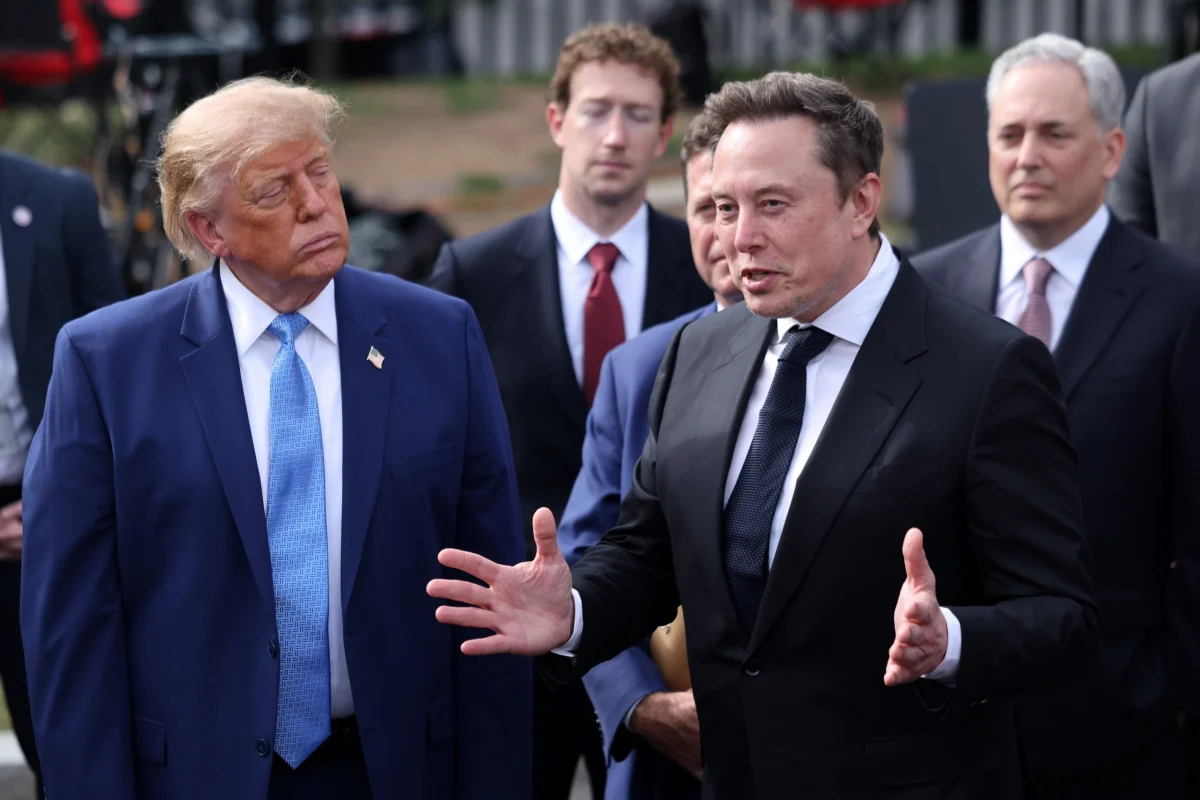
President Donald Trump recently hosted many of the biggest names in the artificial intelligence industry at the White House, using the high-profile gathering to announce a surprising semantic shift: the U.S. government is officially dropping the term "artificial intelligence" in favor of "super intelligence."
The development was unpacked on a recent episode of TechCrunch’s Equity podcast, where journalists Kirsten Korosec, Sean O’Kane, and Anthony Ha sat down to discuss the underlying motivations behind the meeting and what effects this unusual rebranding might have on the broader technology sector. The panel expressed widespread skepticism over the substance of the "Joint Commitment on Frontier Responsibilities," a pact signed by the attending tech executives. O’Kane pointed out that the agreement is "deeply non-binding" from a legal perspective, though Trump reportedly described it as "morally binding"—a novel phrasing that left observers searching for legal precedent.
Korosec suggested that the true significance of the White House gathering lies not in policy enforcement, but in a sweeping public relations and rebranding effort. According to this interpretation, the administration is attempting to distance the burgeoning technology from the widespread public anxieties associated with standard AI terminology. As Korosec framed the underlying messaging of the administration’s new narrative, the public is being subtly nudged to believe that while traditional artificial intelligence might be scary, carry existential risks, and displace jobs, "super intelligence" represents something entirely different. This branding campaign continued shortly after the summit with Trump’s unveiling of a new government initiative dubbed the "Super Intelligence Force."
The suddenness of the summit surprised many industry watchers, particularly given the administration’s shifting rhetoric on the subject. Only a week prior to the meeting, President Trump had publicly dismissed the need for federal oversight, declaring that the United States must lead in the field without constraints and asserting that anyone warning of dangers posed by the technology was essentially a political plant. Yet, despite this staunch opposition to regulation, a roster of prominent tech chief executive officers quickly assembled at the White House to sign the joint commitment—even managing to misspell the "United States" on the official document itself.
Behind-the-scenes friction leading up to the summit further complicated the narrative, particularly concerning Anthropic and its relationship with the federal government. Days before the executive luncheon, Anthropic CEO Dario Amodei was invited to a late-night dinner with President Trump at 10 p.m. This sit-down marked a dramatic shift for a company that had appeared to be out of favor with the administration. The subsequent luncheon brought together a formidable group of tech power brokers, including Meta CEO Mark Zuckerberg, Amazon founder Jeff Bezos, and Tesla and xAI leader Elon Musk, alongside Anthropic’s Amodei.
While the high-profile photo opportunity and post-summit press conference generated plenty of internet memes regarding the awkward social dynamics of gathering rival tech billionaires in one room, podcast participants questioned the depth of the reconciliation. O’Kane noted that despite Amodei’s presence at the dinner and the subsequent signing ceremony, deep divisions remain within the administration regarding Anthropic. While some factions within the White House—such as the Treasury Department—have shown a willingness to collaborate with Anthropic, other powerful entities like the Department of Defense continue to view the company with suspicion, frequently labeling it a national security risk due to its cautious deployment conditions and safety stances.
This internal policy fragmentation suggests that while top executives were brought into the fold for a high-profile photo opportunity, the underlying policy battles within the executive branch remain unresolved. Observers noted that while parts of the White House are eager to leverage Anthropic’s technology and involve the company in high-level strategic decisions, military leadership remains deeply resistant.
Ultimately, the consensus among the podcast panel was that the agreement itself carries very little practical weight. The rushed nature of the summit, highlighted by the glaring typo in the signed document, points to a hastily organized event designed more for political theater than regulatory reform. However, the sheer fact that the administration felt compelled to stage such a gesture is viewed as telling. Whether the newly minted "super intelligence" terminology will stick in official government discourse or merely serve as a temporary branding exercise remains to be seen as the tech industry navigates its evolving relationship with the White House.