
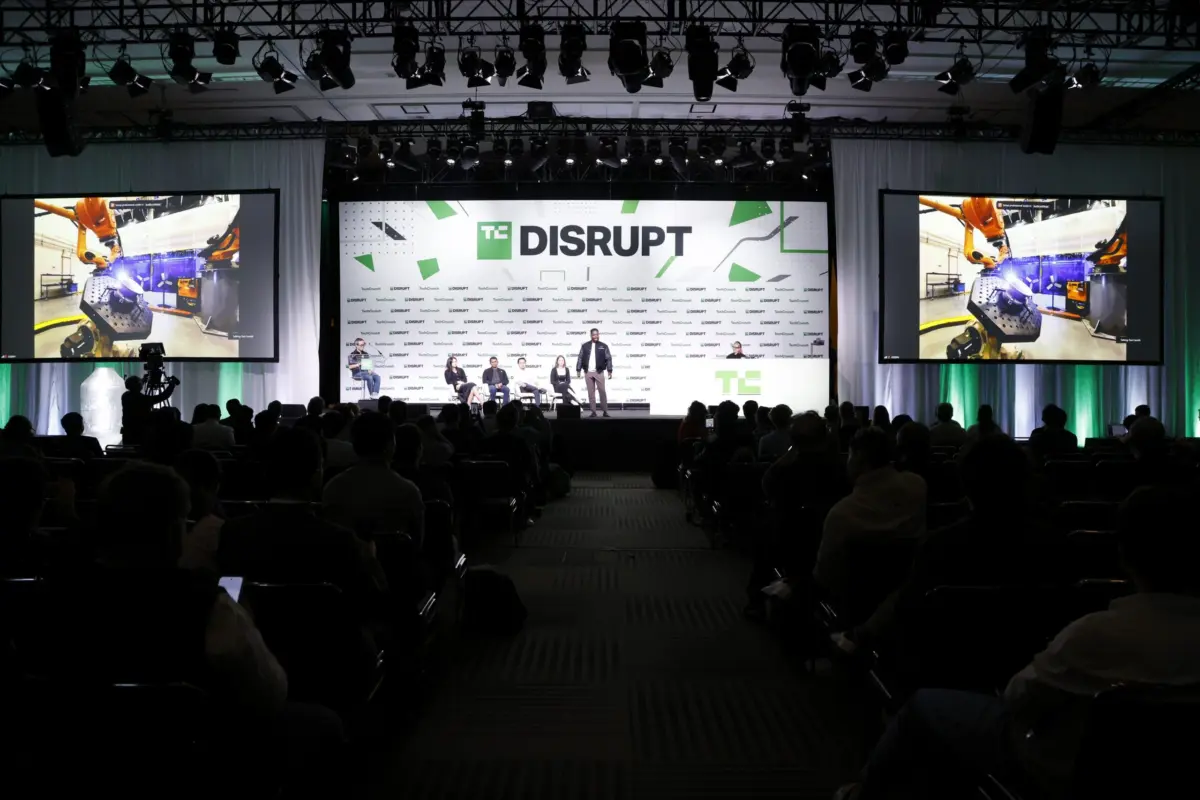
The tech ecosystem’s premier gathering is preparing to take over San Francisco, bringing together the visionary minds, bold investors, and disruptive startups defining the next era of innovation. Scheduled for October 13 to 15 at Moscone West, TechCrunch Disrupt 2026 is positioning its flagship Disrupt Stage as the ultimate crucible for conversations shaping everything from artificial intelligence and robotics to biotech, social media, transportation, and venture capital.
Across three days of keynote conversations, live debates, and high-stakes competitions, the conference will serve as a meeting ground for more than 10,000 founders, venture capitalists, operators, and technology enthusiasts from across the globe. Attendees will have the opportunity to navigate over 200 sessions led by more than 250 industry leaders spanning six distinct industry stages, alongside dozens of roundtables, breakout sessions, and a bustling exhibition floor featuring over 300 exhibiting startups.
At the heart of this sprawling ecosystem is the Disrupt Stage, designed specifically for the trailblazers building the foundational infrastructure of tomorrow. This year’s lineup reflects the pressing questions and tectonic shifts currently reverberating through the technology landscape, offering front-row access to the individuals translating seemingly impossible concepts into commercial realities.
Meet the Entire Disrupt Stage Lineup
The journey from an ambitious concept to a scaled physical enterprise is rarely straightforward, a reality that Rivian CEO RJ Scaringe will unpack during his appearance on the Disrupt Stage. Scaringe is slated to discuss what it truly takes to build complex hardware, design sophisticated physical products, and successfully manufacture them at scale in an increasingly competitive global market.

Hardware and infrastructure constraints will also take center stage during Cerebras CEO Andrew Feldman’s session. As artificial intelligence models demand exponentially greater amounts of compute power, energy, and capital, Feldman will confront one of the most pressing questions hanging over the current AI boom: Can AI keep scaling? His discussion aims to explore where the current technological trajectory ultimately leads and what structural bottlenecks or breakthroughs could fundamentally alter that path.
Shifting from silicon to biology, Science Corporation founder Max Hodak is set to look beyond traditional screens toward a future where technology increasingly interacts directly with the human body. Hodak’s work explores the intersection of consumer technology and neural interfaces, painting a picture of a world where computing is seamlessly integrated into human physiology.
Complementing this exploration of human-centric tech, Flock Safety CEO Garrett Langley will join the agenda for a candid conversation addressing the complex triad of artificial intelligence, surveillance, and the evolving future of public safety. As communities grapple with the implementation of advanced monitoring technologies, Langley’s insights will shed light on the balance between security, data privacy, and technological deployment.
In what is anticipated to be a rare and closely watched appearance, all five partners of Benchmark—Jack Altman, Peter Fenton, Chetan Puttagunta, Everett Randle, and Eric Vishria—will take the stage together. As representatives of one of Silicon Valley’s most influential and historically selective venture capital firms, the partners will share their collective perspective on what they see coming next in the venture landscape and how foundational investments are shifting amid macroeconomic uncertainties.

The blurring lines between software and hardware will receive further scrutiny from Ricursive Intelligence co-founders Anna Goldie and Azalia Mirhoseini. The duo will take the audience inside a radical possibility for the tech sector: AI systems that possess the capability to design the very hardware they run upon. Such an innovation has the potential to fundamentally collapse the traditional divide separating software engineering from silicon manufacturing.
As the event progresses into its latter days, Amazon’s Panos Panay will take the stage on Thursday to pose a fundamental question about consumer electronics: What comes after the smartphone? Known for his extensive background in hardware design and product development, Panay is expected to bring new technology examples with him to illustrate his vision of post-smartphone computing.
Social media and software development paradigms are similarly undergoing rapid transformation. Bluesky CEO Toni Schneider and COO Rose Wang will explore whether the social media landscape can successfully start over, decoupling from legacy models to foster more open and decentralized digital communities. Meanwhile, Replit CEO Amjad Masad will tackle the profound changes awaiting software development, examining what happens to the software industry and the people who build it when artificial intelligence makes coding accessible to nearly anyone, regardless of technical background.
Closing out the keynote lineup with a unique perspective bridging entertainment, business, and capital allocation, Hollywood star, entrepreneur, and investor Mark Wahlberg will take the Disrupt Stage alongside Keebeck’s Bruce K. Lee. The session will reveal how Wahlberg has leveraged decades of global influence, industry relationships, and enterprise building into a serious venture investment career, translating entertainment success into diversified financial and entrepreneurial endeavors.

And Then There’s Startup Battlefield
While the keynote stages host the titans of today, the Startup Battlefield 200 serves as the proving ground for the companies of tomorrow. Throughout the three-day event, early-stage founders will compete live across diverse verticals encompassing space and physical AI, energy and manufacturing, health tech and life sciences, and enterprise and security. These entrepreneurs will face rigorous questioning from a panel of the world’s leading investors as they fight for a coveted spot in the Startup Battlefield final.
The legacy of the Battlefield will be highlighted by the return of Cellino co-founder and CEO Nabiha Saklayen, who emerged victorious from Startup Battlefield in 2021. Saklayen will take the stage to unveil her company’s latest product development and pose a provocative, forward-looking question to the audience: Can you bank your biology?
Additional perspectives from past competitions will be provided by a trio of Battlefield alumni—Molecule.one’s Piotr Byrski, Nephrogen’s Demetri Maxim, and Gläd’s Kevin Damoa. These founders will participate in a candid discussion detailing life after the pitch, reflecting honestly on the strategic bets that paid off, the business plans that required mid-course corrections, and the critical insights they wish they had possessed when they were standing precisely where this year’s finalists find themselves.
The climax of the competition will arrive when the 2026 finalists take over the Disrupt Stage for the final face-off. Only one company will ultimately walk away as the official Startup Battlefield winner, securing the prestigious Disrupt cup alongside $100,000 in equity-free funding to accelerate their enterprise growth.

Grab Your Pass and Hear Directly from Today’s Tech Leaders at Disrupt
TechCrunch Disrupt 2026 is engineered not merely as a venue for observing established industry titans, but as an active networking hub where emerging operators can forge impactful connections. Whether engaging with exhibitors on the showroom floor, attending specialized roundtables, or navigating the expansive exhibition of more than 300 startups, participants are positioned at the epicenter of upcoming industry shifts.
The event continues to offer various accessibility options, including specialized pricing structures for teams, bundle passes, and subsidized Expo+ passes designed to support professionals impacted by recent tech industry layoffs. As the dates draw closer, the convergence of founders, investors, and technologists at Moscone West is set to underscore San Francisco’s enduring role as a central catalyst for global technological progress.