
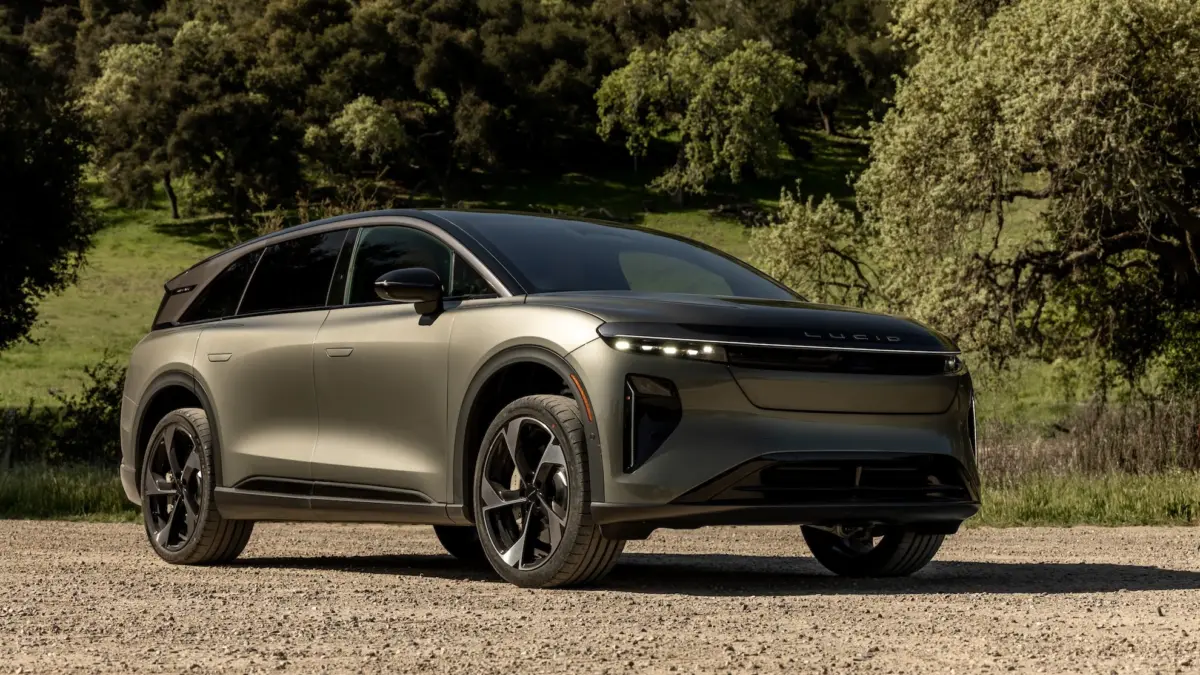
Lucid Motors manufactured 2,954 electric vehicles during the third quarter of the year, marking a dramatic 54% decline compared to the same period a year ago. The reduction in output is part of a deliberate strategy by the luxury EV maker to throttle back production in order to better align with actual market demand for its vehicles.
This latest figures mark the third consecutive quarter in which Lucid’s production volume has decreased. Furthermore, it represents the company’s lowest quarterly vehicle output since the first quarter of 2025, a period that immediately followed Lucid’s initiation of production for its second major vehicle offering, the Gravity SUV.
On the delivery front, Lucid handed over 3,806 electric vehicles to customers in the third quarter. This figure remained roughly flat when compared to the second quarter of the year, though it represents a slight decrease of about 200 vehicles from the third quarter of 2025. The company has persistently faced headwinds in securing a broad base of buyers for its luxury vehicle lineup. Reflecting this ongoing imbalance, Lucid has built more vehicles than it has successfully delivered in five out of the last six quarters.
The latest financial and operational figures arrive as the company navigates a major strategic shift under its new leadership. Silvio Napoli, who stepped into the role of CEO earlier this year, has spent the past few months spearheading a comprehensive initiative aimed at what he terms "simplifying the company." This turnaround strategy has encompassed sweeping workforce reductions, including laying off roughly 1,500 employees, streamlining the corporate leadership structure, and eliminating a second manufacturing shift at the company’s assembly plant in Arizona. These measures are part of an aggressive plan targeted at achieving $1.4 billion in cost savings. As part of this broader recalibration, Lucid also elected to delay the market rollout of its third vehicle, the Cosmos, a planned model designed to capture a much broader audience with a starting price point under $50,000.
The third-quarter data, made public on a Monday afternoon, came to light just days after competitive EV manufacturer Rivian announced the strongest quarter in its corporate history. Rivian’s record-breaking performance was heavily driven by the commercial success of the R2, its newly introduced, more affordable SUV option. Although Rivian did not disclose granular, model-specific delivery figures for the R2 during the announcement, the company reported shipping nearly 20,000 vehicles overall in the third quarter. This strong performance marked Rivian’s first full quarter with the R2 actively in production, rising sharply from the 12,194 vehicles it shipped during the second quarter.
Lucid’s ongoing struggles to capture a meaningful share of the broader EV market stand in stark contrast to the ambitious projections the company laid out when it first transitioned to public markets in 2021. During that year, Lucid Motors completed a merger with a special purpose acquisition company (SPAC), a transaction that injected approximately $4 billion in capital into the enterprise. At the time of the public listing, company leadership issued guidance estimating that it would manufacture and ship as many as 90,000 electric vehicles by the single year of 2024.
During Lucid’s second-quarter earnings call in August, CEO Silvio Napoli offered a candid assessment regarding the factors that have hindered the company’s ability to carve out a sustainable position in the competitive electric vehicle landscape.
While acknowledging the inherent technical merits of the brand, Napoli did not mince words regarding past missteps. He noted that while there is no question that Lucid brought leading innovations and outstanding products to the market, the company has ultimately disappointed on several fronts and for far too long. He added that the organization has failed to execute consistently, missed key commitments, rushed products to market before they were fully ready, underinvested in customer service infrastructure, responded far too slowly to emerging quality issues, and allowed corporate complexity to drag down decision-making speeds.
The planned introduction of the lower-priced Cosmos model could theoretically provide Lucid with the market access necessary to scale its operations by reaching a significantly wider demographic of consumers. However, Napoli has maintained a cautious stance, warning shareholders that attempting to rush the new vehicle to market prematurely would only invite further operational and financial instability. Reiterating the company’s new cautious philosophy on product deployment, Napoli emphasized to investors on the call that they will not repeat the mistakes of the past by bringing a product to market before it is ready.