
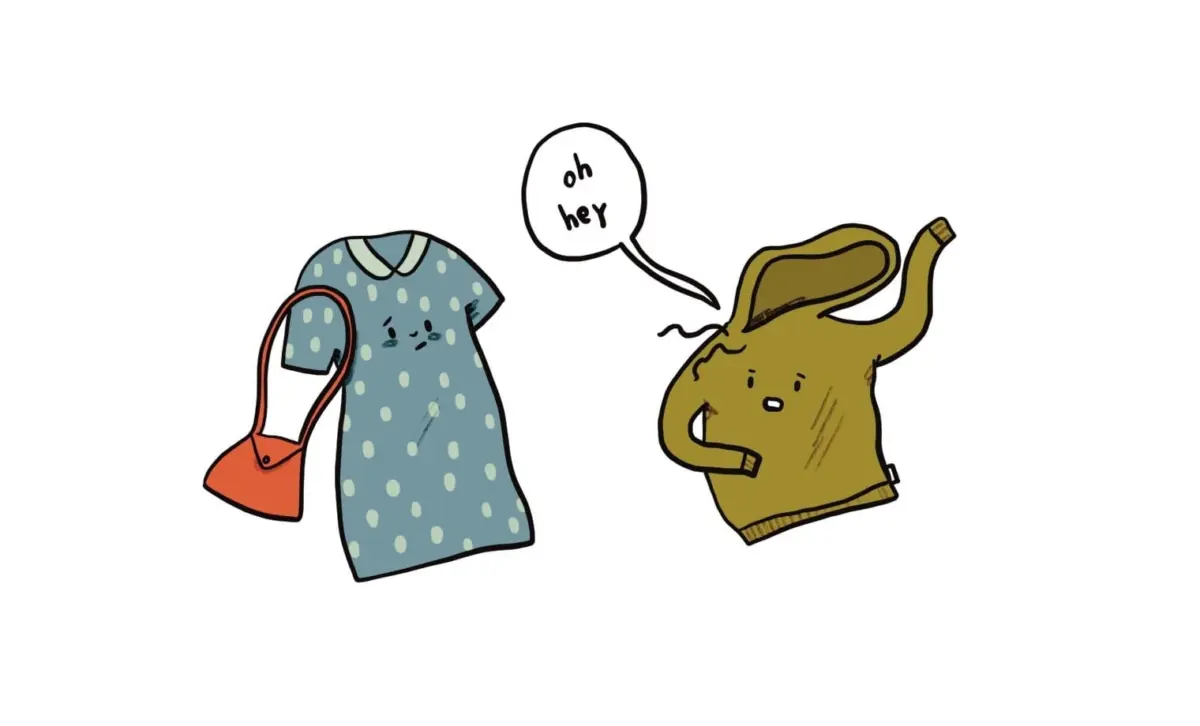
Fenton, who has navigated the complexities of small-space living in New York City apartments for more than two decades, highlighted the advice as a transformative turning point in how she manages her wardrobe. According to Fenton, the directive came originally from a professional organizer and immediately cleared up years of hesitation regarding borderline items hanging in her limited closet space.
"A professional organizer once told me this advice and I’ve never forgotten it: When you’re uncertain about a dress, shirt, or pair of jeans, ask yourself if you would want to run into your ex wearing it," Fenton shared in the column. "As soon as I heard that, I knew exactly which pieces I was ready to give away, like a denim dress that always makes me feel frumpy."
The philosophy taps into a universal psychological friction point in wardrobe maintenance. While capsule wardrobes, seasonal rotations, and numerical limits—such as discarding anything unowned for a year—are common prescriptive methods for cleaning out closets, emotional attachment often overrides logic. Garments frequently carry aspirations of who a person hopes to be, nostalgia for past eras, or guilt over financial investments made in items that ultimately did not suit their daily lives. By introducing the "ex test," the method bypasses abstract questions of utility and forces an immediate, visceral assessment of confidence and self-presentation.
The advice resonates particularly strongly for urban dwellers and individuals contending with limited spatial footprints. For Fenton, whose writing and career have frequently focused on the realities of living small in metropolitan environments, maximizing physical space requires an uncompromising approach to what is allowed to remain. In compact apartments, every square foot and every clothing hanger carries a high opportunity cost. Bulky items that evoke negative self-perception or apathy take up valuable room that could otherwise accommodate functional, confidence-boosting attire.
The publication of Fenton’s tip marks an early installment in Cup of Jo’s "Pro Tips" series, an initiative designed to spotlight practical, everyday wisdom from writers, creatives, and regular contributors. The platform, founded by Joanna Goddard, has long engaged its readership in conversations surrounding personal style, capsule wardrobes, and the psychological weight of material possessions. Previous explorations on the site have examined the minimalist lessons learned from building a capsule wardrobe, emphasizing how paring down clothing options can streamline morning routines and reduce decision fatigue.
The inclusion of an illustrative element by artist Brooke Barker further anchors the piece within the publication’s signature visual style, accompanying a discussion that has historically drawn significant reader engagement regarding domestic routines and lifestyle adjustments. As the column continues to roll out advice from various figures, the focus on unconventional decision-making heuristics highlights a broader cultural shift away from rigid, mathematical organization systems toward emotional and intuitive curation.
For Fenton, the immediate utility of the advice proved decisive. Items that lingered in the gray area of her closet—neither worn regularly nor discarded due to vague sentiments of potential future usefulness—were instantly categorized. The standard cuts through the polite rationalizations people often make for keeping ill-fitting or unflattering clothes, replacing them with a scenario that demands absolute honesty about personal comfort and external perception.
As the conversation around sustainable fashion, mindful consumption, and efficient home organization continues to evolve, strategies like the one shared by Fenton offer a glimpse into how individuals manage the physical and emotional clutter of daily life. Whether readers choose to adopt the ex-test for their own seasonal wardrobe reviews remains to be seen, but the method provides a vivid addition to the broader discourse on how people interact with the clothes they own.