
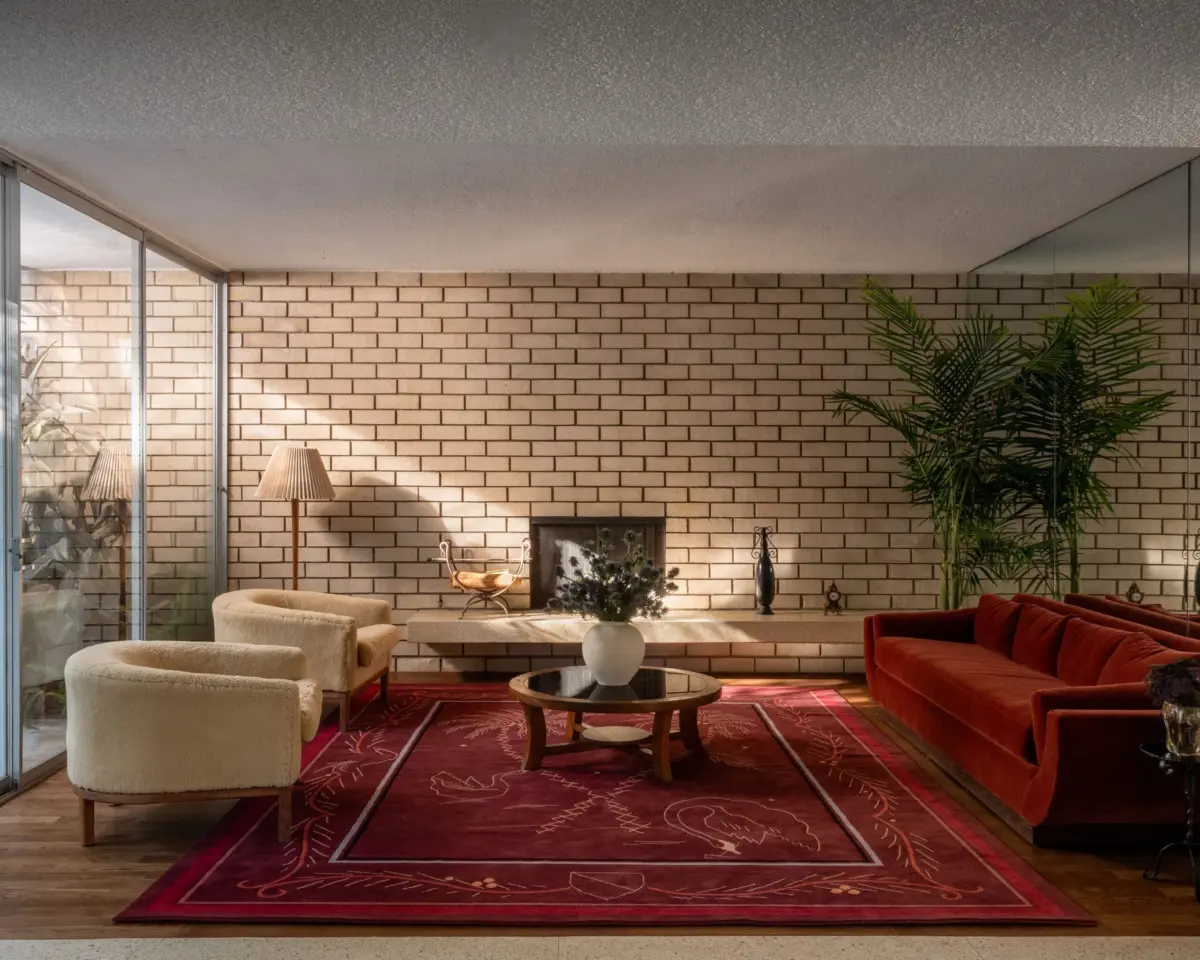
For years, shoppers walking into Reformation boutiques around the world have found themselves captivated by a design element that wasn’t even for sale: the floor coverings. According to Lauren Caris Cohan, the brand’s chief creative officer, one of the most frequent remarks from customers admiring the bright, whimsical showrooms is simply how extraordinary the rugs look. That observation is invariably followed by the question every retailer loves to hear and dreads to answer: "Where can we get them?"
Until now, the answer was nowhere. Thomas Coccimiglio, the founder of the French rugmaking atelier Les Editions de Tapis, maintained a fiercely protective approach to the bespoke floor art he created for Reformation’s physical spaces. Cohan notes that Coccimiglio was "really precious" about these specific store designs, treating them as exclusive installations and declining to replicate them for other commercial or private clients.
That exclusivity has finally ended. A new collaboration between Reformation and Les Editions de Tapis officially brings these coveted rugs to the public market. The launch introduces a curated collection of nine limited-edition styles, all crafted to order and priced between $1,000 and $5,000, bridging the gap between high-end interior design and the distinct aesthetic of the sustainable fashion brand.

From Fashion Ateliers to French Rugs
Coccimiglio’s path to creating some of the most talked-about retail interiors in the fashion industry was unconventional. Long before he began outfitting Reformation showrooms, he spent more than 15 years working as a textile designer within the fashion sector, building a career across the major style capitals of London, Paris, and New York.
His transition toward interior furnishings began during his time at Tory Burch. Frequent professional trips to collaborate with traditional embroiderers in Italy and India exposed him to intricate textile techniques that eventually sparked a deep fascination with rug-making. When the COVID-19 pandemic reshaped the global workforce, Coccimiglio officially stepped away from the garment industry to focus entirely on interiors.
Despite the shift in medium, his foundational background in fashion continues to heavily influence his approach to floor coverings. Even when discussing the construction and visual weight of a heavy wool rug, his terminology remains rooted in haute couture. "I approach a rug almost as I would a piece of embroidery on a garment," Coccimiglio explains.

This philosophy aligns seamlessly with Reformation’s rapid brick-and-mortar expansion. With the brand opening more than 15 new stores every single year, Cohan notes that Coccimiglio designs a unique, hand-sketched motif and custom colorway specifically tailored to each new location. That ongoing creative partnership has allowed the designer to deeply internalize the brand’s unique identity. "There’s a bit of a French sense of humor, a bone-dry sense of humor, in our brand DNA," Cohan says, "that’s reflected in Thomas’s designs."
A Nostalgic Tapestry of French History and Modern Whimsy
For this new capsule collection, Reformation granted Coccimiglio complete creative direction. The conceptual conversations that kicked off the project drew from eclectic historical and visual references, ranging from Marie Antoinette and royal pageantry to whimsical imagery of swans, alongside a dominant palette of soft pinks and vibrant blues. These exact design motifs also cascade into a corresponding 12-piece clothing campaign released alongside the home collection.
To ensure the new line of rugs felt authentic to the brand’s history, Coccimiglio spent time reviewing years of past store designs, mining architectural and decorative details to incorporate into the new pieces. The resulting collection aims to evoke a specific emotional resonance for loyal shoppers who have spent years walking the floors of Reformation boutiques.

"There’s something nostalgic about these pieces, almost like a little Proustian madeleine," Coccimiglio says, referencing the famous literary trigger of involuntary memory. "For customers who have experienced Reformation’s stores over the years, these pieces might feel strangely familiar, almost iconic."
The collection features several standout styles, each with its own narrative and distinct visual vocabulary. The Chintz rugs feature two crossed palm trees—an idea conceived by Cohan and sketched meticulously by hand by Coccimiglio—set between elaborate trailing vine borders, complete with herons and swans tucked discreetly at their roots.
Another striking design, titled Swans Fans, places two black-outlined swans amidst spiky fan palms against a bold French blue foundation. For those seeking minimalism with a touch of irony, Le Chat leaves a field of soft lilac almost entirely empty, save for a single striped cat casually walking along a broken black line. Meanwhile, Le Classique offers a more understated option with an ivory ground, twin wavering oxblood borders, and a solitary central dot, catering to minimalists with traditional French sensibilities.

Craftsmanship and Accessible Luxury
The construction of these limited-edition rugs relies on traditional artisan techniques and premium natural materials, including wool, silk, and linen. Coccimiglio utilizes different production regions based on the scale and desired texture of the piece. Larger rugs are manufactured in India, where he sources a softer wool that lends itself well to expansive formats and sweeping patterns. Smaller editions are produced in Nepal, utilizing dense Himalayan wool to achieve an ornate, highly detailed finish that Coccimiglio compares to fine jewelry.
While consumers can certainly find less expensive floor coverings in the broader market, Cohan emphasizes that these pieces are engineered for long-term durability. Furthermore, acquiring a custom piece directly from Coccimiglio outside of this partnership would typically command a significantly higher price tag.
"This is a much more accessible price point for something so detailed and so custom," Cohan notes, positioning the collaboration as a rare opportunity for design enthusiasts to own a piece of collectible decor without paying bespoke atelier rates.

Cohan brings her own professional eye to the conversation. Alongside her work at Reformation, she and her husband, Matt Jacoby, run Bob Audrey, a practice dedicated to restoring midcentury modern homes in Los Angeles. Because of this background, she envisions the rugs fitting effortlessly into a diverse array of architectural spaces rather than being confined to a single interior design trend. "You could have it in a midcentury house in the Hollywood Hills, but it also would look so stunning in a herringbone-floor apartment in New York City," she says.
Bridging Two Worlds: Old-World France and Modern Los Angeles
The aesthetic tension between European heritage and modern American cool is central to the entire collaboration. The official campaign imagery for the collection was photographed inside a historic residence perched at the top of Wonderland Park in Laurel Canyon—a celebrated 1950s enclave of single-story midcentury modern homes that includes iconic architectural landmarks like Pierre Koenig’s Case Study House No. 21.
In stark contrast, Coccimiglio creates his designs from a 17th-century hôtel particulier situated in the heart of Dijon, France. This geographical and cultural dichotomy defines the soul of the collection, perfectly encapsulating what Coccimiglio describes as his design sweet spot: existing "somewhere between these two worlds: French heritage and contemporary culture."

The Reformation x Les Editions de Tapis collection is available for purchase on Reformation’s official website.