
Rising prices and rampant economic uncertainty are fundamentally transforming the retail landscape this holiday season, forcing both merchants and their customers to approach gift-giving with unprecedented mindfulness and strategic planning.
For millions of U.S. households, careful financial navigation has become an absolute necessity rather than a mere preference. According to a recent comprehensive survey conducted by The Financial Health Network and the University of Southern California, lower-income cohorts have experienced mounting pressures over the past year. A smaller percentage of these households managed to pay all of their monthly bills on time compared to the same period a year ago. Furthermore, the researchers found that the proportion of lower-income consumers dealing with what they classify as "unmanageable levels of debt" now tops 30%, highlighting a growing economic divide as baseline living costs remain elevated.
Entering the peak shopping season, the sentiment of financial vulnerability is widespread across broader demographics. Data from the cash-rewards app Ibotta reveals that 45% of surveyed consumers currently describe their household finances as insecure. Consequently, over 70% of respondents state that actively saving money will be a primary personal mandate throughout the holiday period.
Inflationary pressures over recent years have severely compressed consumer purchasing power. According to market research firm Numerator, prices have risen precipitously across the board since January 2018. Low-income consumers are confronting a retail market where everyday and seasonal prices are up by more than a third. However, high-income consumers have not been immune to these shifts either, currently paying over 30% more for comparable baskets of goods compared to several years ago.
Projections from Accenture indicate that consumers fully expect gifts, decorations, and other seasonal essentials to carry higher price tags this year. Because a significant portion of the population has been forced to tap into their accumulated savings accounts or lean heavily on high-income credit cards simply to cover everyday household bills, upcoming holiday expenses loom larger than in previous years.
Dat Ngo, an accountant and personal finance adviser at Vetted Prop Firms, emphasized the growing danger of short-term financing during an expensive quarter. In an email exchange, Ngo noted that many families will find themselves forced to establish and maintain a firm holiday budget to avoid long-term financial fallout.
"The real problem is not one expensive month. It is entering January with credit card balances that take months to pay off, while regular expenses continue," Ngo said. "A smaller holiday is much easier to recover from than several months of expensive debt."
Despite these warnings, consumer behavior remains nuanced. Accenture’s research shows that while more than 30% of U.S. consumers expect their overall holiday budgets to increase compared to a year ago, more than half of those planning to spend the same amount or more acknowledge that their higher spending is driven entirely by inflation rather than a desire to buy more items. Everything simply costs more.
"Consumers are just having to be a little bit more thoughtful and intentional about where they’re spending, why they’re spending, and how they’re spending," said Kelly Askew, global retail industry lead at Accenture, speaking during a virtual industry event hosted by Retail Dive.
The Plan
As households continue to shell out disproportionate shares of their income for fundamental essentials such as groceries, automotive fuel, and mounting utility bills, they are tackling their holiday shopping lists from entirely new angles to protect their financial health.
To stretch limited budgets as far as possible, shoppers have initiated their holiday purchasing habits much earlier in the calendar year. According to Ibotta’s research, more than a third of shoppers actively bought items for the holidays during promotional sales events over the summer months, and roughly 30% anticipated starting their gift acquisition far earlier than they did the previous year. Comparative data from Accenture underscores this shift, showing that more than twice as many people engaged in holiday shopping over the summer months this year compared to the year prior.
Promotional retail events—ranging from Prime Day and Labor Day sales to early Black Friday rollouts—largely dictate what modern consumers actually buy. Ibotta’s findings indicate that price promotions and discounts drive purchasing decisions far more heavily than traditional gift lists, recommendations from family members, or the established reputation of a particular brand.
In addition to timing their purchases strategically, consumers are increasingly turning to technology to keep their spending on track. Individuals surveyed by Accenture reported that they expect generative artificial intelligence tools to influence approximately 45% of their total holiday spending. The primary use case for these AI tools is finding discounts and promotional deals, followed closely by comparing product options across multiple platforms and deciding precisely where to make their purchases.
The Selection
Yet, price is not the sole factor dictating consumer choices in the current marketplace. Modern shoppers are fiercely pursuing true value alongside product availability, a combination that could prove challenging this year due to supply chain strategies adopted by major merchants. According to Phillip Blee, a consumer equity research analyst at William Blair, retailers are purposefully maintaining exceptionally lean inventories.
This deliberate inventory posture will likely translate to a distinct lack of traditional last-minute shoppers, according to both Blee and Askew.
"Everyone’s a little bit concerned that inventory is light, and that out-of-stocks could happen," Blee remarked during the Retail Dive virtual event. "So I think consumers want what they want, and value is important. But value doesn’t mean just deep discount or low price, right? The consumer wants the quality product, and they want it at the right price."
That consumer demand extends directly to product innovation and freshness. During the peak years of the COVID-19 pandemic, as global supply chains experienced historic disruptions, retailers scrambled to secure and stockpile goods whenever and wherever they could. Consequently, many merchants ended up saddled with massive inventory gluts when consumer tastes shifted and shoppers grew tired of stagnant product selections. This historical miscalculation has left retailers visibly cautious and on edge regarding inventory planning for the current holiday season, Blee noted.
"Especially with transportation costs being so high, input costs being so high, tariffs being all over the place, I think that there’s a lot of risk for them to take on with inventory," Blee explained. "So I think that they’re feeling very much… that they need to keep inventory light. I think that they would prefer to potentially miss out on a little bit of sales in order to avoid an inventory glut at the end of the season that would require high clearance rates on an already very expensive product."
The Place
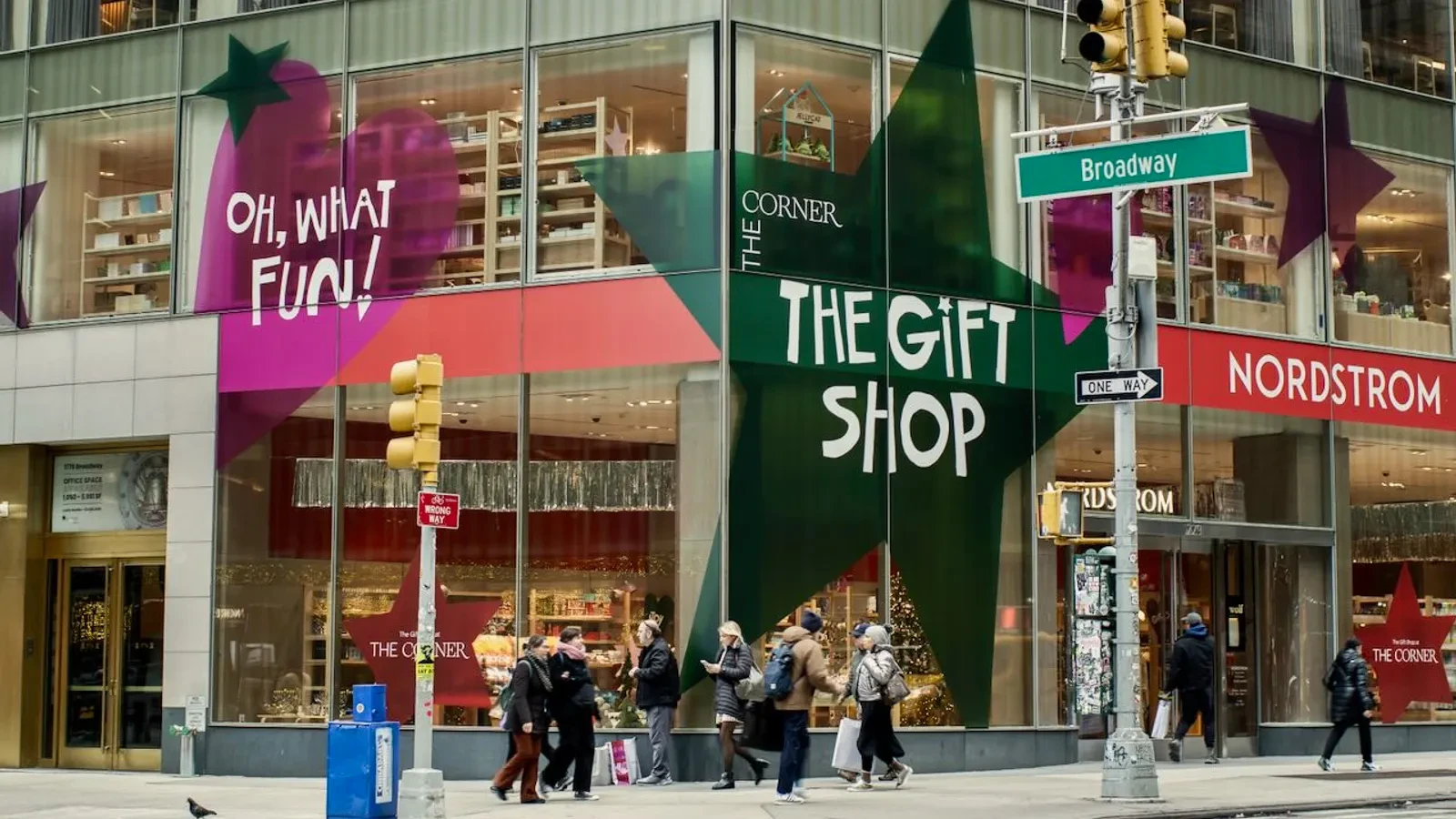
While the digital shopping experience is more seamless than ever, offering frictionless transactions across mobile devices, social media platforms, and increasingly sophisticated AI interfaces, consumers continue to demonstrate a powerful affinity for physical, brick-and-mortar retail stores during the holiday season.
Some of this continued foot traffic is driven by practical considerations. Accenture’s research indicates that more than 40% of shoppers deliberately visit physical stores to inspect merchandise in person before committing to a purchase. Interestingly, these consumers frequently prefer visiting physical storefronts over consulting generative AI tools when seeking personalized shopping advice or product recommendations.
While trust in physical retail environments remains high, Askew noted that the appeal extends far beyond mere product verification.
"A third of people say they visit it for inspiration and ideas and just kind of the vibe and energy that comes in a retail environment around the holidays," Askew said.