
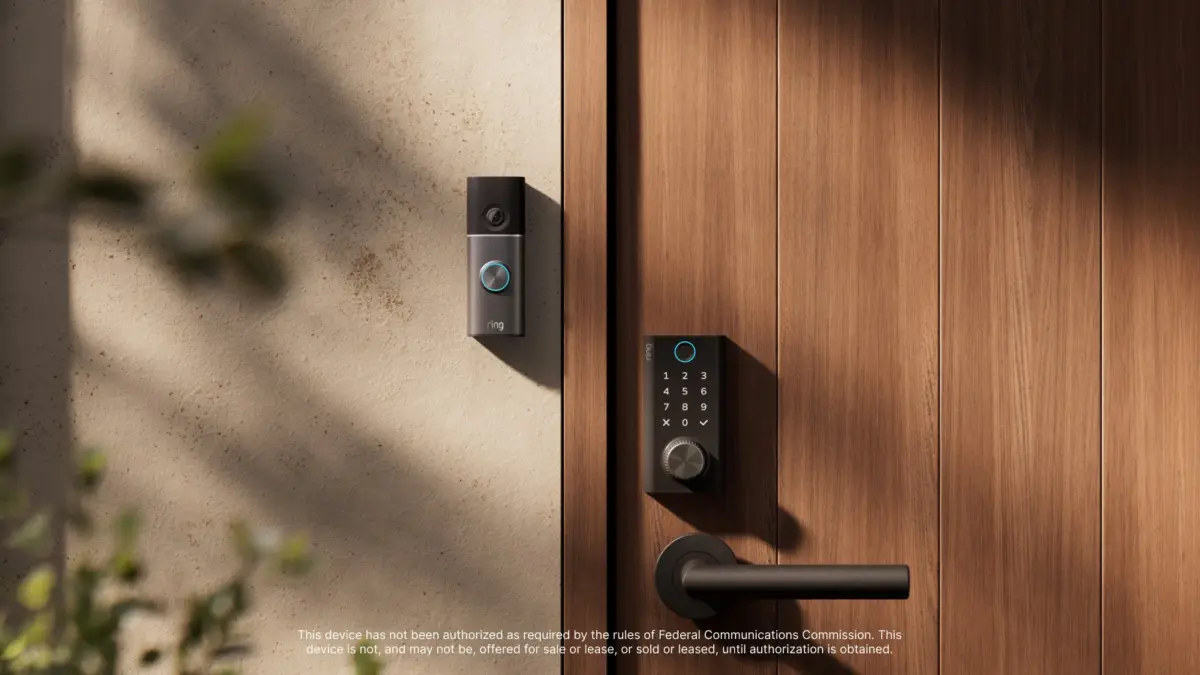
For years, the prospect of a smart lock losing power and leaving residents stranded outside has deterred countless homeowners from upgrading their front doors. Traditional smart lock solutions to this problem have often relied on clumsy or insecure workarounds, such as hiding a physical house key somewhere on the exterior property, carrying backup keys, or relying on temporary 9-volt battery jump-starts that can be frustrating to execute in the dark or during inclement weather. Ring’s upcoming device approaches this issue with a mechanical innovation designed to eliminate power anxiety entirely.
To solve the battery conundrum, Ring has equipped its new smart lock with an integrated power dial. If the device’s primary rechargeable battery pack happens to run out of charge while the homeowner is away or unaware, the user can simply turn the exterior dial a few times. This manual action generates enough emergency power to wake up the lock and allow entry. Once safely inside, the user can easily slide out the rechargeable battery pack and plug it in to charge as usual, removing the need for physical backup keys or outside assistance.
According to Ring founder Jamie Siminoff, the inspiration to rethink the mechanics of smart locks struck him during a personal shopping trip. He was looking to secure a vacation home that experienced infrequent use throughout the year. Siminoff explained that he struggled with the decision because he knew that a traditional smart lock installed in a rarely visited property would inevitably suffer from a dead battery over time. He also worried that visiting family members or friends might arrive at the house and find themselves stuck outside, entirely cut off because the door lacks a direct connection to a home electrical power source and depends completely on internal battery longevity.
Faced with this common dilemma, Siminoff adopted a problem-solving mindset, asking himself why the industry had not yet resolved such a fundamental user friction point. Utilizing artificial intelligence concepts during the early stages of development, his team worked on engineering a lock that could be manually cranked just enough to generate the electrical charge required to unlatch the door mechanism.
Beyond its innovative mechanical backup, the new lock is designed to offer robust day-to-day convenience and reliability. Siminoff notes that the lock’s primary rechargeable battery will boast an impressive lifespan of approximately one year under normal usage conditions. The accompanying Ring app will proactively alert users well in advance when the battery level is running low and it is time to recharge.
The Ring mobile application will also serve as a comprehensive management hub for property access. Homeowners will be able to configure customized access schedules and permissions for individuals who require periodic entry, such as trusted dog walkers, house cleaners, or visiting guests. Looking ahead, Ring has broader ambitions for the platform’s ecosystem. The company eventually plans to open up software development kits to allow third-party app creators to design specialized software integrations for the lock. This capability is expected to unlock new use cases, such as tailored solutions for Airbnb hosts and vacation rental property managers who need to regularly and securely change entry codes for incoming guests.
When it comes to daily operation, Ring’s smart lock is designed to accommodate a wide variety of user preferences by offering four distinct entry methods. Users will not have to worry about forgetting a numerical code or misplacing a key, as they can choose to enter the home using the device’s built-in fingerprint reader, a backlit touchscreen keypad, the Ring mobile app, or voice commands via Alexa.
Siminoff candidly acknowledges that the core features of the lock share similarities with other smart locks currently available on the market. However, he firmly believes that the device’s ability to directly alleviate consumer anxiety over accidental lockouts will serve as its primary competitive advantage and biggest selling point. He emphasized that the fear associated with power failure remains a massive limiter preventing widespread consumer adoption and hesitation regarding smart home security installations.
Designed for straightforward installation, Ring’s smart lock is engineered to fit a standard single-cylinder deadbolt, making it compatible with a wide array of existing residential exterior doors. The device is scheduled to become available for purchase in the United States during the first quarter of 2027, pending the completion of necessary Federal Communications Commission authorization. When it hits the market, consumers will be able to match their home decor, as the smart lock will be offered in three distinct finishes: classic black, sleek silver, and sophisticated brass.
In addition to expanding its hardware lineup into the smart lock category, Ring also used the product introduction to announce a major refresh of its surveillance portfolio, unveiling four new 4K cameras. The newly introduced hardware includes the Outdoor Cam 4K Plus, the Spotlight Cam 4K Plus, the Floodlight Cam 4K Plus, and a versatile pan-tilt Indoor Cam 4K, further broadening the ecosystem of connected home monitoring devices offered by the Amazon-owned brand.