
Wrapping potatoes tightly in foil traps moisture inside the wrapper, which successfully steams the interior to a tender consistency but compromises the exterior. The trapped steam softens the skin, eliminating the desirable contrast in texture that defines a great baked potato. For a truly crisp exterior skin, food professionals recommend abandoning the foil entirely and baking the potatoes directly on the oven grate at a relatively high temperature. To elevate the texture and flavor even further, resembling the savory crunch of a potato chip, cooks are encouraged to thoroughly scrub russet potatoes, rub them generously with vegetable oil, and season them liberally with coarse salt before they enter the oven.
Surprisingly, ditching the foil does not compromise the fluffiness of the interior. Culinary science points to a specific internal temperature as the true secret to a light, fluffy potato texture. When the internal temperature of the potato reaches at least 212 degrees Fahrenheit, the starch cells fully expand and separate, creating that sought-after cloud-like consistency. While taking a potato’s temperature with a meat thermometer might initially strike some home cooks as an unconventional or overly analytical step, culinary tests reveal it to be a fail-safe method for achieving the most enjoyable culinary result every single time.
The debate over the preparation of a baked potato extends beyond the oven and into the method of opening it once cooked. Culinary organizations and renowned food writers hold starkly different views on how to breach the skin without ruining the delicate internal texture. The Idaho Potato Commission, among others, advocates for a gentler approach, eschewing the traditional sharp knife in favor of a fork to carefully poke a plus sign into the surface of the potato. This method is believed to preserve the integrity of the fluffy interior rather than compressing it.
Other authorities prefer a much more dramatic physical intervention. Beloved food writer Nigel Slater famously champions a technique that resembles a martial arts demonstration. Writing in a piece for The Guardian, Slater advises home cooks to strike the cooked potato with significant force. He instructs readers to bring their hand down fast and sharp, mimicking a karate chop, but applying only enough force to crack open the potato skin. Whether a cook chooses to attempt this high-impact culinary feat remains entirely in their own hands. However, comparative kitchen tests suggest that a simpler, single fork-pricked line drawn down the length of the spud is ultimately the most effective and reliable way to open the potato without creating an unnecessary mess.
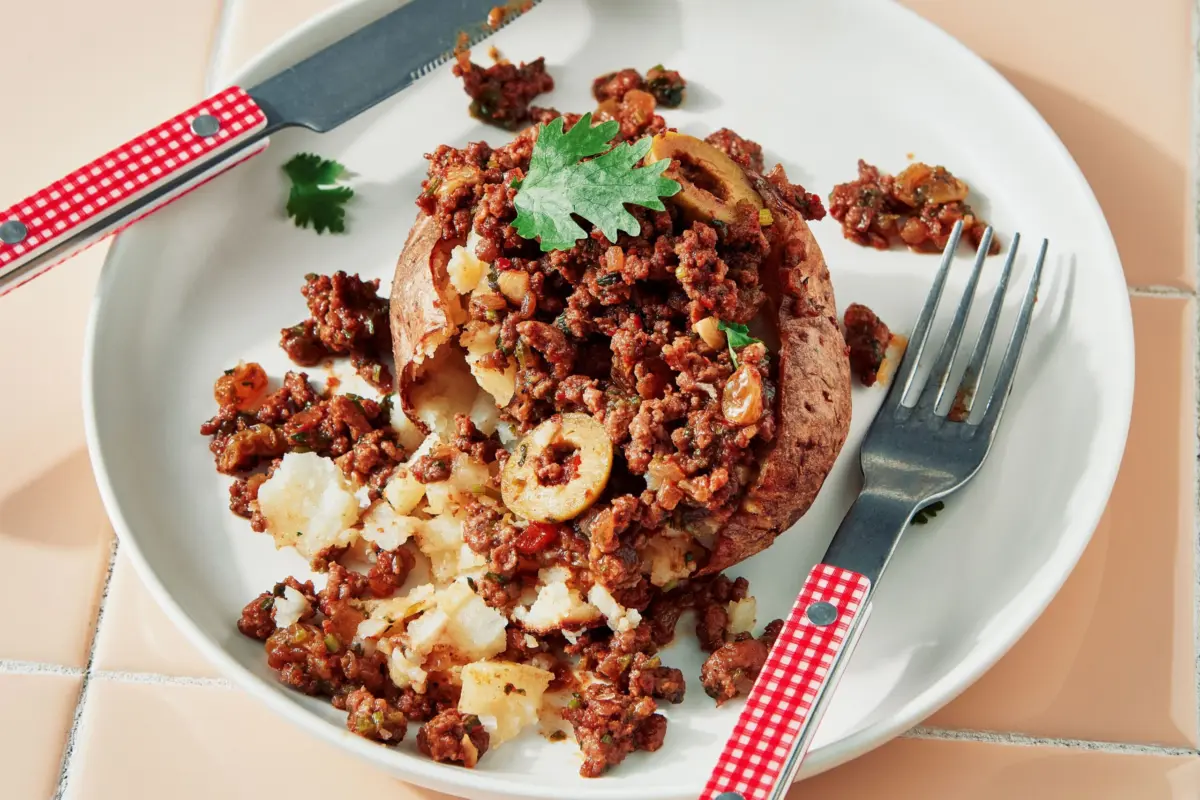
Once the potato is properly opened and fluffed, it transforms into a versatile canvas capable of supporting an expansive variety of fillings, ranging from traditional toppings like classic tuna salad to comforting bowls of cheesy baked beans. In recent culinary developments, test kitchens have turned their attention to heartier, globally inspired fillings, such as a picadillo-inspired mixture centered around ground beef. This savory filling is naturally packed with essential nutrients, including protein, iron, and creatine, though home cooks seeking alternatives can easily substitute ground turkey or chicken with equally delicious results.
To enhance the picadillo-inspired profile, the savory meat mixture is adorned with sweet golden raisins and briny stuffed olives, creating a complex balance of flavors. When spooned generously over the steaming, fluffy potato, a spicy tomato sauce begins its slow descent, soaking into the spud over time and deeply seasoning the potato with every passing minute. Culinary experts emphasize that the choice of seasoning is critical to the dish’s success. Cooks are advised to utilize a chili powder that consists of a robust blend of spices, combining ground chiles, cumin, oregano, and garlic, rather than relying exclusively on simple dried ground chiles.
This focus on elevated comfort food aligns with broader trends in home cooking, which increasingly emphasize that healthy eating does not need to be overly complicated. In fact, culinary professionals frequently observe that the simplest preparations often yield the most satisfying flavors. Through initiatives like Good for You, test kitchen experts continue to share approachable, feel-good recipes designed for any day of the week, helping to reshape public perception around ingredients that have historically been misunderstood. White potatoes, for instance, are increasingly recognized by nutrition experts as being far from empty calories, proving instead to be a nutrient-dense and versatile component of a balanced diet.