
Back in February 2025, the stock market appeared to put the perfect cap on a multi-year climb before stepping onto a wild roller coaster that has since tested the nerves of investors worldwide. Since then, the market has experienced some of the steepest drops and recoveries in history, plunging a full 20% of its value at the bottom while somehow managing to climb right back near its peak. Although stock market volatility rarely comes with a single, neatly labeled explanation, financial observers point to one primary driver behind the recent turbulence: sweeping global tariffs.
As the financial world has been whipped around like a circus tent in a hurricane, stakeholders across the country have scrambled to make sense of the shifting landscape. At the center of the storm is an unpredictable government trade battle that has left businesses bracing for massive structural changes, sent currencies and interest rates reacting in real time, and caused regular investors planning for early retirement to question the long-term future of their portfolios. Surveying the current climate, reactions among everyday individuals span the entire emotional spectrum, ranging from dismissive views that the turmoil is a giant nothingburger to apocalyptic fears that the financial system is entirely compromised.
To understand the mechanics of this volatility, financial analysts emphasize the need to return to first principles, beginning with the fundamental definition of a tariff.

Understanding Tariffs and Their Direct Impact
A tariff is essentially a sales tax charged by the government on goods imported into the country. These taxes are paid directly by whoever is handling the importation—whether it is an individual ordering an e-bike directly from an overseas manufacturer or major corporations like Amazon, Walmart, and Apple bringing in products by the shipload.
Ultimately, however, these costs are not absorbed by foreign nations or multinational conglomerates; they are passed down to the end consumer. When the cost of importing goods increases, retailers naturally raise their prices to preserve their profit margins. Beyond retail goods, tariffs also strike at the core of heavy industry and infrastructure. If a major corporation needs to build a new facility or develop energy infrastructure, tariffs on imported steel, copper, lumber, and countless other components inflate the cost of construction projects. These increased material costs inevitably ripple through the housing market, as the vast majority of building materials originate from multiple international sources.
On a macroeconomic level, tariffs function much like any broad-based sales tax, resulting in higher prices across the board. The overall effect tends to slow economic activity and reduce consumer spending power, while the collected tax revenue flows into the government’s budget, theoretically helping to reduce the national deficit. Ideally, government tax revenues should rely on a balanced mix of sales, income, and corporate taxes maintained at levels low enough to keep the economy functioning while remaining fair and predictable. This predictability is what gives businesses and citizens the confidence to plan far into the future—a balance critics argue is missing from the current erratic tariff regime, which features extremely high threatened figures that change on an almost daily basis.

The Arguments For and Against Protectionism
Governments occasionally implement tariffs to protect domestic industries from foreign competition. For example, placing a heavy tax on imported vehicles grants a competitive advantage to domestic automakers, increasing their sales and profitability. While this outcome benefits domestic manufacturers and their employees, it typically harms consumers through higher prices and a reduced selection of goods.
Such measures can sometimes serve strategic national interests, such as ensuring that domestic aerospace manufacturers remain solvent for national defense purposes. In other instances, critics argue these policies stem from political lobbying by powerful domestic industries seeking to protect their profit margins. Notably, this protectionist approach is not confined to a single political party. Previous administrations have also deployed tariffs to court voters in key electoral regions, including taxes on imported solar panel components. Economists frequently question the logic of restricting access to cheap, clean energy technology that lowers living costs and boosts industry growth for decades.
Proponents of tariffs often argue that they stimulate job growth by encouraging domestic manufacturing. If imported goods become significantly more expensive, consumers may turn to domestic alternatives, prompting local companies to increase sales, build more factories, and hire additional workers. However, economists caution that this localized boom comes at a broader cost. When domestic industries face less international competition, they lose the incentive to innovate and streamline operations, leading to a slower and less efficient overall economy. Higher operational costs for businesses handling logistics and manufacturing ultimately translate to higher prices for consumers, dampening overall economic efficiency.

The Economic Disconnect and Political Maneuvering
The aggressive deployment of tariffs has confused many market observers because the rhetoric surrounding them often contradicts established economic principles. While political speeches frequently frame tariffs as a direct source of national wealth—focusing narrowly on first-order effects like domestic hiring—financial markets react quite differently. When larger tariffs are announced, share prices typically fall as investors recognize that corporate profitability will decline. Conversely, when tariffs are paused or reduced, stock prices rebound.
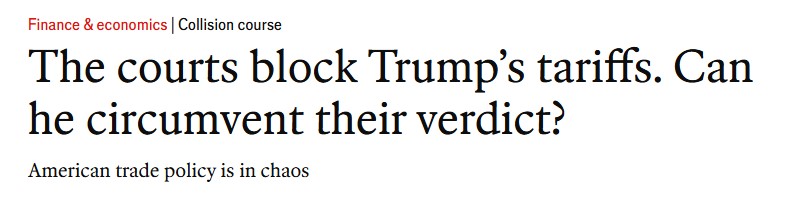
This disconnect has led to theories that the tariff announcements may function primarily as a high-stakes negotiating tactic rather than a permanent economic strategy. Regardless of the underlying intent, the economy’s heavy reliance on the decisions of a single political figure has drawn scrutiny regarding the constitutional balance of power among independent branches of government. Legal challenges are already playing out in the court system as various entities attempt to block executive-level tariff measures, mirroring historical struggles over presidential authority.
Current Tariff Levels and the Supply Chain Lag
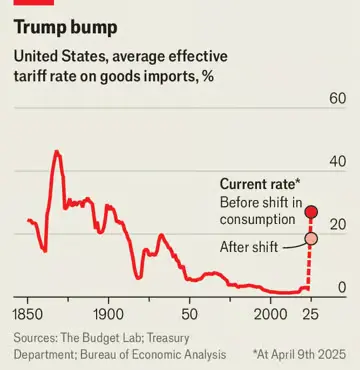
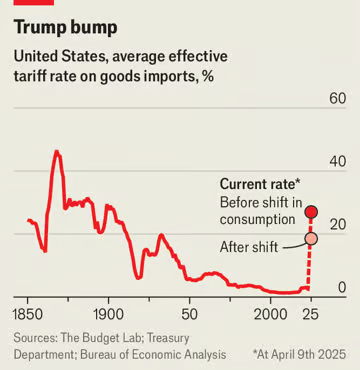
Even after retreating from the most extreme figures floated earlier in the year, current tariff levels remain substantially higher than historical averages maintained over the past 75 years. The modern United States economy has long been built upon a foundation of very low tariffs and relatively free trade.
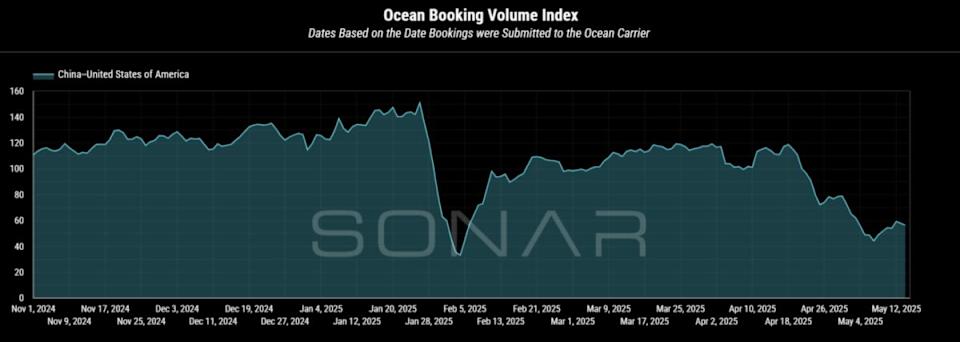
Despite the implementation of these new trade barriers, many consumers have yet to notice widespread price increases. This delay is largely due to the sheer scale of the global supply chain, which functions much like a massive cargo ship carrying substantial existing inventory. When trade tensions initially escalated, importers rushed to place additional orders to stockpile goods before the tariffs took full effect.
Although current import volumes have dropped significantly as businesses burn through existing stockpiles, analysts warn that cheap foreign inventories are rapidly depleting. As summer and fall progress, the exhaustion of these stockpiles is expected to trigger noticeable price increases and potential shortages, particularly if access to essential tools and machinery is restricted.
Potential Scenarios for the Future
As economic uncertainty persists, analysts generally outline two primary scenarios for how the current trade conflict might resolve.
In the first scenario, the elevated tariffs remain in place permanently. Under this outcome, businesses would be forced to restructure supply chains over the long term, shifting production domestically or to untaxed nations. While certain protected domestic sectors might see sustained growth, the broader economy would likely experience structurally higher consumer prices, reduced efficiency, and slower long-term growth.
In the second scenario, the tariffs serve primarily as a temporary negotiating tool, eventually leading to a de-escalation and a return to lower tariff baselines and open trade agreements. Proponents of this outcome argue that just as domestic prosperity relies on open trade and commerce across state borders, international cooperation and the free exchange of goods and services foster mutual economic growth among friendly nations.
Market Resilience and Lessons from Media Coverage
Reflecting on the market trajectory since the initial steep drop in April, the stock market has steadily rebounded. Each reduction in proposed tariffs has triggered a corresponding increase in share prices, reflecting investor optimism about a return to stable international trade. While the stock market currently sits near all-time highs despite elevated tariff levels, the underlying message from long-term investors remains focused on resilience and avoiding panic-driven losses during periods of volatility.
Beyond financial mechanics, the recent market turbulence has highlighted broader concerns regarding modern media consumption. Critics note that commercial media outlets often prioritize sensationalism, fear, and outrage to capture audience attention, frequently publishing conflicting headlines that present vastly different versions of economic reality.
For long-term investors, navigating this environment requires either tuning out commercial news entirely or relying on primary sources and subject-matter expertise rather than sensationalized headlines. As financial markets continue to navigate political and economic shifts, the fundamental principles of long-term investing and diversified planning remain steady guideposts through the noise.