
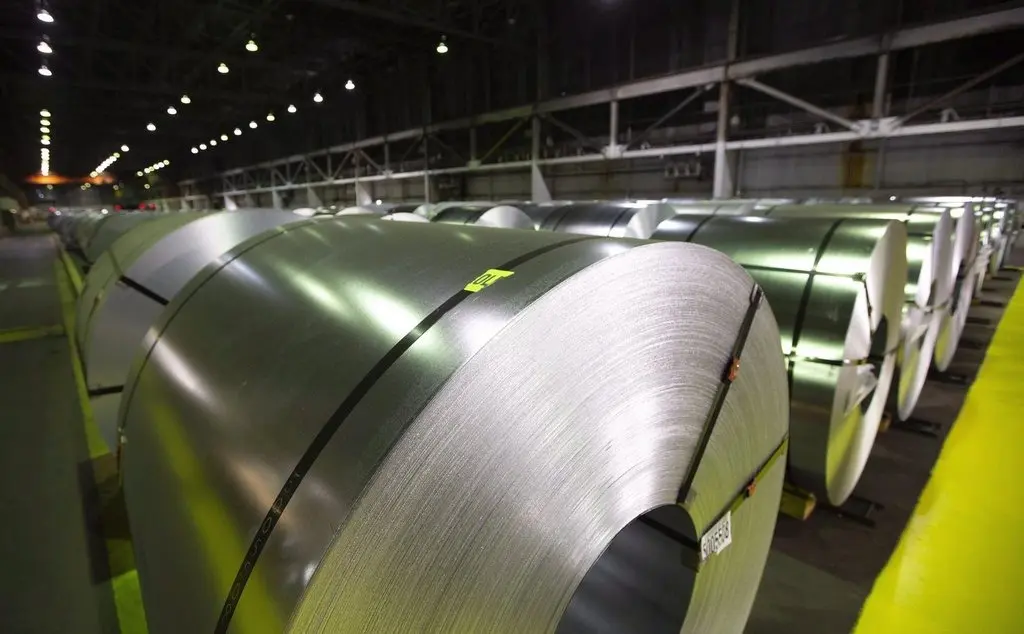
The industrial heartland of Ontario is facing a severe economic headwind as the latest round of job cuts in the province’s steel belt exposes the deep vulnerabilities of Canada’s manufacturing supply chain. The unfolding crisis, triggered by trade barriers and shifting global market dynamics, has begun to ripple far beyond the mill gates, threatening the stability of a highly integrated continental manufacturing ecosystem that has spent decades optimizing for frictionless cross-border trade.
In a stark reminder of these vulnerabilities, Stelco Holdings Inc. announced that it is laying off up to 500 workers at its historic Hamilton and Lake Erie facilities. The prominent Canadian steelmaker pointed directly to an ongoing trade crisis, weak domestic and international demand, and relentless pressure from foreign imports as the primary drivers behind the decision. The workforce reductions represent a significant blow to the local economies of southern Ontario, where steel manufacturing has long served as an economic anchor.
The job cuts at Stelco are the latest in a troubling series of industrial setbacks across Ontario. The province’s manufacturing sector has been reeling from a succession of tariff-related disruptions, including plans for more than 1,000 job cuts at Algoma Steel in Sault Ste. Marie, as well as the permanent closure of ArcelorMittal’s wire-drawing mill in Hamilton. Together, these developments paint a challenging picture of an industry caught in the crossfire of international trade disputes and shifting protectionist policies.
According to economic experts, the decline in domestic steel demand is a direct consequence of how modern tariffs operate. Rather than simply raising the cost of raw materials at the border, these trade barriers trigger a cascading effect throughout the entire production network. Alan Arcand, the chief economist at Canadian Manufacturers and Exporters, noted that the drop-off in Canadian steel consumption reflects the highly integrated nature of North American manufacturing. When trade barriers are erected, the consequences are rarely confined to a single company or sub-sector.
Instead, the damage quickly propagates downstream. Companies that rely on Canadian steel to manufacture finished goods are finding themselves priced out of the crucial United States market due to retaliatory tariffs and import duties. As these manufacturers lose their American sales, they are forced to scale back their own production schedules. Consequently, their demand for raw steel plummets, leaving primary producers like Stelco with mounting inventories and dwindling order books.

This disruption represents a fundamental shock to a system designed for seamless cross-border commerce. For decades, Canadian and American manufacturers have operated under the assumption of stable, predictable free trade. Supply chains were meticulously designed, optimized, and streamlined on the premise that components and raw materials could move back and forth across the border without sudden financial penalties. When those rules are abruptly altered without warning, the entire structural foundation of the manufacturing sector is thrown into disarray, leading to immediate operational and employment consequences.
The impact of these trade barriers is felt both within the firms directly targeted by the tariffs and across the vast network of suppliers, logistics providers, and fabricators that depend on them. For Stelco, the decision to reduce its workforce was described by corporate leadership as an unfortunate but absolute necessity to ensure the company’s long-term survival in an increasingly hostile trading environment. The company noted that U.S. tariffs have drastically restricted the market viability of its high-value cold-rolled and galvanized steel products.
These specialized steel products are essential components for a wide array of secondary industries. The end users of Stelco’s cold-rolled and galvanized steel include automotive assembly plants, auto parts suppliers, heavy machinery manufacturers, fabricated metal producers, household appliance makers, and companies producing construction and electrical equipment. Because these downstream manufacturers are currently facing U.S. tariffs of up to 50 percent on steel-intensive and derivative products, their competitive edge has been severely eroded. Compounding the issue, automakers are navigating a separate web of trade barriers, which continues to weigh heavily on export volumes and overall production levels across the continent.
The human cost of this trade friction is being felt acutely on the shop floor. Ron Wells, the president of United Steelworkers Local 1005, which represents the unionized workforce at Stelco’s Hamilton facility, expressed deep disappointment over the layoffs. He emphasized that the union’s primary focus is on seeing the ongoing tariff disputes resolved so that displaced workers can return to their jobs and regain economic stability. The uncertainty surrounding trade negotiations has left hundreds of families in a state of limbo, waiting for regulatory relief that has yet to materialize.
The corporate landscape surrounding Stelco has also grown more complex following its acquisition in 2024 by Cleveland-Cliffs, a major U.S.-based steel producer. During a recent corporate earnings call, Cleveland-Cliffs Chief Executive Officer Lourenco Goncalves pointed to a stark disparity in the North American market, noting that coated steel prices in Canada are significantly lower than those in the United States.
According to Wells, the corporate leadership has laid the blame for this price gap on Canadian trade policy. The union president noted that Goncalves has criticized Canada for failing to implement sufficiently robust tariffs on steel being imported into the country from overseas. This lack of protective barriers, the company argues, has allowed cheaper foreign steel to enter the Canadian market, driving down domestic prices to a point where producing and selling coated steel products in Canada is no longer financially viable for the company.

This perspective highlights a broader, structural challenge facing the global steel industry. Economists point out that there is currently a massive global overproduction of steel, creating an imbalance where the volume of steel being manufactured worldwide far exceeds actual consumption. This global glut is primarily driven by industrial overcapacity in China, a long-running structural issue that has plagued international markets for years. When excess steel from major global producers cannot find a market domestically, it is often redirected to open economies, putting downward pressure on prices and undermining domestic producers in countries like Canada.
While the Canadian federal government has previously responded to these pressures by implementing anti-dumping duties and other defensive trade measures, industry advocates argue that the situation requires continuous vigilance. Economists emphasize that policy makers must closely monitor import volumes and remain ready to adjust trade policies rapidly to prevent domestic steelmakers from being overwhelmed by underpriced foreign products.
Despite the widespread anxiety gripping the steel belt, some sectors of the Ontario manufacturing landscape are showing remarkable resilience. Brendan Sweeney, the president and chief executive officer of the Pacific Manufacturing Association of Canada, provided a more tempered perspective on the current state of the industry. The trade association, which was launched last April by major Japanese automakers Honda and Toyota, represents a significant portion of Canada’s automotive manufacturing footprint.
According to Sweeney, both Honda and Toyota are maintaining steady production levels at their Canadian assembly plants. Crucially, these automakers continue to purchase substantial volumes of Canadian-made steel, suggesting that the weakness in domestic demand cited by Stelco may be originating from other industrial sectors or from different segments of the automotive supply chain, rather than the major Japanese assembly operations.
Sweeney noted that automotive production remains remarkably stable despite the ongoing tariff pressures. Because Honda and Toyota are among the largest consumers of southern Ontario’s steel, their continued operational stability provides a vital buffer for the regional economy. He reiterated the critical importance of maintaining a robust, localized steel manufacturing base, noting that having reliable domestic steel mills is essential for the long-term health of the Canadian automotive sector.
While the Pacific Manufacturing Association of Canada does not anticipate an immediate disruption to its members’ assembly operations as a direct result of the Stelco layoff announcement, the long-term outlook remains clouded by uncertainty. As trade policies continue to shift and global market pressures mount, the ultimate, lasting effects of this tariff-induced contraction on the broader Canadian manufacturing sector remain to be seen.