
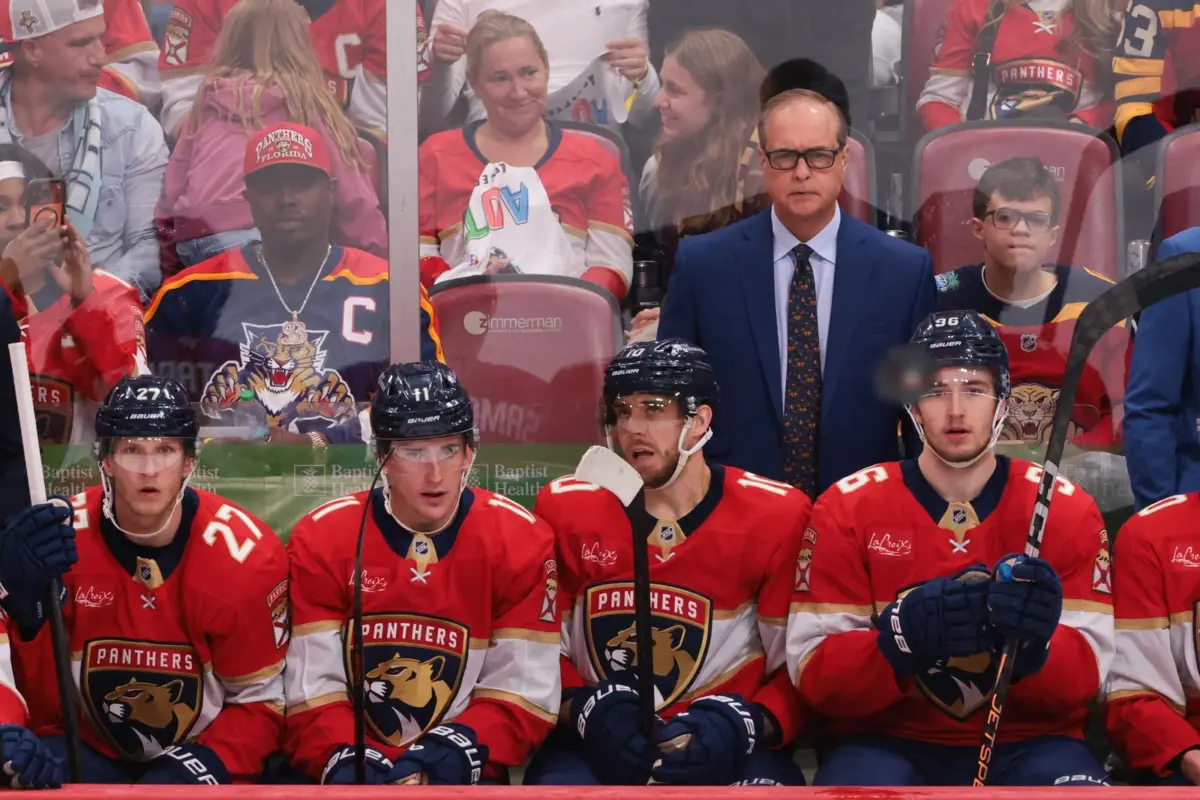
In the National Hockey League’s hard salary cap era, the competitive window teams possess to capture the Stanley Cup almost always closes far sooner than anticipated. Whether it is driven by veteran players experiencing a natural decline in on-ice production, or whether it is the inevitable injury bug taking root and ravaging the roster through grueling months of regular-season and playoff hockey, the end for any particular championship core eventually arrives in spite of a franchise’s best-laid plans.
The Florida Panthers achieved something remarkably rare in modern professional hockey when they captured back-to-back Stanley Cup championships from 2023 to 2025. Following yet another pivotal off-season of roster churn and high-profile acquisitions, many observers and analysts naturally view them as front-runners to repeat their historic success. However, beneath the shine of their recent dynasty lies a very real, pressing concern that the Panthers could stumble or fall short during the 2026-27 NHL season due to the compounding pressures of an aging roster, mounting injury risks, and a severely restricted salary cap.
A Top-Heavy Roster Facing the Realities of Age
A close look at the makeup of the Florida Panthers roster reveals precisely why age could quickly transform from a minor narrative into a major problem for the organization. As the team prepares for the upcoming campaign, a staggering 17 players on the roster—encompassing all seven of Florida’s top-tier defensemen and 10 forwards—have reached at least 28 years of age. Even more concerning for a team playing a heavy, high-tempo style is that 14 of those players are at least 30 years old.
While the acquisition of newcomer Brady Tkachuk brings a welcome injection of prime-age talent at 26 years old, the rest of the veteran lineup is heavily populated by seasoned veterans and established greybeards. The roster features high-mileage contributors such as Brad Marchand at 38 years old, Garnet Hathaway at 34, Lars Eller at 37, Radko Gudas at 36, Dmitri Kulikov at 35, and goaltender Jacob Markstrom at 36. Expecting a group of this vintage to maintain peak physical performance through another grueling 82-game schedule and a deep playoff run is a massive organizational gamble—and one that carries a distinct risk of backfiring spectacularly on the ice.
Compounding these age-related vulnerabilities is the team’s ongoing susceptibility to injuries. During their recent campaigns, the Panthers have already felt the strain of health setbacks across their key contributors. Last season alone, four of the team’s top six scorers missed at least 18 games due to various ailments. On the blue line, defensemen Seth Jones and Niko Mikkola missed a combined 44 games over the course of the year.
However, the most devastating blow to the franchise was the long-term absence of team captain Aleksander Barkov, who was forced to miss the entire year. When a team relies so heavily on a core group of seasoned veterans, losing foundational pieces for extended stretches exposes the thin margins that define modern NHL contention.

Cap Constraints, Missing Draft Picks, and General Manager Risk
The structural design of the NHL salary cap is intentionally crafted to slowly strip away a team’s depth over time, forcing general managers to make difficult choices regarding player retention and financial flexibility. That reality has now caught up to Florida. Should any key player fall victim to injury or a sudden drop in form during the 2026-27 season, the Panthers simply do not possess the salary cap space necessary to make meaningful additions or external roster reinforcements.
Compounding this lack of financial flexibility is the team’s depleted asset pool. The Panthers do not hold a single first-round draft pick in any of the next three upcoming NHL entry drafts. General manager Bill Zito has steadily traded away future draft capital and young assets to aggressively maintain a win-now posture, effectively painting the franchise into a corner. As a result, the Panthers head into the 2026-27 campaign with zero guarantee that this high-stakes strategy will ultimately pay off with another championship banner.
Florida is certainly not alone in navigating the treacherous waters of a closing competitive window. In recent years, legacy franchises such as the Pittsburgh Penguins, the Tampa Bay Lightning, and the Washington Capitals have all encountered considerable difficulty sustaining long, deep playoff runs after years of championship contention. Both the Penguins and Capitals, in particular, have experienced well-documented struggles simply qualifying for the post-season, illustrating just how abruptly the landscape can shift once a core transitions past its athletic prime.
Navigating a Brutal Atlantic Division
The road ahead for the Panthers is made even more treacherous by the unforgiving environment of the Atlantic Division. Florida will be locked in a nightly battle within a division that features seven separate teams harboring legitimate designs on a post-season berth. Given the math of the league standings, it is a statistical certainty that at least three competitive teams from the Atlantic will suffer majorly disappointing campaigns next spring.
While Florida’s veteran core has delivered extraordinary results and historic triumphs during their recent championship window, athletic reality dictates that Father Time rarely fails to humble even the most elite competitors. The physical toll of deep playoff runs, combined with the relentless pace of an 82-game regular season, leaves little room for error. Whether the Panthers can defy conventional hockey wisdom and prove their cynics wrong, or whether the mounting weight of age and expectation will finally prove too much to handle, remains one of the defining storylines of the NHL season.