
Does anyone truly have a healthy relationship with their phone? Outside of fleeting moments of disciplined detachment, evidence of a balanced, harmonious coexistence between humans and their pocket-sized computers remains remarkably scarce. For many adults, the smartphone occupies an awkward, paradoxical space: it is undeniably essential for modern navigation, communication, and work, yet it stubbornly feels like a foreign object clutched in the palm.
This sense of alienation is brought into stark, uncomfortable relief the moment children are old enough to pick up a screen. To a generation born into the digital age, a tablet or phone offers an enticing, comforting, and even productive space. It may not be entirely healthy, strictly speaking, but it is deeply familiar. For adults who remember a time before ubiquitous connectivity, however, the device often feels alien—acting as ground zero for a perpetual cultural battle against brain rot, attention loss, and the slow erosion of shared reality. Phones, for many, are a persistent source of stress.
A much-needed perspective on this modern dilemma recently emerged in a long, thoughtful essay published in Harper’s Magazine by Karl Ove Knausgaard. The brilliant Norwegian writer possesses an uncanny ability to examine the world as it is, capturing contemporary anxieties in meticulous detail. His reflections help clarify a universal struggle: the friction between our current digital reality and the formative years of our youth, long before the smartphone reshaped human interaction.
To understand a man, the old saying goes, you have to know what was happening in the world when he was twenty. While the quotation is often attributed to Napoleon and is likely apocryphal, that does not mean its underlying truth is any less potent. For many adults grappling with tech fatigue, their "Napoleonic prime" occurred during the 2000s—shortly after the advent of early social networking platforms like Facebook, but right before the iPhone placed a hyper-connected computer into every pocket.
For Knausgaard, who is 56 years old, the internet barely existed when he was in his twenties. He candidly admits that he has spent the subsequent decades largely ignoring the fundamental, sweeping influences of technological advancement. Not once in forty years has he truly turned his attention to technology in an effort to understand how it operates on its own terms, or how it alters the human psyche from within. It is as if, he writes, he had moved to a foreign country and simply refused to learn its language, content to remain blissfully ignorant of what is happening around him while settling comfortably into his own isolated world. Lately, he notes, this willful ignorance feels less like a harmless personal quirk and more like a serious neglect.
This sentiment resonates deeply with anyone who finds themselves caught in the paradox of modern parenting and digital consumption. While many adults spend considerable time and mental energy trying to understand and control the impacts of screen time on developing brains, they pay scant attention to their own compulsive habits. What are we actually doing when we check our emails, Slack messages, and texts with the frantic, lab rat-like repetition that defines the workday? Why do we reflexively scroll through news feeds at every available down moment, or lose entire hours to rabbit holes on social media platforms? More importantly, what can, or should, we do to break the cycle?
In search of technological insight, Knausgaard traveled to Athens, Greece, to converse with James Bridle, an author and artist who specializes in nonhuman ways of thinking and the broader ecological implications of our digital infrastructure. Bridle views technology not as an extension of human capability, but frequently as a barrier that gets in the way of direct, unmediated experience. Sounding akin to a philosophy-minded advocate for unstructured, real-world engagement, Bridle argues that the fundamental challenge of technology must be met through physical reality. The only true path forward, he suggests, is to experience the world yourself, to do things with your own body and your own hands, because you are physically part of the world.
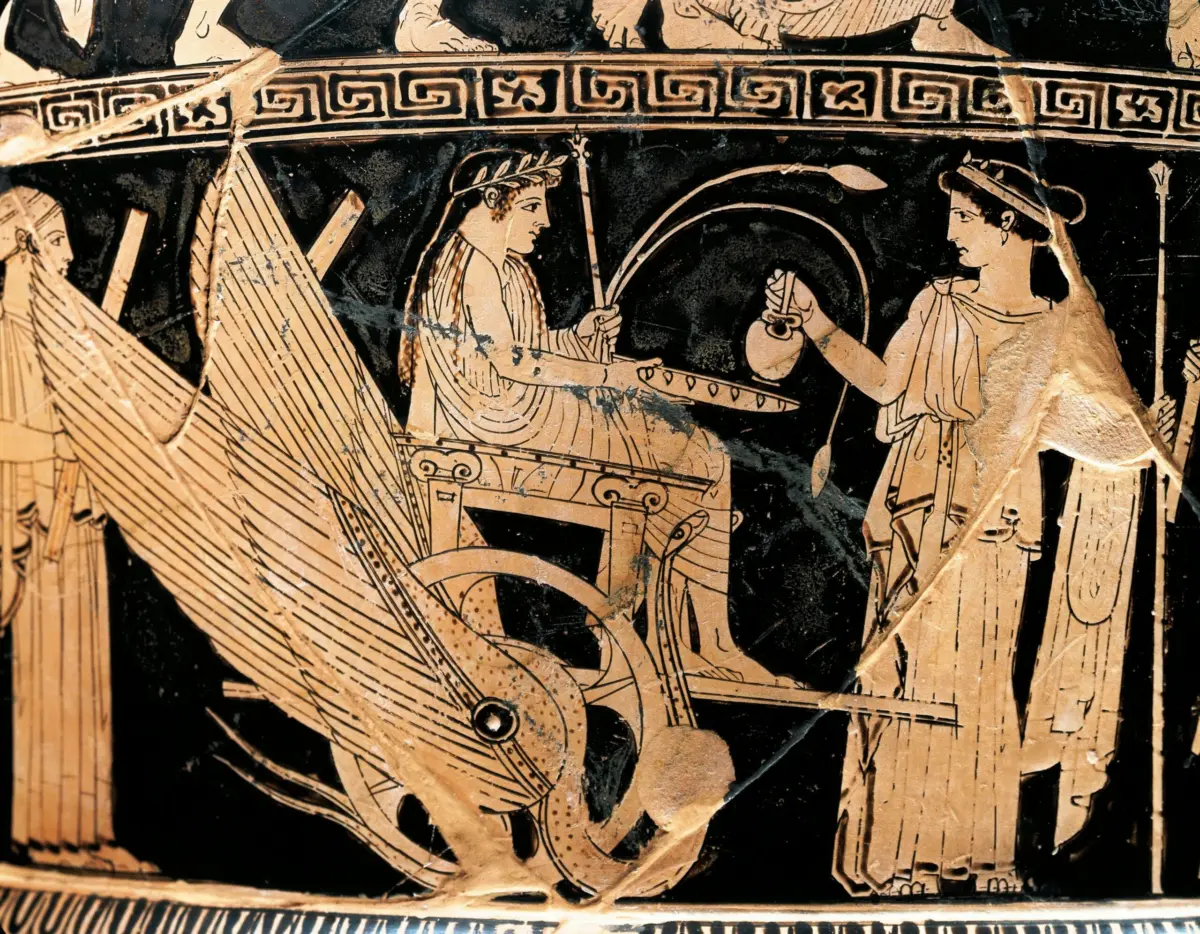
Bridle takes this philosophical inquiry a step further by invoking the imagery of the ancient Eleusinian mysteries, a secretive cult in classical Greece. Initiates were led into a dark room and exposed to a whirlwind of intense impressions, sights, and sounds, without anyone explaining what they were witnessing or what it meant. They were left entirely to interpret the sensory overload on their own. The following year, those same initiates were shown the ritual from the outside. Only then, when the internal gaze was complemented by an external perspective, could the initiation be considered complete.
For many observers of the modern information ecosystem, this historical metaphor serves as a powerful analogy for life in the digital age. All too often, humanity is trapped on the inside, staring bewildered at the chaotic whirlwind of the internet with very little control or genuine understanding. Yet, a growing number of people are attempting to step outside of this closed loop—seeking to identify the invisible architectures and motivations at play in order to reclaim their autonomy and walk away from compulsive consumption.
Returning to the technological innocence of 2006, the idyllic era before the iPhone was introduced, is neither possible nor desirable. The digital innovations that have emerged since childhood are incredible, powerful, and represent a major chapter in human progress. But as adults navigate the tension between the virtual and the physical, it becomes increasingly clear that no screen can ever serve as a true replacement for the grounded, unfiltered lessons learned when the phone is finally put down and real life is allowed to unfold.