
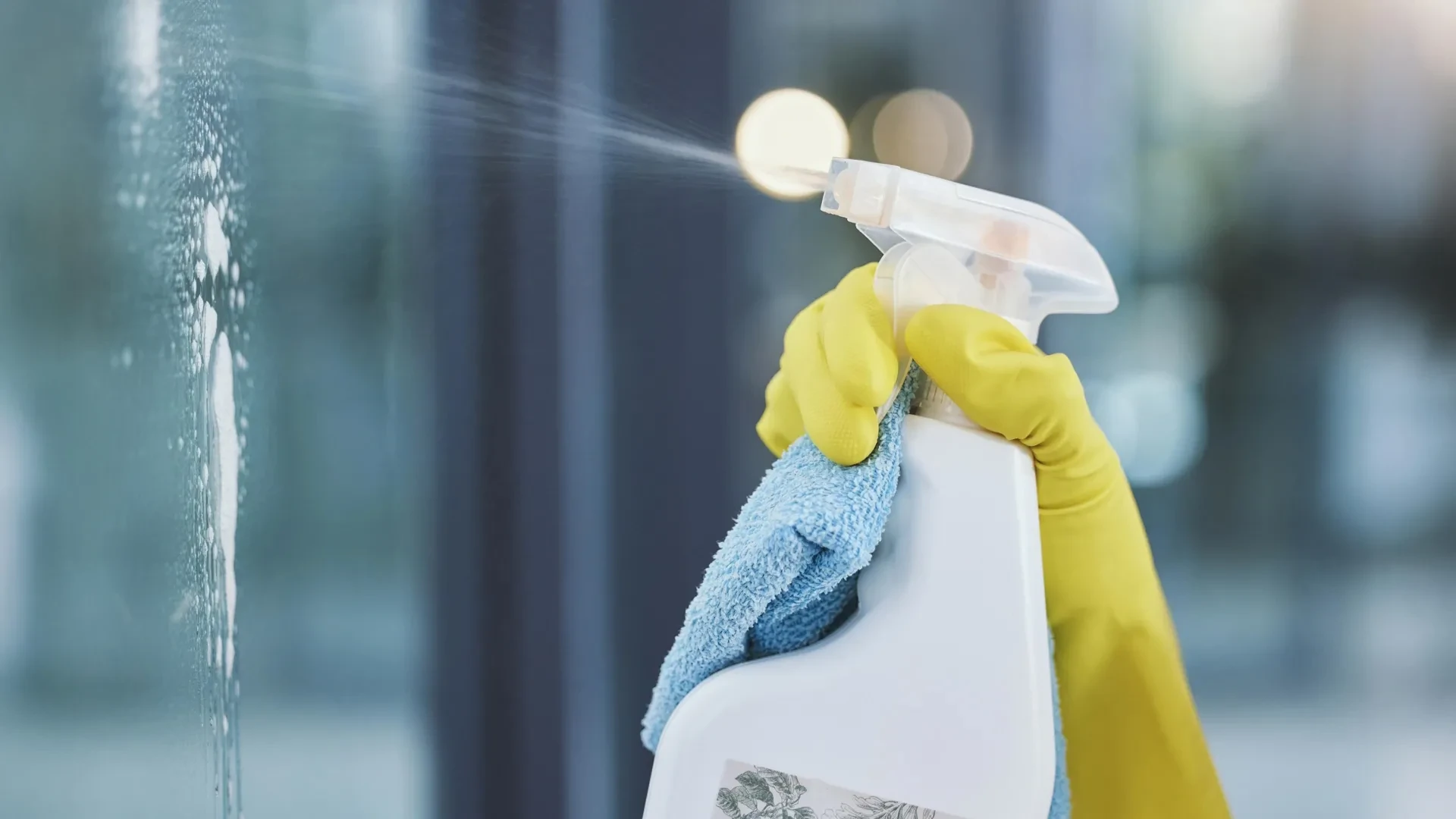
A room that smells brightly of citrus, sharp pine, or delicate flowers is universally associated with cleanliness and freshness. For decades, consumer habits have been shaped by the sensory cue that a pristine indoor space must also carry an aromatic signature. However, a team of researchers at Purdue University has discovered that those familiar, comforting scents often signal active chemical reactions taking place invisibly right in the air we breathe.
Research led by Brandon Boor, an assistant professor of civil and construction engineering at Purdue, reveals that fragrance compounds released by both conventional cleaning agents and botanical essential oil-based products can rapidly react indoors to generate billions or even trillions of nanoparticles. If inhaled, many of these extremely small particles can bypass the body’s primary upper respiratory defenses and penetrate deep into the human lungs.
The researchers presented their comprehensive findings at the fall meeting of the American Chemical Society (ACS) during the "Healthy Indoor Spaces: Bridging the Microbiome and Chemistry" symposium, held in McCormick Place. While the core purpose of routine cleaning is essential for public health—successfully removing harmful viruses and bacteria from high-touch surfaces—the study demonstrates that the process can simultaneously generate a significant wave of invisible air pollution. There is typically no visible dust, haze, or smoke hanging in the air when these reactions occur, leading occupants to assume the environment is entirely safe simply because it smells pleasant.
Boor began investigating how everyday cleaning agents and chemical disinfectants impact indoor atmospheric chemistry during the COVID-19 pandemic, working alongside his Purdue colleague Nusrat Jung, also an assistant professor of civil and construction engineering. One striking feature quickly emerged from their preliminary observations: many of the commercial and domestic products heavily relied upon to clean and sanitize indoor spaces are heavily saturated with strong fragrances.
Those fragrances are intentionally added to create a pleasant "smellscape" within residential and commercial interiors, but Boor argues that our sensory expectations are misaligned with atmospheric realities. Truly clean air, he notes, should not smell like a concentrated citrus grove or an artificial meadow; ideally, it should not really smell of anything at all.
For generations, atmospheric scientists have understood that volatile organic compounds released naturally by plants can react with ozone in the outside world. Terpenes, such as pinene emitted abundantly by pine trees, actively participate in complex chemical reactions that generate tiny airborne particles. Over extended periods, those outdoor particles can combine, aggregate, and grow until they become large enough to help seed clouds. In natural forested environments, however, that chemistry proceeds relatively slowly because the baseline ambient concentration of reactive terpenes is generally low.
Indoors, the environmental dynamics are radically different. Scented household and commercial cleaners release massive quantities of terpenes as fragrance compounds rapidly evaporate from freshly sprayed droplets or newly wiped surfaces. Cleaning liquids commonly formulate with active compounds including pinene, limonene derived from lemons, thymol from thyme, and linalool extracted from lavender.
During routine indoor cleaning activities, the airborne concentrations of these terpenes can skyrocket. Boor points out that terpene levels inside an average room while cleaning can surge to tens or even hundreds of times the concentrations typically measured in a dense forest.
To examine these chemical phenomena under rigorous, realistic conditions, the research team tested a variety of scented conventional liquid products, alongside botanical-containing disinfectant sprays and specialized wipes, inside a fully functional model home located directly on Purdue’s campus. This residential research structure includes a fully equipped kitchen, hardwood flooring, and a standard bathroom, allowing scientists to faithfully recreate ordinary household cleaning tasks.
Their controlled experiments revealed that the exact same basic chemistry responsible for atmospheric nanoparticle formation outdoors can occur indoors much more rapidly and at dramatically higher concentrations. This creates potentially important and under-recognized consequences for human exposure.
Routine household chores such as mopping floors, spraying countertops, and wiping down kitchen surfaces with scented products generate immense numbers of particles, with the total yield depending heavily on the specific formulation of the product used. The vast majority of these newly formed pollutants are nanoparticles or ultrafine particles measuring a mere one to thirty nanometers across. Because particles of this microscopic scale routinely fall completely outside the detection range of standard, commercially available at-home air quality monitors, occupants have no sensory indication or technological warning that local particle concentrations have spiked.
The researchers found that ordinary, everyday cleaning can temporarily push ultrafine particle levels well above those measured outdoors near busy transportation corridors. From a physiological and public health perspective, their tiny size is deeply significant. Ultrafine particles can settle throughout the complex architecture of the human respiratory tract and reach the deepest alveolar regions of the lungs. Once deposited there, they can contribute significantly to irritation, oxidative stress, and inflammation within the respiratory system. Furthermore, scientific concern remains that some of these nanoparticles may possess the potential to cross biological membranes and enter the bloodstream.
One of the most startling discoveries for the research team was the sheer speed of the chemical process. Particle formation and subsequent growth occurred within a matter of minutes. By the time an individual finishes tidying up and cleaning an indoor space, a massive population of nanoparticles has already formed, and a substantial portion of them has likely been inhaled.
In more recent work, Boor collaborated with Ernest Blatchley, a professor at Purdue, to investigate what happens when scented surface cleaners are utilized simultaneously with germicidal far-UV (UV-C) lamps, which are increasingly deployed to disinfect indoor air in public and private spaces. The combination of these technologies created exceptionally favorable conditions for enhanced nanoparticle formation.
The germicidal lamps interact directly with oxygen molecules present in the air, producing ozone as a byproduct. During experiments conducted within the tiny model home, indoor ozone concentrations increased to roughly 20 to 40 parts per billion. Those levels were comparable to, though somewhat below, outdoor ozone concentrations measured during the testing periods.
With both elevated indoor ozone and exceptionally high concentrations of terpenes present simultaneously, nanoparticle production became even more intense. This synergistic combination raised fresh concerns regarding the total cumulative particulate matter occupants might inhale during synchronized cleaning and air disinfection protocols.
Despite these sobering findings, Boor strongly emphasizes that the overarching goal of the research is to empower consumers to make informed choices rather than to discourage cleaning altogether. Maintaining clean indoor environments remains fundamentally important for eliminating harmful viruses and bacteria from surfaces. However, simple adjustments can dramatically reduce exposure to the secondary air pollution produced during the process.
The research team suggests that exposure can be meaningfully reduced by choosing unscented or fragrance-free products, actively improving indoor ventilation by utilizing exhaust fans or opening windows during and after cleaning, and avoiding the operation of devices that generate ozone while scented cleaning products are actively in use.
As the scientific community continues to bridge the gap between indoor microbiology and atmospheric chemistry, studies like those conducted at Purdue underscore the hidden complexities of modern indoor environments. Cleaning remains a vital pillar of public hygiene, but the invisible chemistry unfolding in the air serves as a reminder that a fresh scent does not always equal clean air.