
When the youngest son of a practicing neurointensivist recently lost his beloved dog, Milo—named Rafa after tennis star Rafael Nadal—the grieving process took a remarkably familiar turn. As Milo’s health slowly declined over his final months, Alex and his wife, Reem, made the decision to rescue a new puppy. While the choice was likely only partly intentional, the striking physical and behavioral resemblance between the new addition and the late Milo highlighted a deeper, often overlooked facet of human and animal cognition: how deeply wired we are to recognize, reflect, and share the experiences of others.
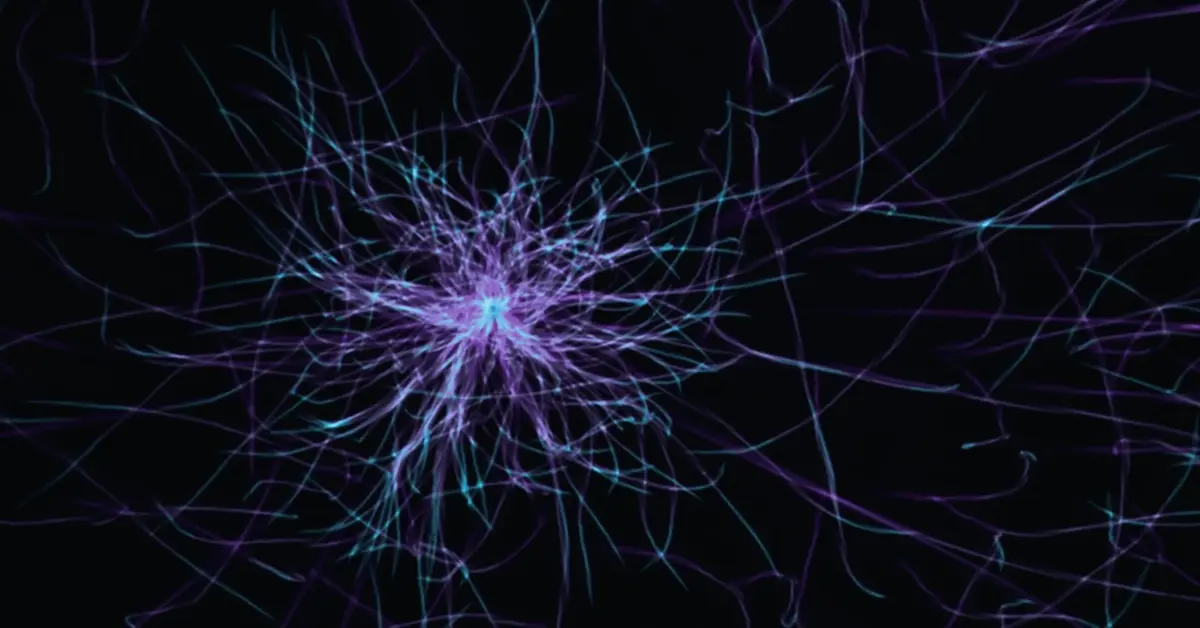
This subtle, poignant moment bridges personal grief with a fascinating neurological phenomenon known as mirror neurons. These specialized nerve cells fire not only when an individual performs a specific motor act, but also when they merely observe someone else executing that same action. Beyond simple physical movements, research indicates that these cells also activate when we experience complex emotions such as love, empathy, or disgust, and when we watch those exact emotions expressed by others.
The scientific discovery of mirror neurons dates back to 1992, marking a major turning point in how researchers understood the brain. During experiments with macaque monkeys, a specific class of cells within the brain discharged both when the animal performed a goal-directed action—such as reaching out to grab a morsel of food—and when the animal simply observed a human researcher or another monkey carrying out the identical movement. This foundational study opened the door to decades of research into how biological systems translate observation into internal experience.
Mirror Neurons and the Science of Empathy
Just as it is nearly impossible to suppress a yawn after watching someone else yawn, human mirror neurons form an invisible, powerful bridge between separate minds. Scientists widely believe that these cells provide the fundamental neural machinery behind empathy—the distinct human capacity to understand another person’s emotional state, to step metaphorically into their visceral shoes, and to mirror their pain or happiness.
The profound complexity of human empathy and vulnerability often reveals itself in unexpected places. Cultural touchstones frequently capture this shared emotional resonance, reflecting how universal feelings transcend individual circumstances. For instance, the enduring resonance of classic art and music often stems from a shared vulnerability. When legendary performers express insecurity or heartache rather than bitterness, they tap into a collective emotional reservoir. No matter an individual’s level of self-confidence, physical beauty, intellect, or worldly success, human beings universally share a baseline vulnerability to uncertainty and emotional pain.
In day-to-day interactions, bodily movements and emotional states remain constantly observable by the brain. When a viewer watches someone else display an emotion, it triggers subjective physiological arousal and specific feelings within the observer. Depending on the context, this shared arousal can either amplify the observed emotional state or act as a powerful counterweight.
Consider the dynamic between a distressed child and a parent. When confronting a child who is highly agitated or angry, effective parents respond by consciously regulating and decreasing their own internal arousal. By remaining calm, they effectively defuse the highly charged affective state of the child, using neurological co-regulation to restore a sense of safety and equilibrium.
The foundational ability to register, process, and reproduce facial expressions emerges remarkably early in life. Any parent of a newborn can attest to the immediate, instinctive feedback loop of infancy, where an infant readily smiles back in response to a close, grinning face hovering above their crib.
Social Behavior and Mirror Neurons Before Birth
Remarkably, this innate capacity for human interaction and social connection begins long before birth, actively developing within the womb. A compelling twin pregnancy study investigated the kinematic profiles of movements in five pairs of twin fetuses, utilizing advanced imaging to track their physical behavior. The findings revealed that by the 14th week of gestation, these fetuses displayed movements specifically aimed at their co-twin. By the 18th week of gestation, these targeted social movements accounted for an astonishing 29 percent of all observed movements.
The realization that humans exhibit clear social behaviors and directed actions toward a peer before they even enter the outside world is striking. These prenatal movements exceed both self-directed and random actions in frequency, offering a compelling early glimpse into the near-telepathic intuition that twins and close siblings often share. This profound understanding of each other’s emotional states frequently begins in the womb and endures through childhood, adolescence, and beyond.
Despite decades of research, neuroscientists still debate the precise ontogenetic origin of mirror neurons—specifically, whether these specialized nerve cells are entirely innate or whether they are shaped and developed through ongoing learning experiences and social interaction. While prenatal twin studies point strongly toward an innate biological foundation, the exact balance between nature and nurture in the development of the mirror neuron system remains an active area of scientific inquiry.
Mirror Neurons in Animals Beyond Humans
Primates and humans are not the exclusive hosts of these intriguing neural mechanisms. Research has shown that the brains of songbirds contain an anatomical area homologous to primate cortico-striatal cells. These structures enable songbirds to learn complex vocalizations through auditory and motor imitation, providing a clear evolutionary advantage in communication and territorial defense.
Beyond birds and primates, domestic pets demonstrate a remarkable capacity for imitative rapport and emotional empathy. Anyone who has spent an afternoon browsing collections of remorseful pets online recognizes the striking behavioral mirroring that occurs between animals and their human companions.
A personal experience highlights the depth of this interspecies connection. Following an awkward hamstring injury sustained while waterskiing over the summer, a family dog named Chief refused to leave the bedside of his injured owner for two full days until mobility was partially restored. The dog remained a constant, attentive guardian through the entire recovery period. Observing that level of unwavering loyalty and intuitive care suggests that the animal’s own mirror neurons were actively firing, remaining closely intertwined with the emotional and physical state of his human companion.