
Anyone who has visited a gasoline pump lately can undoubtedly appreciate a growing desire for less reliance on automobiles. Yet, while life in the most walkable cities across the United States can mean substantial savings on gas—not to mention reduced spending on car insurance, routine maintenance, parking fees, and potential parking tickets—getting around entirely on foot represents far more than a simple budget-conscious lifestyle choice.
According to Daryl Fairweather, chief economist at Redfin, a real estate brokerage that has tracked and analyzed urban walkability for years through its proprietary Walk Score tool, the benefits of pedestrian-friendly infrastructure extend far beyond financial savings. Walkability can positively influence everything from household finances and individual health to environmental sustainability and overall quality of life. Furthermore, there is a distinct housing-market component to consider. People increasingly value the daily convenience and immediate accessibility that come with residing in a walkable neighborhood, and that high market desirability routinely translates into elevated home values. Additionally, walkable neighborhoods inherently foster greater opportunities for residents to interact with local businesses, utilize public spaces and civic resources, and forge meaningful connections with their neighbors, Fairweather notes.

To determine which urban centers currently stand out as the country’s most walkable destinations, recent comprehensive studies have been examined—such as evaluations conducted by travel and discovery platform Only in Your State, alongside insights gathered from realtors, local residents, and urban tourism experts nationwide. Across the country, several standout cities have captured the attention of planners and homebuyers alike for their exceptional pedestrian infrastructure.
Hoboken, New Jersey
Just across the flowing waters of the Hudson River from the towering skyscrapers of Manhattan, Hoboken has secured its position as the most walkable city in the United States, according to the most recent analysis by Only in Your State. Spanning just a single square mile, this densely built New Jersey city earned a nearly perfect Walk Score of 97. This impressive pedestrian rating is largely attributed to its historic, tightly knit street grid, an abundance of mixed-use residential and commercial buildings, and exceptional access to robust public transportation networks. Notably, Hoboken was not alone in representing the region; three other cities in the Garden State—Union City, West New York, and Jersey City—also managed to secure coveted spots within the upper echelon of the national ranking.

2. West Hollywood, California
Southern California and Los Angeles County in particular are rarely celebrated for their robust public transit systems or pedestrian-oriented design. Nevertheless, West Hollywood managed to capture the fourth spot in the national analysis, securing a remarkable Walk Score of 91. The municipality packs more than 300 restaurants, vibrant bars, and independent coffee shops into a compact footprint measuring just under two square miles. West Hollywood’s high level of walkability is especially prized by locals and visitors alike because the area serves as one of the Los Angeles metropolitan area’s most dynamic nightlife districts, providing safe, accessible pathways for revelers navigating the world-famous Sunset Strip without needing to rely on automobiles.
3. Boston, Massachusetts
As one of the oldest and most historically significant cities in the United States, Boston offers an urban landscape tailor-made for exploration on foot. George Sarkis, CEO and co-founder of the Sarkis Team at Douglas Elliman, emphasizes that the true magic of the city lies in its distinct neighborhood identities. What makes Boston truly special is that every neighborhood possesses its own unique personality, and visitors can experience an immense cross-section of the city entirely on foot, Sarkis explains. Pedestrians can stroll seamlessly from the historic brick brownstones of Beacon Hill to the upscale boutiques and bustling restaurants of Back Bay, wander through the lush expanses of the Public Garden, and continue onward into the South End without ever feeling as though they are covering an unreasonable distance. For those looking to absorb centuries-old architecture, winding cobblestone streets, and pivotal historical landmarks, walking remains unequivocally the best method of transportation.

4. San Francisco, California
While San Francisco’s dramatic, hilly landscape can quickly turn a casual afternoon stroll into a rigorous, full-body workout, the Bay Area metropolis boasts one of the highest transit scores in the entire country, making the prospect of going completely car-free remarkably straightforward. However, for many long-term locals—such as Wendy Newman, a realtor with Wesely & Associates who has lived in the city since 1987—walking is not merely a practical way to commute, but rather the defining experience of living there. In a single urban outing, a resident can purchase groceries, pause for a artisanal coffee, admire the vibrant and sometimes eccentric paint palettes of classic Victorian homes, offer a familiar nod to a neighbor whose face is well-known even if their name remains unlearned, and stumble upon an independent bookstore that wasn’t even on the itinerary, Newman observes. Furthermore, San Francisco’s famously mild coastal climate ensures that taking a leisurely spin through culturally rich neighborhoods like Chinatown and North Beach remains an enjoyable activity year-round.
5. New York, New York
Virtually every real estate and urban planning expert consulted for these findings pointed directly to New York City as the ultimate metropolis designed explicitly for the art of the stroll. From the café-lined lanes of Little Italy to exceptionally scenic pedestrian corridors like the East River Promenade and the sweeping span of Brooklyn Bridge Park, the Big Apple places an immense premium on pedestrian accessibility.

Beyond the immediate convenience of avoiding hefty taxicab fares, the city’s exceptionally high walkability score yields profound long-term health benefits, points out Kate Wollman-Mahan, a real estate agent at Christie’s International Real Estate New York. Citing data from the city-run Health Dashboard and real estate economist Jonathan Miller, Wollman-Mahan notes that life expectancy in New York City exceeds the national average by approximately five years, standing at 82.3 years compared to the national average of 77.3 years. Walking is seamlessly integrated into the fabric of everyday life here, whether residents are heading out for a morning coffee, running routine neighborhood errands, or taking a restorative walk through a municipal park.
6. Washington, DC
According to data compiled by Walk Score, the nation’s capital commands an outstanding walk score of 98. Washington, DC is such a celebrated pedestrian playground that even major local cultural institutions actively incorporate walking into their educational and public outreach programming. A prime example is the International Spy Museum, which developed its own dedicated free walking tour specifically because of the extraordinary breadth of pedestrian-friendly strolling space downtown and overwhelming interest from both local residents and tourists. Aliza Bran, the museum’s director of media relations, explains that visitors are sent out along the National Mall and surrounding downtown streets to explore the actual historical locations where real espionage took place throughout the nation’s history. Beyond the monumental core, other exceptionally walkable residential and commercial neighborhoods include Dupont Circle, U Street, Capitol Hill, and Georgetown.

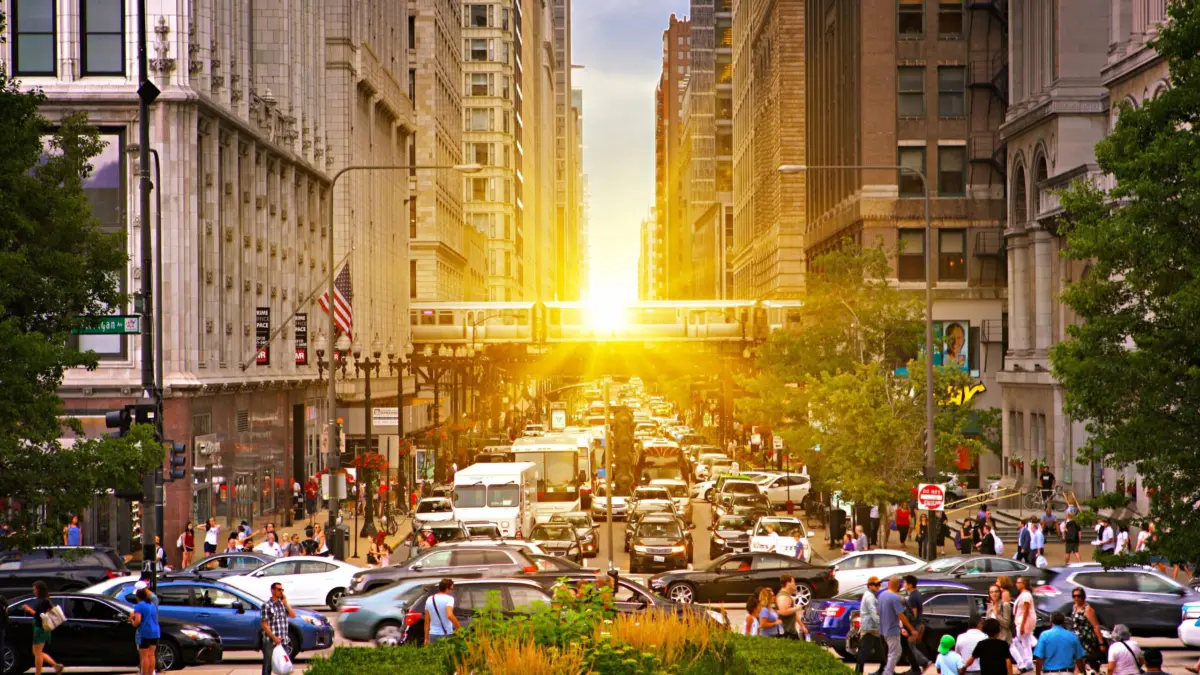
7. Chicago, Illinois
The Windy City captures the top position in the national walkability rankings compiled by Preply, a language-learning marketplace that routinely conducts urban pedestrian studies across the United States, Europe, and Asia. Madeline Enos, communications leader for Preply, notes that visitors can comfortably walk between Chicago’s five most-visited cultural attractions—including the Art Institute of Chicago, Millennium Park, the iconic Cloud Gate sculpture, the Chicago Architecture Center, and the bustling Magnificent Mile—in just 28 minutes, translating to roughly 2,500 steps.
Furthermore, Sheldon Bishop, founder of BrewAtlas, a specialized guide dedicated to independent specialty coffee shops, argues that the most reliable indicator of a truly walkable neighborhood is the presence of a thriving café culture. Chicago is exceptionally well-catered in this regard, boasting 95 independent specialty cafes spread across 41 distinct neighborhoods. When individuals have the capability to walk to their local coffee shop, they naturally encounter neighbors, drop into adjacent independent bookstores, and circulate their disposable income directly within the immediate block rather than patronizing anonymous suburban drive-thrus, Bishop observes.

8. Miami, Florida
Although traditionally viewed as an automobile-centric southern metropolis, Miami features distinct urban pockets that champion pedestrian life, according to local residents and real estate professionals. For Sandra Masis, director of sales at the Arbor Coconut Grove residential development, historic neighborhoods like Coconut Grove exemplify Miami’s hidden pedestrian potential. Residents can easily walk to local restaurants, cozy cafés, neighborhood shops, public parks, and the shimmering waterfront, all while thoroughly enjoying the area’s lush tropical greenery and relaxed, community-oriented atmosphere, Masis explains. This environment fosters a profound sense of community that actively encourages people to step outdoors and explore their surroundings. Even newer master-planned developments in Miami, such as the high-rise dense district of Brickell, prioritize pedestrian mobility just as much as established historic areas like Little Havana. Even within a city fundamentally structured around cars, thoughtful urban planning can successfully carve out vibrant pockets where people can comfortably live, work, and socialize entirely on foot, Masis adds.
9. Philadelphia, Pennsylvania
Every year, GuruWalk, an international platform specializing in free guided walking tours, compiles a comprehensive global ranking identifying the finest cities in the world to explore on foot. In their most recent study, New York City claimed the top spot among major urban centers in the United States, with Philadelphia following immediately behind in a strong second place. Carolina Martínez of GuruWalk points out that although Philadelphia occasionally attracts fewer international tourists than some of its massive coastal counterparts, travelers and residents who take the time to explore its historic streets develop an immense appreciation for the city.

Philadelphia commands an exceptional average user rating, with an overwhelming majority of visitor reviews awarding top marks, Martínez notes. Walking just a few blocks through the city’s historic district places a pedestrian directly in front of monumental civic landmarks such as Independence Hall and the Liberty Bell. With Philadelphia joining other historic pedestrian hubs like New Orleans, San Francisco, and Boston near the top of the national conversation, the clear economic, physical, and social advantages of walkable urban design continue to shape the future of American city living.