
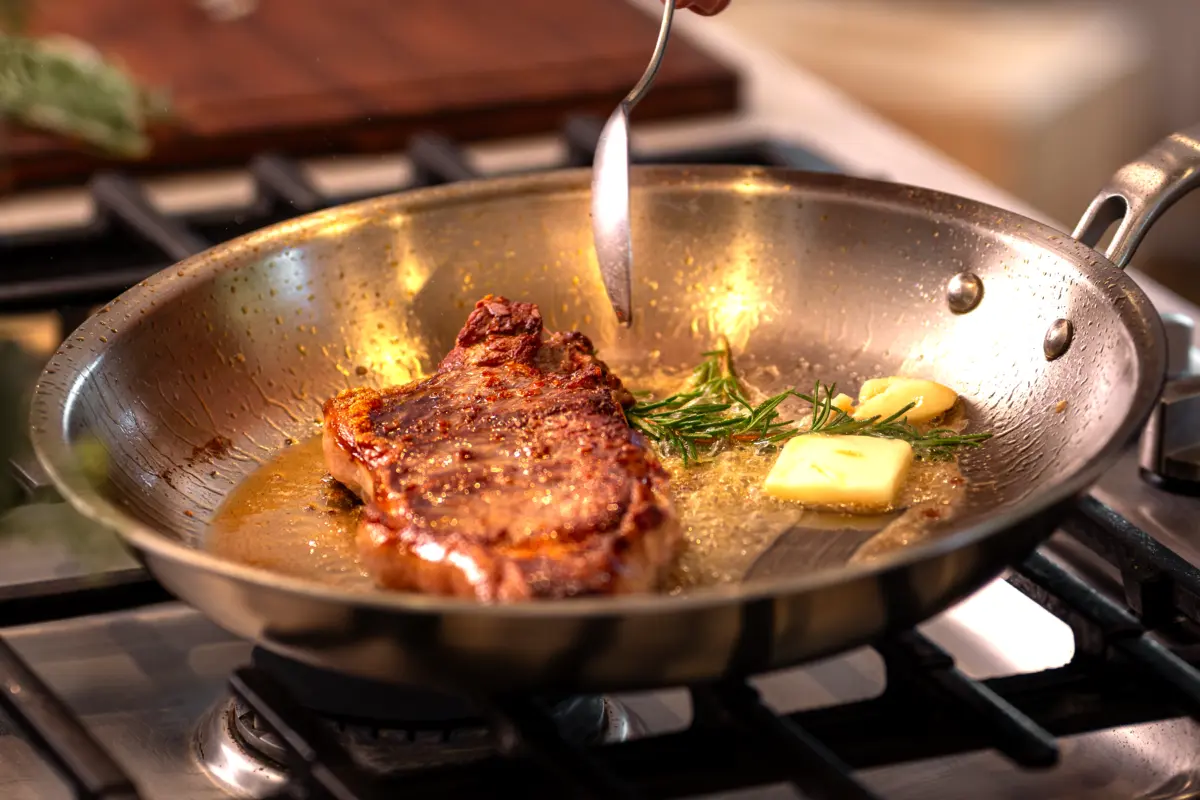
Stainless steel cookware is experiencing a cultural renaissance. This is not to say that the category of cookware ever truly disappeared from the market, but during the height of the post-pandemic online shopping boom, it felt as though an advertisement for a trendy nonstick cookware brand was always just a scroll away. Now that the dust has settled from that digital retail rush, the tides are shifting. Today, consumers investing in new cookware sets want to ensure that what they purchase will last, both in terms of everyday culinary function and aesthetic appeal, maintaining its look and performance year after year. For many home cooks, and especially for those working day in and day out in professional kitchens, that is where the enduring craftsmanship of great stainless steel truly pulls its weight.
To understand why virtually every commercial restaurant kitchen is stocked with stainless steel cookware, one only needs to look at how it performs under pressure. Carlyle Lester, the sous chef at HAGS, a queer fine dining restaurant located in the East Village of New York City, knows this better than most. Speaking about why she loves to reach for stainless steel at her restaurant—and why so many other chefs and culinary professionals do the same—Lester points directly to reliability as the primary benefit.
"I love that it gets super hot and heats evenly; it is easy to get a good sear on whatever you are making," Lester says, explaining that she frequently uses stainless steel pans to achieve a precise sear and crisp texture on a mustard-marinated cod at HAGS. "And I love that stainless steel can be more reliable than a nonstick if you’re using the correct methods."
That reliability points directly to what is perhaps the greatest misconception surrounding stainless steel cookware: the persistent belief that it is fundamentally incapable of acting as a nonstick surface. In everyday reality, if a cook heats up a stainless steel pan to the correct temperature—typically around 400 degrees Fahrenheit, or the point at which a few water droplets flicked into the pan start dancing and beading across the surface instead of immediately evaporating—and adds a modest amount of oil, it creates a remarkably effective nonstick cooking environment. This phenomenon is driven by the Leidenfrost effect, a physical process where a liquid in contact with a mass significantly hotter than its boiling point produces an insulating vapor layer that keeps the liquid from boiling away rapidly, allowing food to slide freely across the metal.
When it comes to pan aftercare and maintenance, the rules are straightforward but essential for preserving the cookware’s finish. Cooks must make sure to let their pans cool completely before washing them to prevent warping, and dry them thoroughly with a microfiber cloth afterward to prevent unsightly water spots from forming. Beyond these simple steps, quality stainless steel—ideally constructed with at least three layers, though five-ply construction is frequently recommended for optimal heat distribution, heavy-duty oven use, and extreme temperatures—is considered the gold standard for commercial kitchens.
This is largely because the material is entirely nonporous, meaning it will not react chemically with highly acidic ingredients like tomatoes, citrus juices, or wine. Furthermore, home and professional cooks alike can whisk sauces to their heart’s content in a stainless steel saucepan and use metal spatulas, tongs, and turners without worrying about damaging a delicate chemical coating. Because there is no nonstick coating to scratch, flake, or degrade, the metal can withstand decades of heavy-duty wear and tear. Unsurprisingly, this extraordinary durability is precisely why Eater chose to collaborate with Heritage Steel to create a custom 5-ply stainless steel cookware line; the publication noted that it would only ever put its name on a cookware collection if it was fully chef-approved, hardy enough to handle every imaginable style of cooking, and built to last a lifetime.

If you let it, Lester notes, stainless steel cookware can actually transform into a phenomenal cooking teacher in its own right, rewarding attentiveness and technique.
"I think people think it is hard to use," Lester says, addressing the hesitation that many newer home cooks might naturally feel when confronting bare metal pans for the first time. "But there are countless YouTube videos, TikToks, and Instagram reels out there, and if you’re friends with a chef, we are always happy to pick up the phone and walk you through it."
As for the broader consumer shift back toward stainless steel, Lester views this evolution as a completely natural reaction after the initial selling points of conventional nonstick pans have begun to wear thin for the public. Many home cooks have grown frustrated over the years upon discovering that nonstick pans eventually lose the efficacy of their slippery chemical coatings, rendering their main point of appeal temporary at best.
"I think we are entering a new era of cooking," she told Eater, "where people are less interested in the shortcuts." In that broader cultural context, she explains, the enduring appeal of steel is not simply that it looks sleek and professional on a stovetop, but that it holds the immense potential to last for decades when it is cared for correctly.
Even the famously design-forward, social-media-savvy cookware companies that were once the most staunch slingers of ceramic-coated nonstick pans have recently started offering titanium and stainless steel collections, promising consumers both modern style and enduring craftsmanship. Stainless steel never truly went out of style inside commercial restaurant kitchens, but as the general cost of living skyrockets and consumers grow weary of replacing disposable cookware every few years, its long-term financial and practical appeal becomes increasingly enticing.
"It is a pan that asks for your attention and intuition," Lester says, "but that is always my favorite way to cook."