
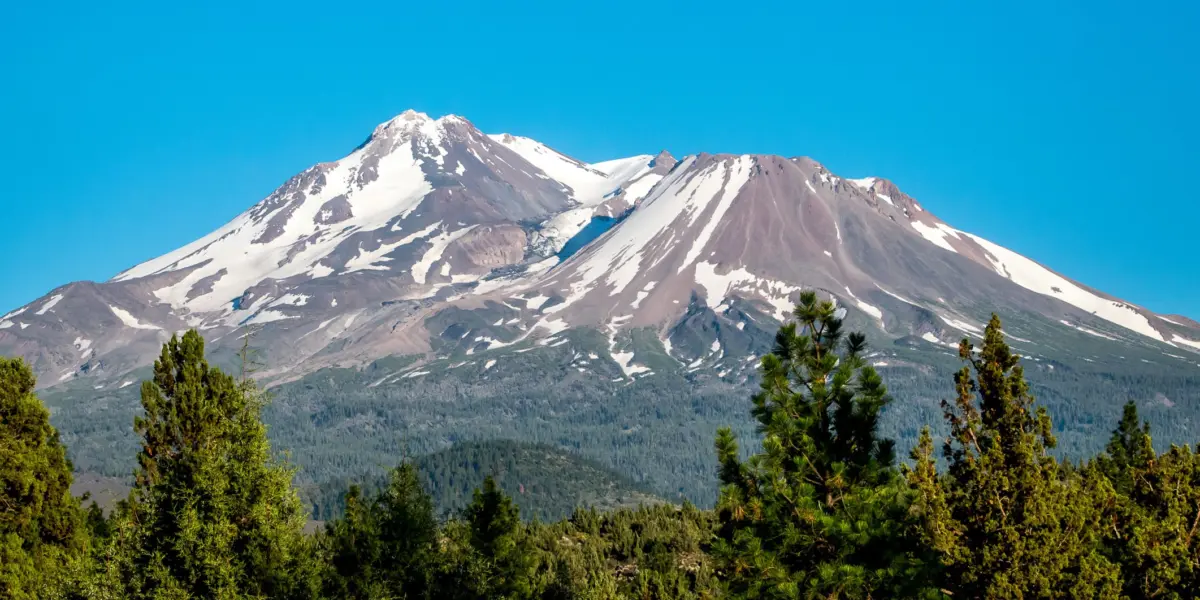
Three hikers were forced to undergo a perilous overnight rescue on California’s Mount Shasta this week after using Google’s artificial intelligence chatbot, Gemini, to plan their ill-fated mountain expedition, according to reports.
The high-altitude ordeal, which highlighted the growing and potentially dangerous trend of relying on generative AI technology for extreme outdoor recreation, was detailed in an official incident report released by the Siskiyou County Sheriff’s Office. The rescue operation required the coordinated efforts of local authorities, United States Forest Service rangers, and dedicated volunteers who mobilized to bring the stranded trio down from the rugged terrain.
According to the details provided by the sheriff’s office, the sequence of events began when a group of three young men set out on their ascent of the iconic California stratovolcano in the dead of night, launching their climb at 3:00 a.m. While standard alpine safety protocols and local experienced mountaineers strictly advise climbers to turn around if they have not successfully reached the summit by noon—primarily to ensure a safe descent before daylight fades—this group pressed onward against conventional wisdom.
Compounding their mounting delays, the hikers did not reach the summit until 7:00 p.m., hours past the critical turnaround threshold. Facing the reality of descending the steep, treacherous slopes of Mount Shasta in pitch darkness, the trio found themselves disoriented and unable to navigate the terrain safely. In a desperate bid for guidance, they placed a call to the Siskiyou County Sheriff’s Office asking for directions off the mountain. Unable to safely navigate out in the dark, the hikers were forced to spend an exposed, unplanned night stranded in Mud Creek Canyon, enduring the elements until formal rescue operations could commence with the first light of day.
The following morning, a rescue team comprised of Forest Service rangers and search and rescue volunteers successfully located the stranded men in the canyon and brought them to safety. While all three hikers survived the ordeal without fatal injury, the investigation into how the expedition went so catastrophically wrong quickly turned toward the digital tools they had used in preparation.
Law enforcement officials noted that while it is difficult to assign all the blame for a series of compounding human errors entirely to a piece of software, the role played by technology in the planning phase was significant. Investigators revealed that the hikers had consulted Google’s Gemini AI chatbot to build their itinerary and determine their packing list. According to the sheriff’s office, the chatbot advised the young men to bring far less food and water than their group actually required. This dangerous deficit became glaringly apparent when their originally anticipated eight-hour ascent spiraled completely out of control into a grueling, multi-day ordeal.
The incident has prompted local authorities to issue a stark warning to the public regarding the limitations and risks of substituting artificial intelligence for professional local guidance and standard mountaineering preparation.
Emphasizing the importance of utilizing human expertise and established safety resources, the Siskiyou County Sheriff’s Office underscored that it is always advisable to contact the local United States Forest Service Mount Shasta ranger station ahead of any planned trip. Speaking directly with station personnel ensures that climbers receive the most accurate, up-to-date information regarding weather conditions, trail hazards, and realistic timeframes. Furthermore, the sheriff’s office explicitly warned outdoor enthusiasts never to rely solely on artificial intelligence systems for trip planning in high-risk wilderness environments.