
The British government has formally accused Iran of orchestrating a high-profile security plot near a vital military airfield in southern England, dramatically escalating diplomatic tensions between London and Tehran. The incident, which unfolded outside the Royal Air Force Fairford base in late September, prompted the immediate summoning of Iran’s ambassador to the United Kingdom, fresh economic and travel sanctions against Iranian intelligence figures, and a unified diplomatic reprimand from nearly thirty allied nations.
The measures come in the wake of an extensive police investigation into the activities of several British nationals who were intercepted in the immediate vicinity of RAF Fairford, an installation heavily utilized by the United States Air Force for its long-range strategic bomber fleet. Addressing lawmakers in Westminster, British officials indicated that intelligence assessments point toward direct coordination by Tehran, marking one of the most serious allegations of state-sponsored disruption on British soil in recent years.
The diplomatic fallout swiftly followed the initial security response, triggering warnings from senior ministers that Britain is prepared to deploy the full breadth of its legal, financial, and regulatory powers to dismantle proxy networks operating on behalf of the Iranian regime.
The Security Alert and the Fairford Investigation
The crisis began on September 27, when law enforcement officers intercepted five British nationals in the immediate vicinity of RAF Fairford in Gloucestershire. The rural airfield, situated approximately two hours west of London in the countryside north of Swindon, was placed under a heightened state of security as specialized counterterrorism units and explosives ordnance disposal personnel were dispatched to the perimeter.
The suspects, all young men traveling from London, were taken into custody on suspicion of offenses under the Explosives Act and broader terrorism legislation. A short time later, investigators arrested a sixth individual in connection with the inquiry.
Public concern mounted following the subsequent decision to release the initial five suspects on bail under strict supervisory conditions. The move prompted scrutiny from both domestic observers and United States authorities, who questioned the handling of suspects detained near sensitive allied military infrastructure.
Police investigators acknowledged early in the process that they were evaluating whether a foreign state actor had influenced, financed, or directed the operation. The strategic value of RAF Fairford made the prospect of foreign interference an immediate investigative priority. The base serves as a crucial European forward operating location for United States Air Force heavy bombers, including supersonic B-1B Lancers and subsonic B-52 Stratofortresses—aircraft with operational ranges capable of reaching the Middle East and striking targets across Iran.
Despite the sweeping disruption, the actual operational competence displayed by the London-based suspects appeared markedly limited. While the presence of vans near the airfield prompted bomb disposal teams to establish a wide security perimeter, subsequent technical examinations revealed that the vehicles did not contain functional, viable explosive devices. Instead, investigators recovered chemical accelerants, primarily petroleum. While incapable of causing the catastrophic explosive devastation associated with dedicated ordnance, the materials confirmed an intent to conduct an incendiary incident or major disruptive disturbance at the doorstep of the joint military facility.
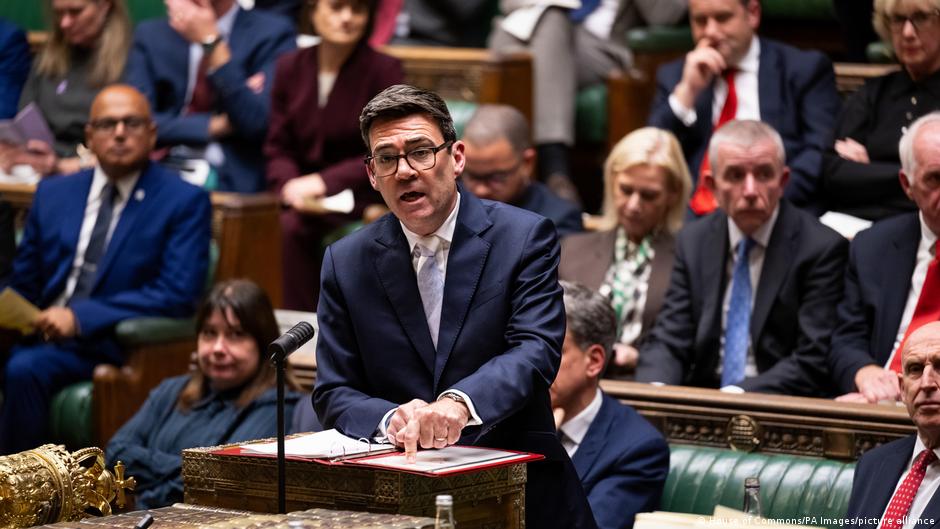
What Did Prime Minister Andy Burnham Tell Parliament?
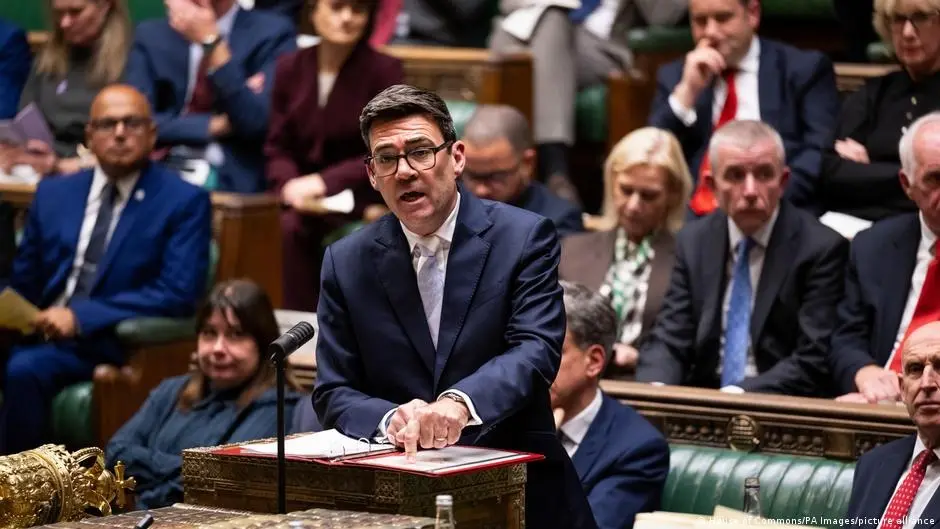
Delivering a statement to the House of Commons on Monday, Prime Minister Andy Burnham set out the government’s formal intelligence assessment of the incident, attributing the plot directly to the upper echelons of Iran’s security apparatus.
Burnham informed lawmakers that the operation outside Fairford bore the distinct hallmarks of Iranian state direction, warning that the United Kingdom would take decisive steps to protect its national borders and allied infrastructure from state-sponsored aggression.
"I can confirm our assessment that it is highly likely to have been coordinated in Iran, almost certainly directed by Iran’s Islamic Revolutionary Guard (IRGC)," Burnham said from the dispatch box. "We will not tolerate these threats on our soil."
The Prime Minister indicated that while the suspects on the ground had exhibited a questionable level of capability, the willingness of foreign actors to leverage domestic criminal elements constituted an intolerable breach of national security. He noted that the government remained prepared to impose additional punitive measures should Tehran persist in hostile activities within British territory.
"We will crack down on Iran’s use of criminal networks, using our full range of powers to target them and their funding streams, and we will bring further sanctions to restrict the capacity of Iran and the IRGC to do us harm," Burnham warned.
The Prime Minister emphasized that law enforcement agencies and domestic intelligence services would intensify scrutiny of transnational criminal corridors that foreign adversaries seek to exploit for outsourced sabotage, harassment, and surveillance operations.
Foreign Secretary Miliband Says Iranian Ambassador Summoned
Parallel to the Prime Minister’s address in parliament, Foreign Secretary Ed Miliband moved quickly to enforce diplomatic consequences against Tehran.
The Foreign Office summoned Iranian Ambassador Ali Moussavi to Whitehall, delivering a stern formal protest over the regime’s covert activities. Miliband stated that the diplomatic engagement served to unequivocally "reiterate" Britain’s foundational position that it "will not tolerate attacks on our soil."

Simultaneously, the Foreign, Commonwealth and Development Office announced targeted financial sanctions against two key figures linked to overseas disruption operations. Under the newly enacted restrictions, the individuals will face immediate asset freezes, international travel prohibitions, and disqualification from acting as company directors under UK jurisdiction.
The sanctioned individuals were identified as:
- Ruhollah Bazghandi, the head of counterespionage operations within the IRGC, whom Western intelligence agencies have long linked to foreign interference operations.
- Shahram Ali Reza Tamarzadeh Jakki, identified by British authorities as an operational facilitator associated with the Zindashti criminal network, an international syndicate frequently leveraged by Tehran for outsourced contract operations abroad.
Miliband noted that both men were being sanctioned for "their role in facilitating or engaging in hostile activity on behalf of the Iranian regime, with the clear intent of threatening, planning or conducting attacks overseas."
The diplomatic rebuke was met with swift pushback from Tehran. According to the state-run Islamic Republic News Agency (IRNA), Ambassador Moussavi "categorically rejected the accusations" leveled by the British government during the Whitehall meeting. The ambassador dismissed the UK’s conclusions as unfounded and challenged the government in London "to present evidence supporting its allegations if it possesses any."
Joint Statement From 29 Countries Condemns ‘Iran’s Use of Violent Attacks’
The British government’s actions were reinforced by an coordinated multilateral pushback from international partners. Shortly after the measures were announced in London, a coalition of 29 nations released a sweeping joint statement condemning the Islamic Republic for engaging in systemic hostile operations across international borders.
The international coalition denounced "in the strongest terms Iran’s use of violent attacks," highlighting a persistent pattern of behavior that extends well beyond traditional intelligence-gathering activities.
The joint declaration specifically censured Tehran for "acts of lethal plotting, arson, sabotage, cyber-attacks, and other hybrid activities against us and our partners."
The roster of signatories highlighted the broad geopolitical concern surrounding Iranian state behavior. The statement was endorsed by all members of the Five Eyes intelligence-sharing alliance—comprising the United Kingdom, the United States, Canada, Australia, and New Zealand—alongside the vast majority of European NATO members. Signatories included key continental allies such as France, Germany, and Spain, as well as non-NATO partners including the Republic of Ireland.

The multilateral response underscored widespread apprehension regarding Tehran’s reliance on non-conventional warfare tactics, particularly the contracting of local criminal elements, third-party logistics networks, and informal syndicates to target political dissidents, foreign infrastructure, and military facilities across Europe and North America.
Strategic Significance of RAF Fairford and Allied Adjustments
The security alert has refocused attention on the critical strategic function of RAF Fairford in Western defense architecture. Situated in the tranquil Cotswold countryside, Fairford is an airfield characterized by a long, heavy-duty runway and specialized hangar infrastructure that make it virtually unique in Western Europe for supporting continuous heavy bomber missions.
Originally established during the Second World War, when Allied air wings operated mass bombing campaigns and laid the logistical groundwork for the 1944 D-Day landings across Nazi-occupied Europe, the facility has maintained a prominent role throughout the modern era. Although legally designated an RAF station, it features a permanent, large-scale operational footprint managed by the United States Air Force.
In the immediate aftermath of the September 27 alert and the subsequent arrests, the operational disposition at the base underwent notable shifts. The deployment of advanced, variable-sweep B-1B Lancer supersonic bombers was brought to a close, with the high-tech aircraft departing Fairford to return to their home bases in the continental United States.
Meanwhile, the base’s contingent of venerated B-52 Stratofortresses remained deployed in place, preserving a heavy forward strike posture in the European theater. The presence of these strategic assets—capable of carrying an array of precision-guided standoff munitions and conventional payloads over intercontinental distances—places potential adversaries within direct reach, explaining why allied defense planners view the perimeter security of the Gloucestershire airfield as an indispensable national security priority.