
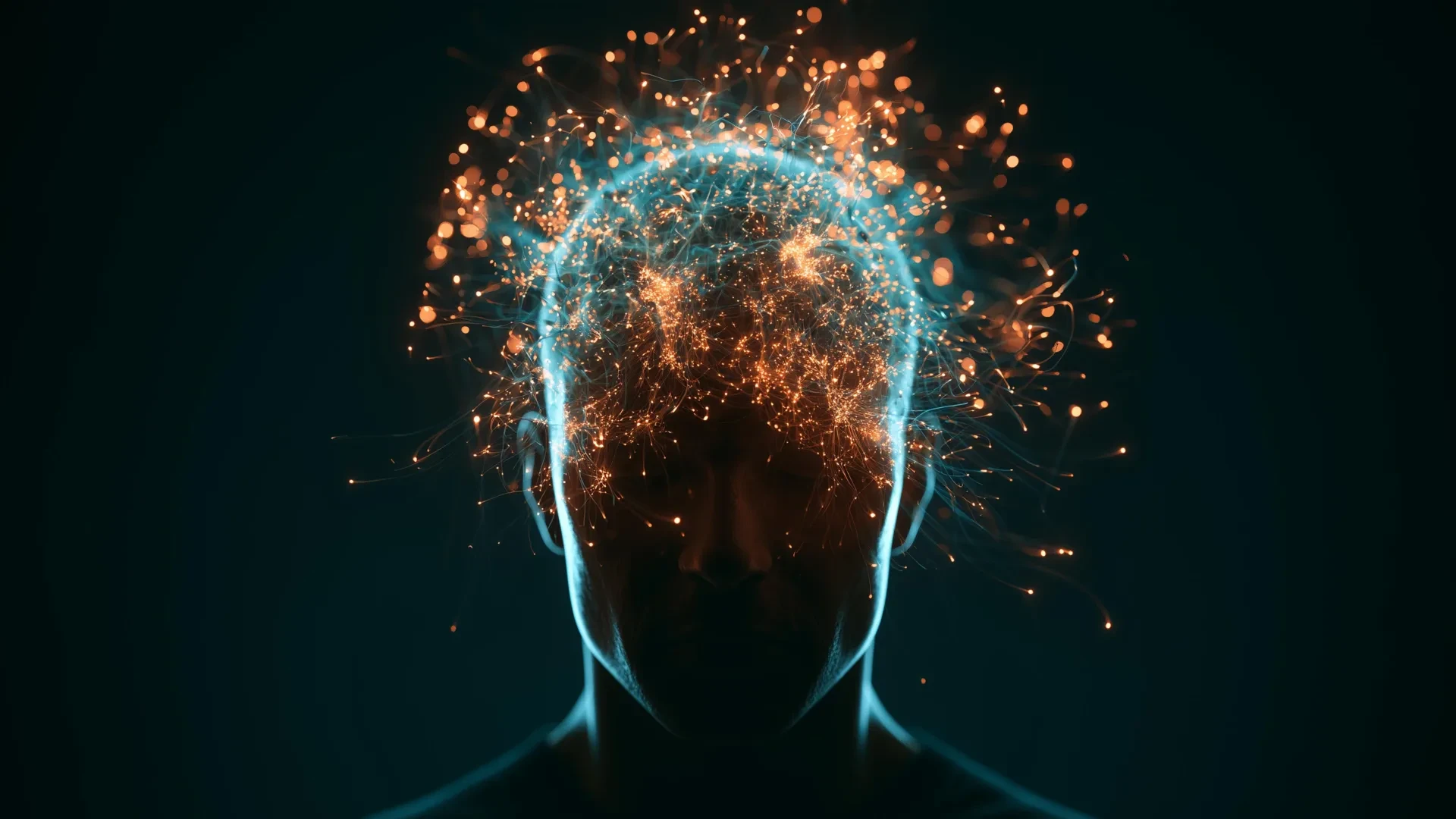
Even when a person is fully unconscious under general anesthesia, their brain may still be doing something remarkable: processing language, recognizing patterns, and even anticipating which words will come next.
Researchers at Baylor College of Medicine have discovered that the brain retains surprisingly sophisticated abilities during anesthesia, despite the absence of conscious awareness. The findings, published in the journal Nature, challenge traditional assumptions about the relationship between consciousness and thinking. They could also provide new insights into how the brain processes memories and language, potentially leading to advances in technologies that help people communicate after neurological injuries or severe medical events.
"Our findings show that the brain is far more active and capable during unconsciousness than previously thought," said Dr. Sameer Sheth, professor and Cullen Foundation Endowed chair of neurosurgery and a McNair Scholar at Baylor. "Even when patients are fully anesthetized, their brains continue to analyze the world around them."
Recording Brain Activity During General Anesthesia
To investigate what happens inside the unconscious brain, Sheth, who is also a neurosurgeon at Baylor St. Luke’s Medical Center, and his colleagues studied patients undergoing epilepsy surgery while under general anesthesia.
These medical procedures offered an unusual and highly valuable opportunity to examine the hippocampus, a complex brain structure deeply involved in learning, memory consolidation, and spatial navigation. Located securely within the brain’s temporal lobe, the hippocampus helps organize incoming sensory information and plays an indispensable role in forming new long-term memories.
To capture this hidden activity, the researchers used advanced recording devices called Neuropixels probes to monitor electrical signals from hundreds of individual neurons in the hippocampus simultaneously. These tiny, high-density silicon probes can detect minute electrical fluctuations from many nerve cells at once, providing an exceptionally detailed picture of how specific groups of neurons respond to external stimuli.
According to the research team, this cutting-edge technology had not previously been used to investigate this particular region of the human brain in this specific context. It allowed the scientific team to examine how the hippocampus responds to sounds and complex language while patients remained completely unconscious and entirely unable to report what they might be experiencing.
The experimental process began with a foundational auditory test. The first experiment involved playing a series of repeating tones, which were occasionally interrupted by a single sound that differed noticeably from the others in pitch or duration.
Although the patients were heavily sedated under clinical general anesthesia, individual neurons in their hippocampus responded differently to the unexpected sounds compared to the repeating baseline tones. Even more surprisingly, these brain cells actually became better at distinguishing the unusual tones as the experiment progressed over time.
This progressive improvement suggested that the hippocampus was displaying clear signs of neural plasticity, which is the brain’s intrinsic ability to reorganize itself and adapt its responses through repeated experience. In other words, some of the most fundamental biological processes associated with basic learning appeared to remain fully active even in the complete absence of conscious awareness.
The Unconscious Brain Can Process Language and Predict Words
Encouraged by these initial auditory results, the researchers then sought to test whether the unconscious brain could handle something significantly more complicated than simple, repetitive tones.
To explore this, they played short narratives and stories to the anesthetized patients while continuing to record high-resolution electrical activity directly from populations of neurons within the hippocampus.
The resulting data revealed a surprisingly sophisticated level of language processing occurring beneath the surface of medical sedation. Distinct, recognizable patterns of neural activity contained specific information about different grammatical categories of words, including nouns, verbs, and adjectives. This strong evidence suggested that the hippocampus was actively responding to the meaningful semantic features of language rather than simply registering that raw acoustic sounds were taking place in the environment.
However, the most intriguing and unexpected discovery went a step further into the mechanics of human cognition.
The researchers discovered that ongoing neural activity also carried computational information that could be used to predict upcoming words in an unfolding sentence. Even though the patients were entirely unconscious, their brains appeared to actively anticipate how the language around them might continue from one moment to the next.
"The brain appears to anticipate what comes next in a story, even without conscious awareness," said Sheth, who also serves as Director of The Gordon and Mary Cain Pediatric Neurology Research Foundation Laboratories within the Duncan Neurological Research Institute at Texas Children’s Hospital.
This sophisticated cognitive ability is closely related to a neurological process known in cognitive science as predictive coding. Rather than acting as a passive receiver that merely records external information, the brain continually uses established patterns, context, and previous life experience to anticipate what is likely to happen next in its environment. When listening to another person speak in daily life, for example, the human brain constantly uses the words it has already heard to form rapid expectations about what vocabulary or concepts are likely to follow.
Historically, scientists have primarily studied this kind of complex cognitive prediction in people who are fully awake, alert, and paying close attention to their surroundings. Finding concrete evidence of this process occurring during full general anesthesia strongly suggests that at least some of the underlying neural machinery can operate completely independently of subjective conscious awareness.
"This kind of predictive coding is something we associate with being awake and attentive, yet it’s happening here in an unconscious state," said Dr. Benjamin Hayden, professor of neurosurgery at Baylor, highlighting the unexpected nature of the data.
What Does This Discovery Mean for Consciousness?
These groundbreaking findings raise fundamental questions about what conscious awareness actually contributes to the brain’s overall ability to process complex information.
Consciousness is generally defined in neuroscience as subjective awareness, which includes the conscious experience of hearing, thinking, feeling, and understanding the world and oneself. Yet this new study powerfully suggests that some of the intricate neural processes traditionally thought to require that awareness—such as interpreting language structure and predicting future information—can continue unfolding even when that subjective awareness is completely absent.
This does not necessarily mean that the anesthetized patients consciously understood the stories being played to them, nor does it imply they would retain explicit memories of the narratives after waking up. Instead, it indicates that biological brain tissue can carry out surprisingly complex aspects of linguistic and cognitive processing without a person being actively aware of performing those mental tasks.
This important distinction could ultimately help neuroscientists better understand how conscious experience actually emerges from physical brain activity.
One prominent possibility is that subjective awareness depends not simply on whether individual brain regions remain active and responsive, but rather on how information is globally coordinated, integrated, and shared across larger, distributed networks of brain regions spanning the entire organ.
Under this prevailing theoretical view, a specialized structure such as the hippocampus might continue performing localized computational analysis on incoming data even when the broader communication pathways and functional connectivity between distant brain regions—which are necessary to generate a unified conscious experience—are temporarily disrupted by anesthetic drugs.
A Surprising Connection Between the Brain and Artificial Intelligence
The new discovery also highlights an intriguing and timely similarity between biological human brain activity and modern artificial intelligence systems.
Large language models, which form the computational technology behind many contemporary AI chatbots and text generators, operate by using statistical patterns learned from enormous libraries of language data to predict what words should logically come next in a sequence.
Remarkably, the researchers observed a functionally related predictive ability operating within the human hippocampus, where neural signals continuously reflected information about upcoming words even while the human subjects remained completely unconscious.
Although biological brains and artificial intelligence models operate through fundamentally different physical substrates and computational rules, both systems rely on extracting structural patterns from language data to anticipate future information. Studying these striking functional similarities may help computer scientists and neuroscientists alike better understand how predictive processing works across both natural and artificial systems.
Furthermore, these findings could hold significant practical implications for the development of advanced brain-computer interfaces, which utilize electrical signals recorded directly from the brain to communicate with external hardware and software devices.
One potential long-term application involves speech prosthetics, which are emerging technologies designed to help individuals communicate effectively when strokes, traumatic injuries, or progressive neurological conditions have severely impaired their natural ability to speak.
If scientists can reliably identify and decode these meaningful language-related signals in human brain tissue, those neural patterns might eventually be harnessed to support communication technologies for patients who have lost their speech abilities due to injury or disease.
"Can we use these signals to deploy and run a speech prosthetic for some of the parts of the brain that are damaged by stroke or injury? These are questions that we can now consider in relation to this part of the brain," said Dr. Vigi Katlowitz, first author of the study and a neurosurgery resident at Baylor.
Scientists Are Rethinking the Limits of the Unconscious Brain
Despite the striking and novel nature of the results, the research team emphasizes that several important questions remain unanswered and require further investigation.
The experiments described in the study were conducted using one particular type of general anesthetic agent and clinical protocol, meaning the findings cannot automatically be generalized or extended to other anesthetic methods, dosages, or different states of unconsciousness.
Additionally, it remains entirely unclear whether similar sophisticated language processing occurs during natural human sleep or in various pathological states of coma, two conditions that differ significantly in their underlying neurophysiology from medically induced general anesthesia.
Another notable limitation is that the researchers focused their recording efforts specifically on the hippocampus. Further scientific studies will be required to determine whether comparable language and predictive processing capabilities persist in other major brain regions, such as the cerebral cortex, and how these distinct areas interact with one another when subjective consciousness is absent.
Nevertheless, the results provide compelling, direct evidence that clinical unconsciousness does not necessarily mean the human brain has completely stopped performing sophisticated information processing tasks.
Instead, the brain may continue actively analyzing environmental patterns, responding dynamically to unexpected events, and anticipating language structure even when a person possesses zero conscious awareness of the surrounding world.
"This work pushes us to rethink what it means to be conscious," Sheth concluded. "The brain is doing much more behind the scenes than we fully understand."