
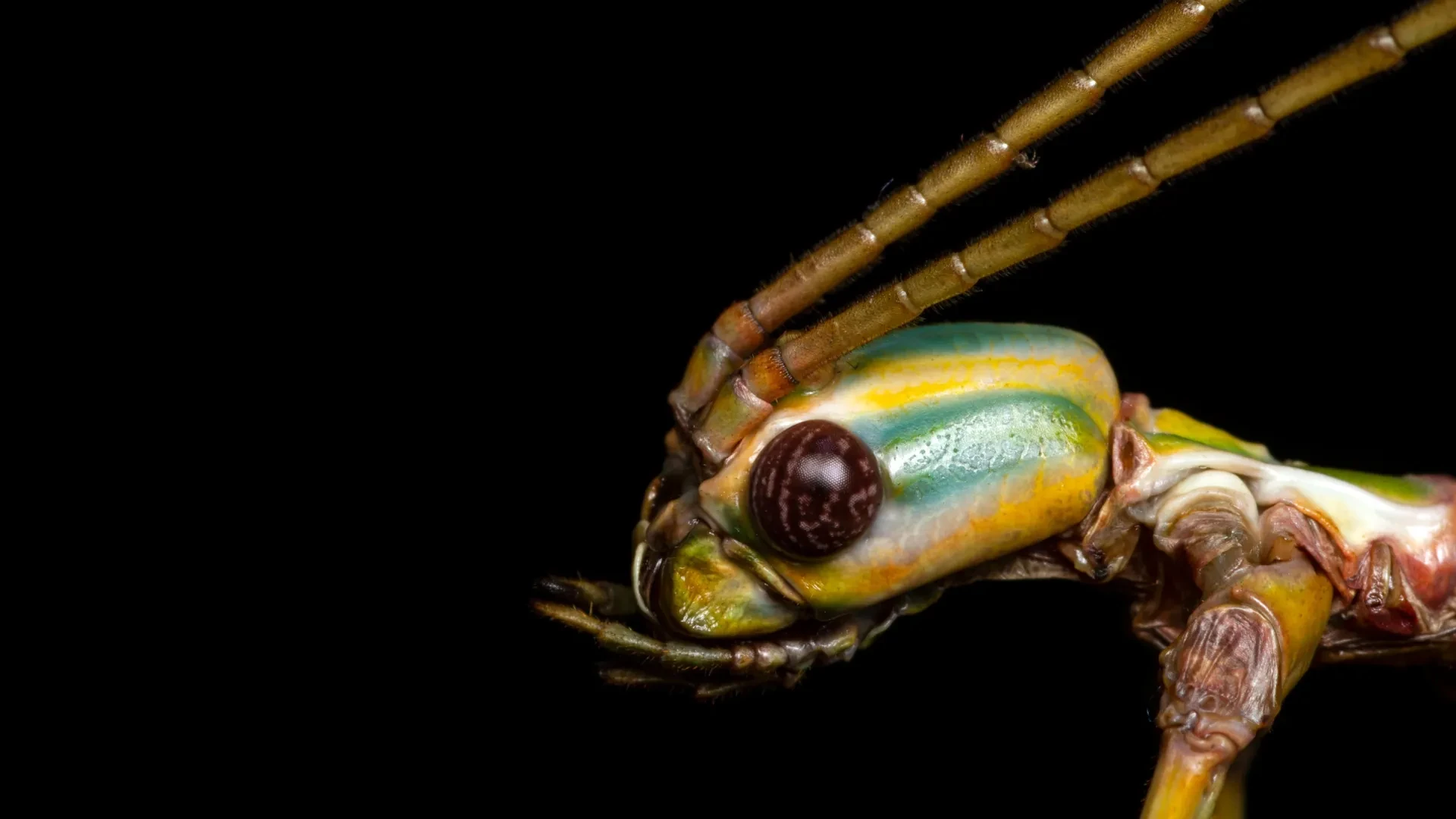
Scientists have identified two previously unrecognized species of large stick insects in Australia, revealing that even in some of the country’s most closely studied environments, new species are still waiting to be found. The discovery overturns long-held assumptions about a familiar group of insects and highlights the vast gaps that still exist within our documentation of local wildlife.
A University of Sydney research team recently reexamined Australian members of the stick insect genus Anchiale and made the surprising discovery of two new species. One of these newly identified insects produces unusual eggs featuring a distinctive lidlike structure, a trait previously unknown in the group. Alongside these additions, the researchers also successfully restored a third species that had gone unrecognized and misclassified for decades.
The comprehensive work demonstrates that insects previously classified within the genus as just two species actually represent five separate species. Together, this expanded group occupies a wide geographic range extending from northern New South Wales, moving upward along coastal Queensland, and stretching deep into tropical northern Australia.
Hidden Diversity Among Familiar Insects
Scientists reached these conclusions despite a remarkably large amount of existing information regarding Australian stick insects. More than 1,000 citizen science observations have been enthusiastically submitted through platforms such as iNaturalist and the Atlas of Living Australia, and the insects themselves have been studied by professional scientists and hobbyists for decades.
Even with this wealth of documentation and public engagement, the researchers emphasize that a staggering amount of Australia’s insect diversity remains undocumented and poorly understood.
Lead author Dr. Braxton Jones of the Aola Richards Sydney Insect Hub at the University of Sydney noted that the discoveries clearly demonstrate how much scientists still have to learn about insect biodiversity, even within regions that are frequently visited and heavily photographed.
"Taxonomy is often a bit like detective work. Even among some of Australia’s most photographed and frequently reported insects, we’re still finding species that have escaped scientific recognition," said Dr. Jones, who serves as a Postdoctoral Research Associate in the Molecular Ecology, Evolution and Phylogenomics Laboratory.
A Stick Insect Misidentified for Decades
One of the study’s biggest and most unexpected surprises involved a large stick insect that had long been exceptionally familiar to both professional scientists and dedicated insect enthusiasts.
To untangle the taxonomy of the group, researchers combined advanced DNA analysis with the careful examination of historical museum specimens, extensive field surveys, contributions from citizen science observations, and detailed studies of live insects raised in captivity. When all the evidence was brought together, it clearly showed that the prominent insect had been incorrectly identified for decades.
It is now officially recognized as a separate species called Anchiale robusta. The findings detailing this correction and the broader taxonomic revision have been published in the scientific journal Austral Entomology.
As part of their sweeping reassessment, the researchers also formally described Anchiale mabiensis, a fascinating new species found within Queensland’s critically endangered Mabi rainforest, located on the Atherton Tablelands. The eggs of this particular species contain an unusual structural lid that has not previously been documented in any other stick insect or its closest evolutionary relatives, marking a unique morphological feature for science.
Discovery Could Help Forestry and Agriculture
Beyond advancing pure taxonomic knowledge, the newly revised classification may also carry significant practical value for land management, forestry, and agriculture.
One particular stick insect within the group is well-known for occasionally reaching plague-like population levels, during which time it can strip leaves extensively from trees. The new study revealed that this pest-associated insect actually represents more than one distinct species. Distinguishing clearly between these closely related species could help researchers, conservationists, and land managers better understand, anticipate, and manage future ecological and economic impacts on forestry and agriculture.
Furthermore, the research points to another possible new species residing in the remote regions of Cape York. Researchers strongly believe that this population may represent an entirely undescribed species, though they emphasize the need for additional specimens and further field study before they can formally confirm its identity.
Reflecting on the broader implications of the work, Dr. Jones emphasized the urgency of continued scientific exploration and habitat protection.
"These findings demonstrate the importance of protecting threatened ecosystems and documenting Australia’s extraordinary biodiversity before we lose species without us having even discovered them," Dr. Jones said.
Funding to support the comprehensive research came from the Australian Biological Resources Study, channeled through the National Taxonomy Research Grant provided by the Commonwealth Department of Climate Change, Energy, the Environment and Water. Additional support for the project was provided through a CSIRO postgraduate scholarship.