
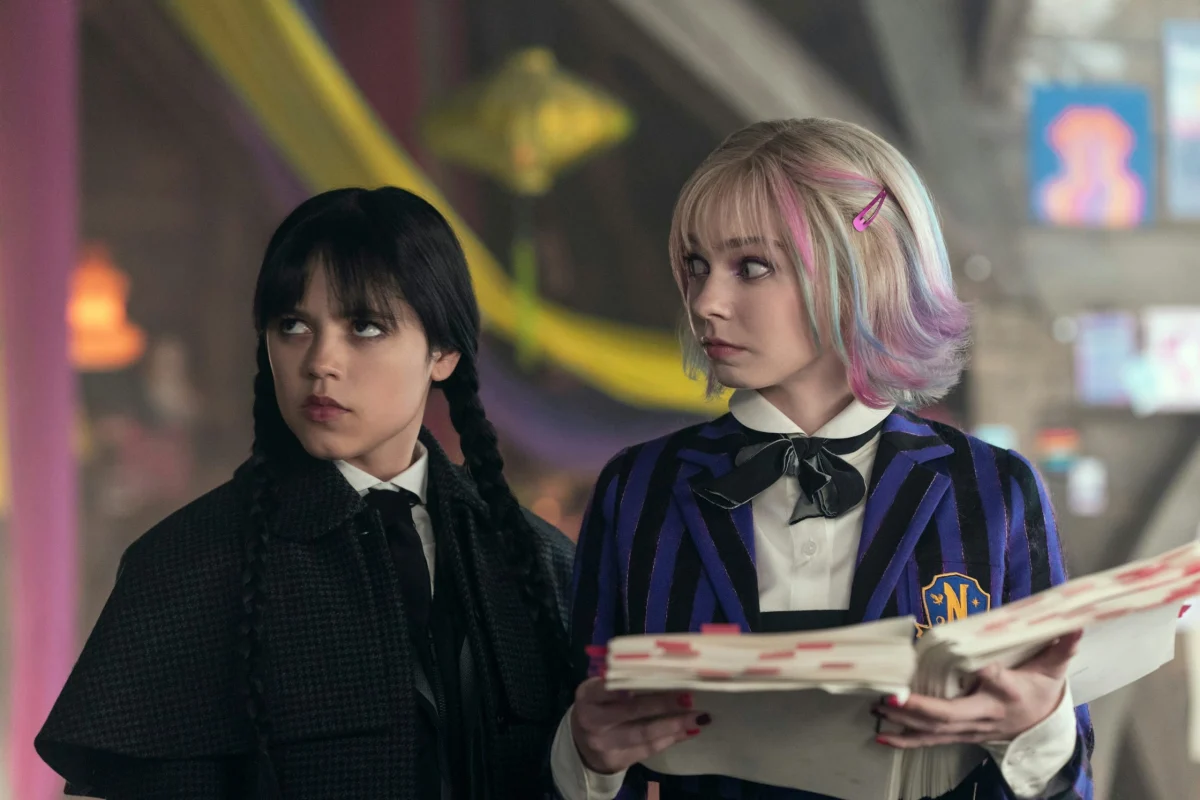
It is a dynamic familiar to anyone who has tuned into modern pop culture revivals or watched siblings interact under the same roof: the stark contrast between the gloomy, monochrome aesthetic and the colorful, hyper-extroverted personality. This dynamic, popularized on screen by characters like Wednesday Addams and her vibrant roommate Enid, often manifests in real-world households in surprising ways.
For many parents, raising a child who blends these opposing traits can lead to uniquely surreal moments. Consider the parent who answers a casual museum question about "how the dinosaurs’ bones got out of their bodies" with a full clinical explanation of decomposition, caskets, and embalming, all while snacking on a bag of crackers. Yet, when that same child begins casually discussing the prospect of removing limbs or meticulously crafting makeshift coffins for their stuffed animals, a familiar wave of parental anxiety tends to set in.
If your child or teenager leans significantly closer to the Wednesday Addams side of the spectrum than the Enid side, you are likely far from alone in wondering where the boundary lies between a harmless eccentric phase and something requiring actual concern. Fortunately, child mental health experts say that an affinity for the morbid, spooky, or strange is often a completely standard component of growing up.
Developmentally Appropriate Curiosity
While a child’s sudden fascination with death, horror cinema, violence, or the occult might be enough to give parents the creeps, specialists emphasize that it is frequently a sign of healthy development. Dr. Monika Roots, a child and adolescent psychiatrist and co-founder of the pediatric mental healthcare provider Bend Health, notes that children routinely turn to imagination and play to process concepts that feel overwhelmingly large, confusing, or emotionally heavy.
This internal processing can surface in various ways, ranging from dramatic storytelling and dark humor to pretend scenarios that sound genuinely alarming to adult ears. According to Dr. Roots, an attraction to gothic characters, spooky imagery, and grim jokes often functions as a vehicle for identity exploration, particularly as children transition into later childhood and adolescence.
Experts encourage parents to remember that discussing or engaging with dark topics does not equate to harmful intent. When a child talks about death or morbid ideas, they are typically trying to make sense of concepts they have encountered organically in stories, media, or everyday conversations, rather than expressing an internal desire to cause real-world harm.
This perspective is echoed by Jillian Amodio, a licensed social worker who counsels adolescents. Amodio points out that curiosity surrounding these themes is entirely natural, given that human beings of all ages eventually grapple with fundamental questions regarding mortality, dying, and interpersonal conflict.
For teenagers specifically, this developmental stage is characterized by a rapidly expanding capacity for abstract thought. Amodio explains that focusing on true crime, mortality, danger, and suspense serves as an enticing, safe mechanism to explore complex emotions and process the intricacies of human existence. It provides a controlled environment to test personal boundaries and investigate intense themes that would otherwise be unsafe or socially unacceptable to enact in reality.
Having Conversations About Dark Topics
When parents maintain an open and receptive stance toward conversations about difficult subjects like death, they inadvertently cultivate a secure environment where children feel comfortable voicing their concerns and asking questions. Dr. Roots advises adults to respond to inquiries simply and calmly, to remain genuinely curious about their children’s dark-themed play, and to frame processes like death and dying as natural aspects of life rather than terrifying unknowns.
When a child references a provocative or dark phrase they have picked up from their surroundings, parents are often better served by asking what the expression means to the child rather than immediately assuming it reflects their underlying emotional state. Keeping communication channels open reinforces the idea that uncomfortable or complex topics can be discussed safely within the home.
Conversely, shutting down these conversations or reacting with harsh negativity can imbue these subjects with an unnecessary sense of fear and mystery. This dynamic often drives older children and teens to seek answers elsewhere, turning to peers, social media, or unfiltered corners of the internet where they may encounter inaccurate information or genuinely disturbing material.
Proactive parental questioning can also help clear up misunderstandings before they snowball. Amodio recalls a case where the parents of a young client grew deeply concerned because their child carried a doll everywhere, repeatedly announcing that the toy was dead. Upon closer inquiry, it emerged that the child had simply been watching cartoons featuring vampires, understood that vampires were technically "dead," and applied that logic to his favorite toy. He harbored no genuine preoccupation with mortality; he was merely drawing a creative line between his plaything and his favorite television show.
Red Flags To Look Out For
While an interest in the macabre is rarely a cause for alarm, mental health professionals stress that certain behavioral shifts can indicate deeper underlying issues. With younger children, Dr. Roots suggests paying close attention to the overall tone and emotional flexibility of their play.
There is a distinct line between exploring dark themes purely as a form of fantasy or humor and engaging in play that feels rigid, genuinely distressing, or rooted in real-world intent. A child who spins a spooky yarn while smiling, laughing, or seamlessly transitioning between different imaginative topics presents a very different picture from a child who appears visibly tense, fearful, or psychologically stuck on a single grim concept.
For adolescents, Amodio emphasizes that the concern lies less in the specific content of their interests and more in how they engage with it. If a casual fascination with true crime or the afterlife crosses the threshold from normal curiosity into an all-consuming obsession or fixation, it serves as a clear red flag that warrants closer attention and intervention.
Ultimately, experts maintain that a dark aesthetic, a temporary spooky phase, or the occasional use of provocative language does not automatically signal danger. What matters most is the child’s overall emotional well-being and functional health beneath the surface. For parents noticing persistent distress or concerning behavioral shifts in their children or teens, consulting with a qualified mental health professional, such as a child psychiatrist or licensed therapist, remains the recommended path forward.