
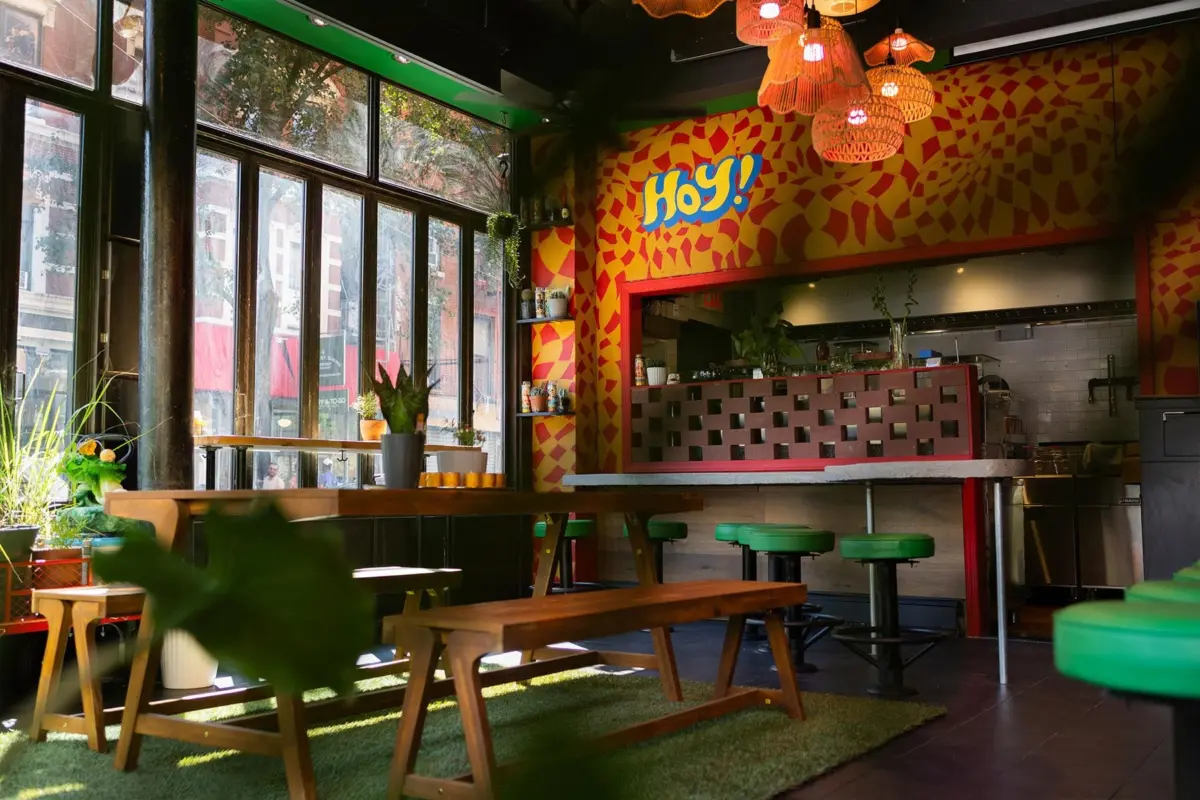
When hospitality veteran Cyed Adraincem talks about his forthcoming New York restaurant, Hoy, his dedication to the project is evident in the details. Having spent nearly two decades in the restaurant industry, including a seven-year tenure working in cocktail bars, Adraincem was recently found out on the sidewalk at 4 a.m., personally washing the pavement in front of his new venue.
"I wanted to beat all the foot traffic," he explained, a sentiment that mirrors the meticulous preparation and high-intensity planning he has brought to outfitting the space.
Hoy, which aims to serve authentic Filipino street food within an immersive environment reminiscent of a Manila night market, is already generating significant buzz across the hospitality community. Though the doors are not yet officially open, the project has garnered substantial attention for its loud, off-kilter aesthetic, clever pop-cultural touchpoints, and transparent, behind-the-scenes glimpses into its research and development process.
The restaurant concept itself is designed to address a perceived gap in the local culinary landscape. According to Adraincem, Filipino cuisine remains underrepresented in New York City, and he is eager to introduce these flavors to a broader audience through an approachable, fast-casual format. The menu is intentionally straightforward, featuring barbecue skewers, lumpia, and a selection of distinct sandwiches. Rather than pursuing formal, high-end dining, Adraincem relies on traditional recipes paired with professional culinary techniques he and his team have honed over the years.
In the current economic climate, Adraincem believes diners are actively seeking environments that are casual and affordable rather than pretentious. The core objective is simply to provide a space where patrons can enjoy good food and a quality drink.

The physical design of Hoy draws heavy inspiration from classic American diners, a style Adraincem has long admired. Combined with his background in cocktail bars, the resulting atmosphere is a distinct mashup that aligns seamlessly with the vibrant energy of a Manila night market. The space operates entirely on a counter-service model, featuring an open kitchen where all staff members are front-facing. This layout is intended to maintain a continuous flow of high-energy interaction between the staff and the customers, creating an environment that mirrors an active street-market affair.
For the restaurant’s branding and visual identity, Adraincem collaborated with his cousin, Kristofferson San Pablo, a well-known Los Angeles-based Filipino American artist. The visual direction centers on the intense, visually stimulating environment of a night market, utilizing a rich palette of colors without crossing into overwhelming territory. Notably, the wall patterns are adapted from some of the oldest textile designs originating in the Philippines, offering a subtle yet direct nod to cultural heritage.
The interior also features curated shelves of snacks designed to mimic a traditional sari-sari store. Typically found on every street corner in the Philippines and often operated directly out of an owner’s home, these small neighborhood shops sell an assortment of everyday essentials. Alongside the snacks sit cookbooks passed down through generations from Adraincem’s parents, some of which are decades old. These family archives serve as the baseline for the restaurant’s culinary creations, supplemented by cookbooks from local culinary favorites.
In developing the visual language of Hoy, the creators deliberately avoided conventional and overly mainstream Filipino symbols, such as the sun and stars from the national flag or traditional barong tagalogs. Instead, they incorporated lesser-known cultural touchstones, including the iconic wooden barrel man novelty and imagery celebrating the water buffalo, known locally as the carabao, and traditional agrarian life.
The barrel man, in particular, holds a specific cultural significance that Adraincem looks forward to sharing with guests. Originally created as souvenirs for economically disadvantaged artisans to earn a living, the novelty item also reflects a lighthearted aspect of Filipino humor. In addition to these cultural artifacts, the restaurant incorporates art pieces sourced from independent creators across New York City and Los Angeles. While the primary focus is on supporting Filipino artists, Adraincem remains open to featuring any local creator whose work aligns with a community-focused ethos.
This commitment to contemporary visual culture is also reflected in the restaurant’s promotional materials and digital presence. Prior to opening, Hoy utilized pop-culture-heavy imagery, such as a sports-themed artistic sign referencing a high-profile basketball moment, developed rapidly through an agile creative partnership with San Pablo. According to Adraincem, the creative process is remarkably fast-paced and organic, driven by shared cultural awareness and spontaneous brainstorming.

Beyond the physical space, Hoy is preparing a comprehensive merchandise lineup that extends beyond standard restaurant apparel. While traditional offerings like shirts, hats, and tote bags will certainly be available, the team has explored producing novelty items such as custom barrel man key chains and house slippers. As the restaurant establishes itself and management gains a clearer understanding of the space, the merchandise operations are expected to expand further through collaborations with various external artists and creatives.
Adraincem’s emphasis on merchandise is informed by his extensive industry experience. Having observed the popularity of branded apparel in cocktail bars where staff and patrons frequently wear clothing representing their favorite hospitality venues, he views merchandise not only as a cultural touchstone and a way to build community loyalty, but also as a viable secondary revenue stream.
Sourcing the physical components of the restaurant has presented significant logistical challenges. Furnishing a venue amid current market conditions has proven difficult and expensive, requiring extensive research and comparative pricing across major retailers. Meanwhile, the interior environment has been softened by the integration of extensive vegetation designed to evoke a tropical Philippine atmosphere. The team has constructed a makeshift pond from a large planter pot and established a nearby garden growing lemongrass, a calamansi tree, and labuyo chiles. Capitalizing on the building’s corner location and abundant natural light, the plan is to cultivate a thriving indoor ecosystem that may eventually contribute directly to the operation.
Currently, the path to opening has encountered a temporary hurdle regarding gas-line approvals with New York’s Department of Buildings, which has delayed onsite cooking operations. Rather than remaining dormant while awaiting clearance, management chose to activate the space for the community by launching an ongoing series of culinary residencies. The restaurant is currently hosting Arellano Pandesal, a popular pastry operation hailing from Queens, which provides traditional Filipino baked goods while Hoy’s team manages the beverage program. Plans are also underway to launch a community marketplace featuring local vendors, friends, and family, serving as an immediate bridge to engage the neighborhood and generate local anticipation while final regulatory approvals are completed.