
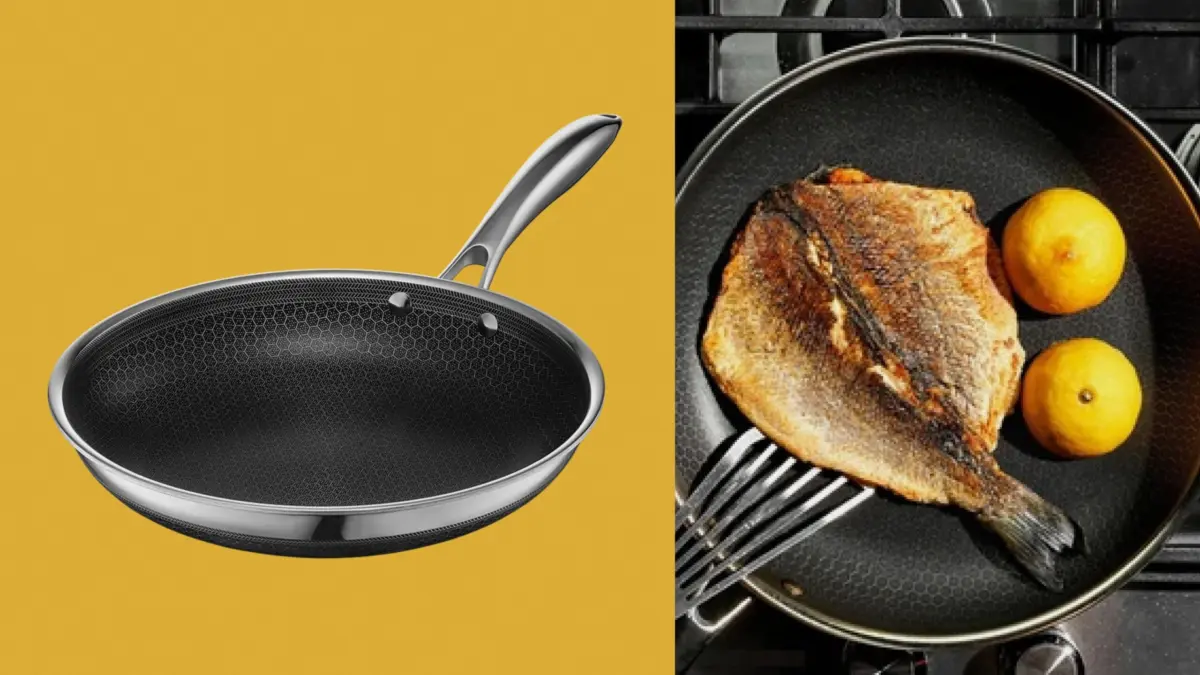
Odds are you have encountered a HexClad pan before. Even before Gordon Ramsay’s substantial $100 million cash infusion through Studio Ramsay Global in 2024, the company had successfully saturated the internet with targeted advertisements, promotional partnerships with prominent food influencers, and prominent product placements in spaces like reality television villas.
When people discover that testing cookware is a daily profession, questions about HexClad inevitably surface more frequently than inquiries about any other brand. To address this persistent curiosity comprehensively, a standalone review becomes necessary to cut through the marketing noise.
To lay inherent biases out in the open: professional reviewers generally do not favor nonstick cookware. When forced to evaluate nonstick items for occupational reasons, testers typically include several addendums outlining inherent issues with the category—primarily its relatively short lifespan and the way its ubiquity prevents everyday home cooks from mastering proper culinary techniques. Instead, experts routinely point consumers toward more durable, long-lasting alternatives.
Still, just as with HexClad or any other piece of nonstick equipment, these products must be evaluated relative to each other to determine what the best nonstick pans actually are—if a consumer absolutely insists on purchasing one.
This reality brings the focus back to HexClad. Having cooked with the brand’s pans several times—initially testing the original PTFE pans several years ago and more recently evaluating the ceramic nonstick versions that replaced them—certain clear conclusions emerge regarding their construction and performance.
How HexClad Pans Differ From Other Types of Nonstick Cookware
HexClad belongs to an increasingly popular niche within the broader cookware ecosystem known as “hybrid cookware.” These pans differentiate themselves from conventional, smooth nonstick surfaces by featuring a textured design composed of raised stainless steel “peaks” and coated nonstick “valleys.” According to the manufacturer, this distinctive pattern provides a durable surface designed to protect the ceramic nonstick coating located within the depressions. For instance, using a metal spatula—traditionally considered one of the cardinal sins of cooking with nonstick pans—is supposedly mitigated because the raised steel peaks prevent the utensil from scraping the delicate nonstick valleys.
The brand’s nonstick surfaces share underlying similarities with other ceramic nonstick cookware lines on the market. While various companies frequently boast about proprietary ceramic nonstick formulas, almost all commercial variations of the material are manufactured using the exact same underlying chemical process known as the sol-gel process.
On the corporate website, HexClad claims that its cookware successfully brings together the high-performance searing capabilities of stainless steel, the durability of cast iron, and the effortless cleanup convenience of nonstick surfaces. The company also offers a lifetime warranty, though it strictly covers manufacturing defects, alongside broad marketing assertions that their products are engineered to last a lifetime. However, these promotional statements directly counter the fundamental scientific realities governing ceramic nonstick cooking surfaces.
What It’s Like Cooking with HexClad
Nonstick pans traditionally excel at making strong first impressions, so it came as no surprise that these pans deliver on their slippery, effortless release promises straight out of the box. Running both a skillet and a saucepan through standard professional testing procedures yielded acceptable initial results.
From a design perspective, the pans maintain a comfortable weight and feature well-designed handles. However, the choice to apply a nonstick coating to the very bottom of the exterior pan—where it sits in direct contact with a high-heat source—remains a puzzling engineering decision.
The bottom line is that when compared strictly against other types of nonstick cookware, HexClad pans perform adequately. Yet, serious concerns persist regarding the brand’s ambitious claims surrounding product longevity and long-term durability.
How Does HexClad’s Performance Stand Up Over Time?
Dissatisfied HexClad customers have frequently filled internet forums and community message boards with complaints regarding the longevity and overall quality of the pots and pans. Many lament how staple breakfast items like eggs and other delicate foods began sticking aggressively after only a few months—and occasionally just weeks—of regular household use. Professional evaluators experienced a similar degree of food sticking when testing a roughly one-year-old HexClad set.
This rapid degradation is not entirely unique to HexClad: all ceramic nonstick coatings inevitably degrade over time because of the fundamental nature of the material itself.
Consulting experts in materials science illuminates the inherent limitations of ceramic nonstick technology. Ceramic nonstick coatings are frequently silica-based sol-gels, representing a microscopic solution of tiny silica particles that fill a metal pan’s naturally rough surface texture to create a smoother, slicker plane. Unfortunately, these specialized coatings are inherently brittle. Repeated cycles of heating and cooling cause microscopic fractures to develop across the coating due to thermal expansion and contraction. As these fractures accumulate over time, surface friction increases noticeably, gradually stripping away the pan’s initial nonstick capabilities.
This structural vulnerability is the primary reason why consistently used nonstick pans typically have a functional lifespan of only one to two years. While cooking remains technically possible past this window, the steady deterioration of the coating inevitably leads to micro-chipping and severely diminished cooking performance. In translation, the normal act of cooking inevitably causes any ceramic pan to deteriorate over time.
Complicating matters further, HexClad instructs consumers that in order to properly maintain their nonstick qualities, the pans must be periodically seasoned with neutral oil and heated over medium heat.
Seasoning a nonstick pan represents a contradictory instruction for most cooks. Seasoning is traditionally understood as the rigorous process required to prime cast iron and carbon steel cookware—a maintenance chore that many everyday users actively dislike, often pushing them to opt for low-maintenance nonstick coatings in the first place.
This suggestion to oil nonstick pans before use proves problematic for multiple reasons. First, it completely undermines the low-maintenance value proposition that makes nonstick cookware attractive to consumers in the first place.
Second, it is physically impossible to truly season the surface of a HexClad pan. Neither the stainless-steel peaks nor the ceramic-nonstick valleys can develop a true seasoning in the manner associated with carbon steel or cast iron. When oil is applied to those traditional materials and subjected to heat, the lipids break down and form a layer of polymerized fat that permanently bonds to the porous metal cooking surface. This molecular bond repels moisture and prevents food from sticking at a microscopic level. That chemical transformation simply cannot take place on a smooth ceramic nonstick surface, full stop.
While it is technically possible to develop a short-term layer of polymerized fat on an exposed stainless-steel surface, it cannot be maintained or developed long-term. Stainless steel is a significantly smoother material, making it difficult for polymerized fat to adhere securely. Furthermore, the metal features a non-reactive layer of chromium oxide that actively inhibits the strong chemical bonds necessary for authentic seasoning to take root. Unpolymerized fats and food residues can certainly accumulate on a stainless-steel pan, but this buildup only makes the cooking surface more sticky, not less, while also creating a thoroughly unsanitary cooking environment.
Even if HexClad recommended re-seasoning the pan prior to every single use—which essentially amounts to basic oiling—the official care instructions state that over the first few weeks of use, hybrid cookware will actually perform better as it re-seasons from the fats naturally present in the food being cooked.
Discarding the formal term "seasoning," the manufacturer is still advising users to pretreat the pan with fat prior to cooking, exactly as one would do to make a traditional stainless-steel surface behave in a nonstick manner. If a HexClad pan requires the exact same level of careful prep, management, and maintenance as a stainless steel, cast iron, or carbon steel pan, the fundamental rationale for purchasing an expensive hybrid pan over those vastly more durable, traditional materials disappears.
To the credit of HexClad and other manufacturers operating in the nonstick space, consumers frequently hold unrealistic expectations for these products. Food sticking is frequently the direct consequence of improper cooking technique, and a nonstick surface of any kind can only compensate for human error to a limited degree. Pan temperature, the precise amount of cooking oil utilized, and proper timing all dictate how and why food adheres to a surface. Even when utilizing the absolute slickest nonstick pans available, cooks can still end up with stubbornly stuck-on food if mindful culinary habits are ignored.
Is HexClad Worth the Money?
These hybrid products are not positioned as budget-friendly alternatives; rather, they are aggressively marketed as premium kitchenware at top-tier price points. A single 12-inch fry pan without a lid retails for $179. For direct context, a 12-inch fry pan from All-Clad—widely regarded as the gold standard for professional-quality stainless-steel cookware, backed by a decades-long reputation for exceptional longevity in kitchens worldwide—sells for around $160.
For consumers who remain steadfast in their desire for a textured hybrid pan despite professional warnings, alternative manufacturers including Oxo, Greenpan, and Zwilling offer comparable hybrid lines at lower price points.
Ultimately, investing significant financial resources into premium cookware that lacks long-term durability is rarely a sound strategy. Accepting that minor sticking can occur during the learning curve of cooking sets home cooks up for far greater success in the long run. For those who prioritize the sheer convenience of a nonstick surface, selecting an option that does not demand the meticulous care and pretreatment routines of traditional metals makes far more sense. Professional reviewers test nonstick pans out of occupational necessity, but continue to advocate for traditional alternatives that improve steadily with age, such as properly maintained cast iron, versatile carbon steel, and reliable stainless steel.