
What began as a casual, innocent product review for a winter heated vest on Amazon quickly snowballed into a nine-month psychological experiment involving behavioral science, consumerism, and the hidden mechanics of online reward systems. The author behind the prominent personal finance platform Mr. Money Mustache recently shared a detailed retrospective of his accidental induction into Amazon Vine, an exclusive invitation-only program that rewards prolific reviewers with complimentary merchandise in exchange for honest evaluations.

The saga commenced last winter when the long-time financial independence advocate left a five-star review for a heated garment designed to ward off the cold. Shortly after submitting the feedback, an automated notification arrived in his inbox announcing that he had been selected to join "Amazon Vine" as a recognized "Vine Voice." The program’s premise sounds appealingly straightforward: participants can select and order various products from the e-commerce giant free of charge, provided they maintain a compliance rate by reviewing at least eighty percent of the items ordered.
Attracted by the prospect of receiving complimentary goods—especially after years of writing product reviews voluntarily—he accepted the terms and conditions without extensive forethought. This decision initiated an unexpected journey over the next three quarters of a year, revealing the surprising potency of modern digital nudges, evolutionary psychology, and how easily deeply ingrained frugality instincts can be bypassed by carefully engineered incentive structures.

While the experiment did yield tangible financial benefits—including thousands of dollars saved on tools and materials for a construction business and a coworking space—it also highlighted the subtle ways digital platforms capture human attention and drive unnecessary consumption. The author noted that his initial motivation was partly to secure items he genuinely would have purchased anyway, alongside the journalistic curiosity of testing a system to write about it later. Yet, the experiment offered a cautionary tale about how small incentives can manipulate time management and personal values.
To understand how a seasoned advocate for financial independence and minimalist principles fell into a consumerist loop, the retrospective draws upon behavioral science, referencing Michael Easter’s book Scarcity Brain. The work explores how modern gambling platforms, targeted marketing, and social media algorithms exploit evolutionary vulnerabilities linked to scarcity and unpredictable rewards. The Amazon Vine program, it turned out, shared several structural parallels with online casinos and endless-scroll feeds.

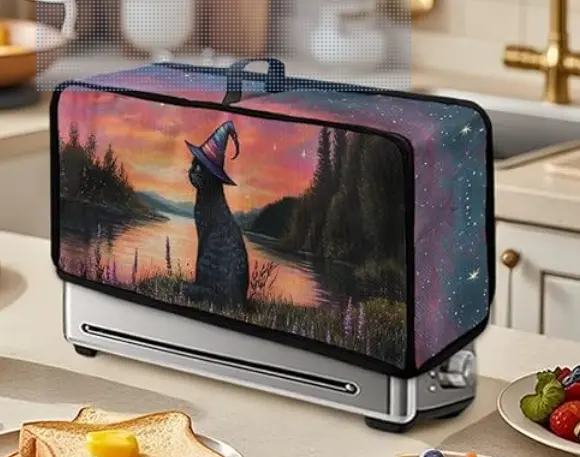
Accessing the restricted "reviewers only" platform revealed a constantly rotating inventory of available items. Browsing often felt like an exercise in frustration, yielding endless pages of unrelated goods, disposable party supplies, or bizarre items like toaster covers featuring cats wearing witch hats. However, interspersed among the clutter were genuinely useful items, such as high-grade light fixtures, plumbing components, electric vehicle chargers, construction tools, and clothing, including a distinctive eagle shirt featured in a promotional music video and realistic artificial plants utilized for hard-to-water courtyard areas.
To manage the influx of goods, the author even involved friends and coworkers at his headquarters, allowing them to select and review products they desired while sharing in the labor and the humor of sorting through eccentric merchandise. Nonetheless, as the spring and summer progressed, a persistent sense of unease settled in. Driven by the goal of upgrading his account from the initial "Vine Silver" tier to "Vine Gold"—which ultimately offered little practical difference, as top-tier catalogs featured the same trinkets—he found himself checking the platform daily out of habit rather than genuine need.

Packages arrived with mounting frequency, leading to overflowing recycling bins filled with cardboard boxes. Frivolous purchases drew amusement and mild scrutiny from family members, prompting the author to discreetly tuck away deliveries to evade observation. The behavior persisted largely out of habit and procrastination, serving as an easy digital distraction compared to more demanding physical tasks like working out on running trails, managing construction projects, or engaging in intentional creative writing.
Eventually, the inherent friction of the Vine program itself aided the recovery process. Sifting through endless screens of trivial trinkets ultimately generated more annoyance than satisfaction. Furthermore, the platform’s user experience underscored that reviewers functioned more as low-wage laborers than valued VIP partners. Search functionality was intentionally restricted without basic sorting or filtering tools, designed to force users to comb through entire inventories regardless of the value of their time. Bureaucratic artificial intelligence systems frequently flagged standard, factual reviews for allegedly violating community standards without providing clear explanations, requiring repetitive edits to punctuation or phrasing to secure automated approval.

Reflecting on these administrative hurdles, the author compared the experience to conventional employment structures where workers follow rigid rules within pre-existing systems without having a meaningful voice in governance. It also recalled a previous 2017 experiment working as an rideshare driver, where obvious structural improvements were ignored because frontline workers lacked decision-making authority. These experiences reinforced the value of financial independence, emphasizing the preference for autonomy and self-directed work over managed labor systems.
A critical financial realization regarding the Vine program involves tax implications. Contrary to popular assumptions of receiving entirely free merchandise, Amazon tracks the retail value of all acquired items and issues a Form 1099 at the end of the year. This treats the complimentary goods as taxable income, requiring participants to pay income tax based on their marginal tax rate. For the author, the account accumulated roughly seven thousand dollars in goods, creating an estimated tax liability that was partially offset because seventy-five percent of the items were converted to commercial use for construction and office renovations.

The financial picture shifted further following advice from knowledgeable community members, who noted that standard accounting practices often allow participants to reduce the estimated taxable value of review items by a significant margin because opening and evaluating products effectively eliminates their resale value.
To break the behavioral loop permanently, the author employed a "Keystone Habit" strategy rather than formally canceling the account. By remapping browser bookmarks away from the Vine portal and linking them to a personal tracking chart for daily physical activity and wellness goals, accessing the platform was successfully replaced with healthy physical movement.

Concluding the experiment, the author emphasized that the broader lesson transcends the specifics of Amazon Vine or personal habits, serving instead as a reminder to continuously question personal assumptions, daily patterns, and lifestyle choices. Even minor course corrections and self-reflection can accumulate into significant changes over the course of a lifelong journey toward intentional living.